Why the Moon Now Needs Its Own Official Time Standard
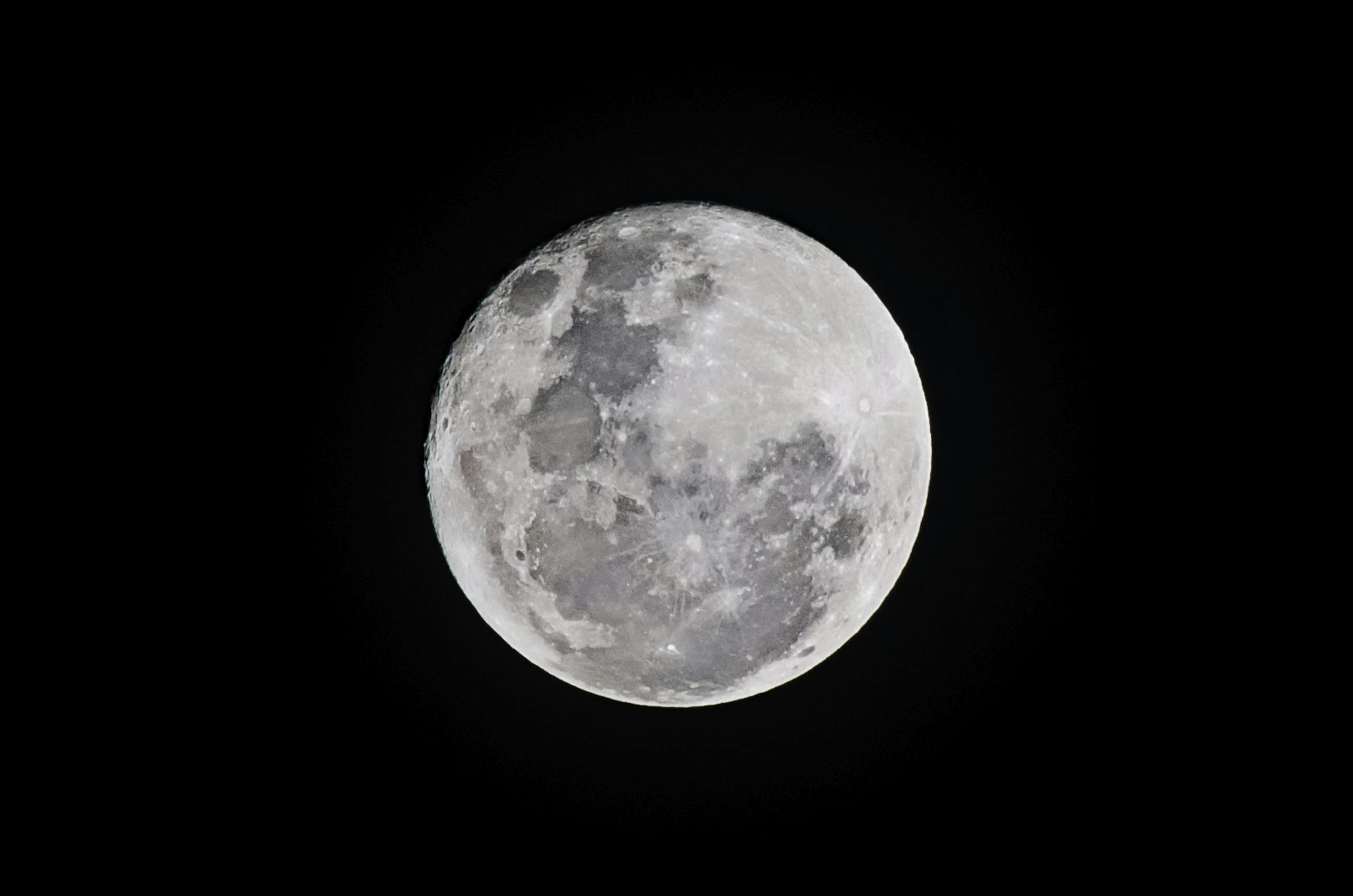
Humanity is heading back to the Moon in a far more serious and long-term way than ever before, and that shift brings up a surprisingly tricky question: how do we tell time on the Moon? As simple as that sounds, keeping accurate time across two different gravitational environments—Earth and the Moon—quickly becomes a scientific and engineering puzzle. A recent research paper proposes a practical solution, and many space agencies are poised to adopt it as lunar exploration scales up.
Below is a clear breakdown of what this new lunar time proposal is, why we need it, how it works, and what challenges still lie ahead.
The Push for a Lunar Time Standard
As the United States, China, and the European Union prepare for sustained lunar missions, the need for precise Position, Navigation, and Timing (PNT) services on the Moon has become urgent. These future systems—basically a lunar version of GPS—require incredibly accurate internal clocks. For meter-level navigation precision, they need clocks synchronized to within a few nanoseconds.
On Earth, we take these systems for granted, but our planet’s GPS satellites already deal with relativity-driven clock discrepancies due to their altitude and speed. Those systems work only because engineers constantly correct for those differences. The Moon will require similar care, but with even more complex considerations.
In 2024, the International Astronomical Union (IAU) formally introduced the Lunar Celestial Reference System (LCRS) and a corresponding time standard known as Lunar Coordinate Time (TCL). This gives scientists a reference starting point—but not the details needed for practical implementation. That is exactly the gap the new paper aims to close.
Why Clocks on the Moon Don’t Match Earth Time
Einstein’s general relativity tells us that gravity affects time. A weaker gravitational field means time runs slightly faster. The Moon’s gravity is only about one-sixth of Earth’s, which means a clock on the surface of the Moon will tick differently than a clock on Earth.
The difference is small but critical:
- A clock on the Moon’s surface would drift by about 56 microseconds per day relative to a baseline reference clock in orbit.
- This drift is enough to break the precision needed for navigation and communication systems.
- Even clocks at different heights on the Moon—such as crater floors versus mountain rims—would tick at different rates.
Because the Moon has no unified “sea level” baseline, timekeeping becomes even more complicated. Earth’s time systems rely heavily on a sea-level gravitational reference, which simply doesn’t exist on a mostly airless, sea-less world.
These challenges make a self-consistent lunar time framework absolutely necessary.
Approaches Considered for Lunar Timekeeping
The research team examined three main strategies. Each approach is rooted in how scientists currently handle time on Earth—adjusted for the realities of the lunar environment.
1. Create a Scaled Lunar Time Like Earth’s Terrestrial Time (TT)
On Earth, Terrestrial Time (TT) is a scaled version of coordinate time that compensates for sea-level gravity. In theory, the Moon could use a similar scaled time.
But the Moon has:
- no seas,
- no unified altitude baseline, and
- extreme local variations in topography.
A scaled lunar time would therefore be uneven, inconsistent, and difficult to define. This option was considered impractical.
2. Base Lunar Time on Solar System–Wide Standards
Another idea was to adopt a time system similar to Barycentric Dynamical Time (TDB), which is tied to the entire solar system’s center of mass.
This would eliminate drift relative to a “local surface reference” because the time is defined on a system-wide basis.
But this approach is:
- too large-scale,
- unnecessarily complex, and
- difficult to use for local lunar operations.
It’s elegant but not very convenient.
3. Use TCL Directly With Periodic Clock Steering
This final method is what the authors recommend.
TCL—already defined by the IAU—would be used directly as the lunar time standard. Then, lunar clocks (surface nodes, orbiting satellites, ground stations) would be periodically “steered” or adjusted based on a master reference.
This method:
- avoids the complications of scaling,
- works even if clocks sit at different lunar altitudes,
- leverages techniques already widely used on Earth,
- keeps all clocks synchronized without requiring extreme modifications, and
- minimizes implementation complexity.
The authors conclude that this “steered TCL” approach offers the best balance of precision, simplicity, and practicality.
What This Means for Future Moon Missions
Adopting a unified lunar time standard is not just a theoretical exercise. It has major consequences for real missions.
Here are the immediate benefits:
Reliable Lunar GPS
A synchronized time system is essential for:
- pinpoint landing accuracy,
- rover navigation,
- astronaut mobility,
- autonomous systems, and
- robotic construction equipment.
Without consistent time, navigation errors would accumulate dangerously fast.
Better Communications
Lunar ground stations, orbiters, and Earth-based systems all rely on tightly synchronized timestamps for:
- message ordering,
- latency control,
- bandwidth optimization, and
- error correction.
Cooperation Between Countries
As multiple agencies launch lunar infrastructure, a unified time standard prevents a chaotic mix of incompatible systems. Navigational and communication interoperability depends heavily on shared timing rules.
Long-Term Settlement
Future lunar habitats, vehicles, and scientific instruments must all operate on the same clock. A standard time system makes that possible.
How Timekeeping Works Today on Earth (and Why It Won’t Directly Work on the Moon)
To understand why the Moon needs its own framework, it helps to look at how Earth handles time.
Earth uses multiple carefully defined timescales:
- UTC — the civil time used by society
- TAI — an unadjusted atomic time
- TT and TCG — relativistic coordinate time standards
- GPS Time — used by navigation satellites
Each system serves a purpose, and all must be reconciled through relativistic corrections. GPS satellites drift relative to clocks on Earth and require constant compensation because of gravity and speed effects.
A lunar system will face similar issues but with different drift patterns and no sea-level baseline. That’s why the Moon needs its own reference frame (LCRS) and its own coordinate time (TCL).
Extra Background: How Scientists Define a “Second” in Space
A second is defined as a fixed number of oscillations (9,192,631,770) of a cesium atom. This definition is universal and does not depend on Earth. However, relativity means the rate at which these oscillations occur changes depending on:
- gravity,
- altitude, and
- velocity.
This means:
- a second is always the same in theory,
- but clocks can tick at different rates in different environments.
This is why a Moon time system must be based on coordinate time rather than proper time (the time experienced by a specific local clock). TCL is a coordinate time defined for the Moon’s reference frame.
Remaining Challenges Before Lunar Time Becomes Reality
Even with a solid proposal and an IAU-defined reference, several hurdles remain:
- Space agencies must agree on adopting TCL.
- A master lunar clock must be established.
- Lunar satellites and landers must support time-transfer systems compatible with TCL.
- Conversion between Earth-based time (like UTC) and TCL must be standardized.
- Relativistic models must account for lunar rotation, orbital motion, and gravitational influences from Earth and the Sun.
Without this coordination, the Moon could end up with multiple competing time systems—exactly what engineers want to avoid.
Source Research Paper
Lunar Time — Pascale Defraigne et al. (2025)
https://arxiv.org/abs/2511.02709