Searching for Life in Alien Clouds Gets a Boost from New Atmospheric Microbe Study
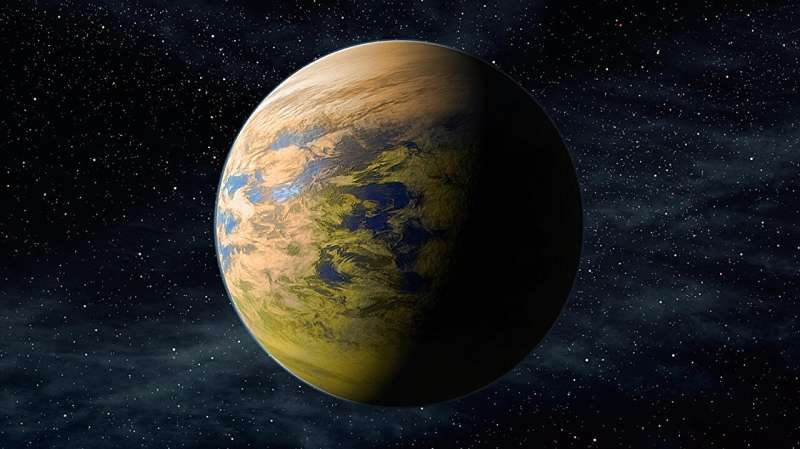
Scientists have long focused on the surfaces and atmospheres of distant exoplanets in the hunt for extraterrestrial life, but a new study suggests we may have been overlooking an entire habitat: the clouds themselves. Researchers at Cornell University have created the first-ever reflectance spectra—essentially a color-coded light signature—of microorganisms that naturally live high above Earth’s surface. This breakthrough offers astronomers a new, practical tool for identifying potential signs of life in the clouds of other worlds, especially planets with dense or total cloud cover.
The new research centers on microorganisms that produce distinctive biopigments, which help them survive harsh atmospheric conditions. These pigmented microbes are rare in Earth’s atmosphere, but they do exist, floating high in the lower stratosphere at altitudes between 21 and 29 kilometers. Since pigments strongly affect how organisms reflect light, the research team realized that these tiny aerial travelers could hold the key to recognizing similar life forms suspended in the skies of distant planets.
Understanding How Microbes Live in Earth’s Atmosphere
While the idea of life in the atmosphere sounds exotic, Earth already hosts a vibrant community of airborne microbes. These organisms survive in thin air, extreme cold, intense dryness, and high levels of radiation. Their survival is largely thanks to their biopigments, which protect their cells from ultraviolet exposure, temperature extremes, and low moisture.
To create the new spectral data, Cornell researchers relied on collaborators at the University of Florida, who launched a balloon-based sampler into the stratosphere. This device captured living microorganisms drifting in the upper atmosphere—organisms that cannot be gathered by conventional ground-based methods. Seven microbial strains were successfully obtained.
Back at Cornell, the microbes were carefully grown in laboratory cultures using specialized equipment and microbiological expertise. Once thriving, each strain was examined using high-precision instruments that measure how light reflects off microbial surfaces across various wavelengths. The result is the world’s first reflectance library of airborne microorganisms—a reference catalog of what high-altitude life looks like to a telescope.
Why These Spectra Matter for Exoplanet Science
Light reflected from a planet carries clues about what is on or within it. When the surface or clouds of a planet contain pigmented organisms, their presence may alter the planet’s coloration in detectable ways. Dense cloud cover on exoplanets has historically been seen as an obstacle because it hides the surface. But these new spectra show that clouds themselves could become the target.
If similar pigmented microbes lived in the clouds of a distant planet and existed in high enough numbers, their spectral signatures could be observed from telescopes across space. The Cornell team modeled such scenarios and found that a planet enriched with cloud-borne microbes would have a distinctly different reflectance profile than one without them.
This means cloudy worlds—which have often been dismissed as too obscured for biosignature detection—may actually be prime candidates for the search for life.
Conditions Needed for Detectable Cloud Life
While Earth’s own airborne microbes are abundant in variety, they are not present in high enough density to be detectable from distant space. For an exoplanet’s cloud life to be detectable, several conditions would likely need to align:
- High humidity in the atmospheric layer where organisms live
- Stable cloud systems that can support long-term microbial communities
- Pigment-rich organisms, which stand out more strongly in reflectance spectra
- Active biological reproduction to maintain population densities
These conditions aren’t outlandish—they are similar to what scientists hypothesize may be possible on planets like Venus, certain warm exoplanets, or even icy moons with plume-like atmospheres.
Implications for Future Telescopes and Missions
This new spectral library arrives at a crucial time. Several major telescopes currently being built or designed will rely heavily on spectral analysis to detect biosignatures. This study directly informs these instruments, including:
- NASA’s Habitable Worlds Observatory, now in development
- The European Southern Observatory’s Extremely Large Telescope, expected to begin observations in the 2030s
These observatories will be equipped to examine exoplanet atmospheres in unprecedented detail. Having access to a reference set of what atmospheric life might look like—rather than just surface-based life—adds an entirely new layer to mission planning. Telescopes can now be optimized to search for pigment-based biosignatures in cloudy conditions instead of filtering out cloud-dominated datasets as “uninformative.”
Why Pigments Are So Useful as Biosignatures
Pigments are some of the most universal biological traits on Earth. They are produced not only by bacteria but also by archaea, algae, plants, and many animals. They serve functions like:
- UV protection
- Heat absorption
- Communication
- Defense against predators
- Shielding from environmental stress
Because pigment production is tied so strongly to survival, it’s reasonable to expect that life elsewhere—if subject to similar environmental pressures—might develop pigments too. This universality makes pigments powerful potential biosignatures, especially in atmospheric environments where other organic molecules may be hard to detect.
The Bigger Scientific Context: Life Beyond Surfaces
Traditional astrobiology emphasizes surface features: oceans, vegetation, rock types, atmospheric gases released by surface life, and so on. But clouds represent a third environment for life beyond the familiar land and sea.
The idea of atmospheric ecosystems is not new; scientists have discussed them in the context of Venus’s cloud layers, which show UV-dark patches that some researchers believe might be due to unknown particles or biological processes. On gas giants and warm exoplanets, cloud layers could contain nutrients and energy sources from atmospheric chemistry.
This study provides the missing puzzle piece: actual measurable spectra for living airborne organisms. With this reference data, astronomers can compare observations from space telescopes to see if any exoplanet’s cloud reflectance resembles the signatures created by pigmented life.
What This Means for the Search for Extraterrestrial Life
In short, this research expands our understanding of where life might exist. If life can thrive in the harsh upper atmosphere of Earth—protected by pigments and surviving extreme conditions—it might also thrive in the clouds of other planets.
Thanks to this spectral catalog, astronomers now have a new biosignature pathway to explore. Instead of needing clear skies or visible surfaces, they can look for the tell-tale colors of life hidden in the clouds.
Cloudy planets—which make up a huge proportion of the worlds we’ve discovered—just became far more interesting.
Research Reference
Colors of Life in the Clouds: Biopigments of Atmospheric Microorganisms as a New Signature to Detect Life on Planets Like Earth
https://doi.org/10.3847/2041-8213/ae129a