Open Urban Spaces Are Emerging Hotspots for Human–Coyote Encounters
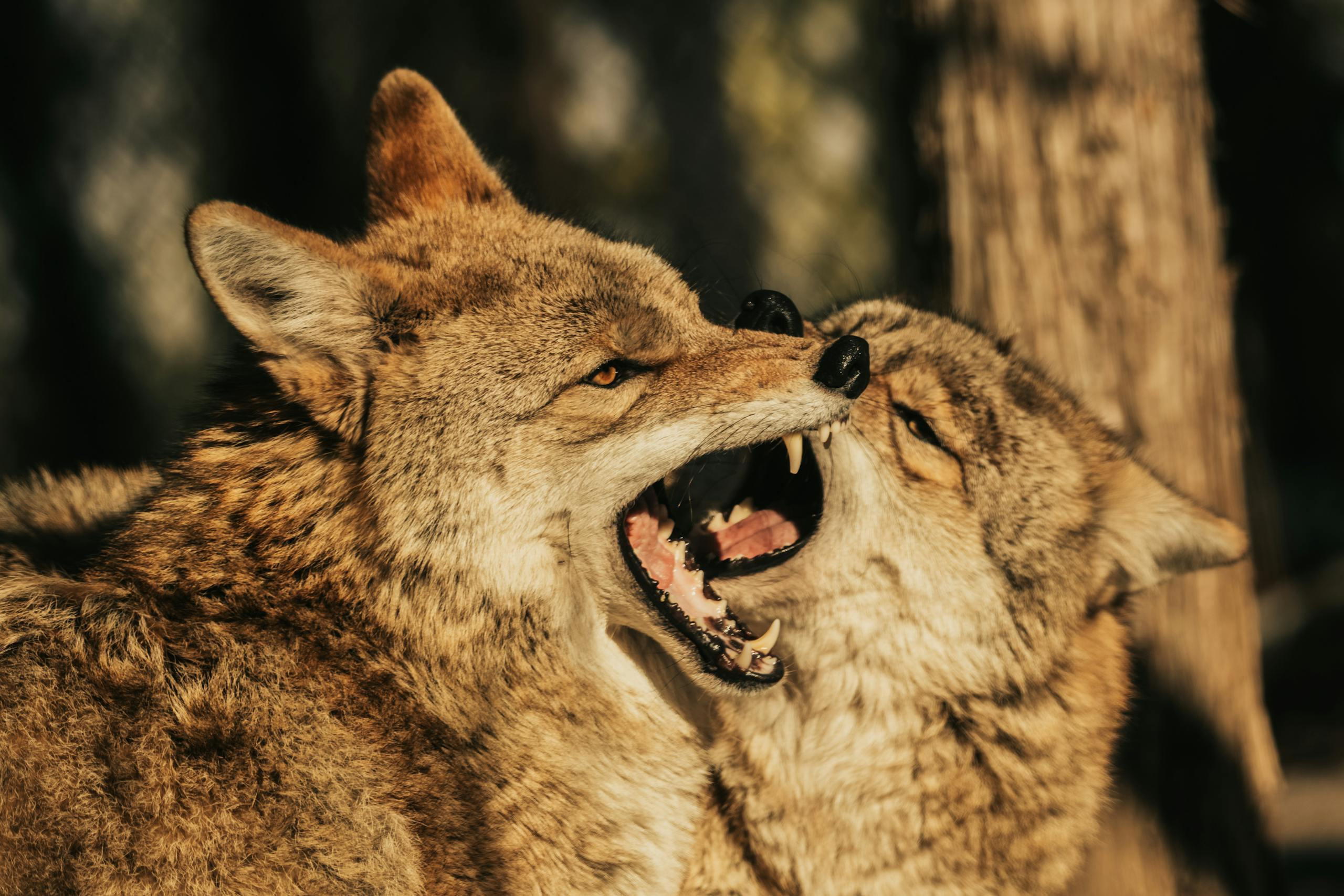
Urban wildlife researchers are uncovering new patterns in how coyotes move through modern cities, and the results offer a clearer picture of where humans are most likely to cross paths with these adaptable predators. A newly published study focusing on Chicago shows that open semi-natural areas inside cities — such as parks, golf courses, and vegetated public spaces — are the places where human activity and coyote activity most often overlap. The findings challenge the assumption that coyotes avoid busy human environments and instead highlight how certain environmental features can draw both species into the same spaces at the same time.
The research team analyzed times and locations when coyotes were active during the same periods that humans were typically outside their homes — working, commuting, exercising, or socializing. By using detailed GPS collar data paired with human activity indicators like traffic volume and population density, the study found a clear trend: overlap between humans and coyotes was far more likely in urban areas with significant open space and less likely in regions dominated by concrete and pavement.
This relationship held even when those open areas were embedded in neighborhoods with high human population density. According to the study, the probability of coyotes using such high-density zones increased 1.8 times when those neighborhoods also contained moderate levels of open space. In comparison, strictly paved environments — industrial corridors, heavily built-up districts, or commercial zones with little vegetation — showed the lowest overlap. These findings suggest that coyotes are drawn to places where natural resources remain abundant despite human presence.
The lead researcher, urban wildlife ecologist Emily Zepeda from The Ohio State University, explains that the overlap is driven by environmental features rather than human demographic factors. In simple terms, it’s less about who lives in a neighborhood and more about what that neighborhood physically looks like. Coyotes appear to seek out zones that offer vegetation, prey animals, and shelter, even when those zones sit directly next to, or within, highly populated residential areas. Humans in turn use these same spaces for recreation and daily routines — creating a natural convergence point.
The study builds on earlier work from Zepeda and her colleagues, who previously found that certain urban features can actually increase the lifespan of city-dwelling coyotes. That earlier research showed that coyotes living in densely populated areas tended to survive longer than those in more isolated or less populated zones. This newer paper digs deeper into how coyotes behave within those dense environments, showing that their movements align with human activity patterns more than expected.
To generate their findings, the researchers relied on data from the long-running Urban Coyote Research Project, which has tracked Chicago’s coyotes for many years. The study focused on 54 coyotes — 44 males and 10 females — each wearing GPS collars that recorded their location every 15 minutes for 24-hour periods, repeated every two weeks. On average, each animal was monitored for 221 days, giving the researchers a robust dataset of movement patterns, habitat use, and behavioral tendencies.
Human activity was estimated using population density data from the U.S. Census Bureau and traffic data from the Illinois Department of Transportation, which consistently shows that the busiest period for urban traffic — and therefore general outdoor human activity — falls between 6 a.m. and 8 p.m. These time blocks were cross-referenced with coyote GPS data to identify moments and locations of overlap.
Interestingly, the study does not claim that the presence of open spaces causes human–coyote interactions. Instead, open spaces correlate with higher overlap because they offer resources that both humans and coyotes independently seek. For coyotes, these include small mammals, shelter from harsh weather, and possible access to human-linked food sources. For humans, these spaces serve as recreational and social areas. The overlap stems from shared preferences rather than direct attraction.
Another important detail is the role of individual variation among coyotes. Although the broader population trend indicates a general avoidance of humans, the study highlights that some coyotes behave differently. These individuals — the ones that remain active when humans are also active and venture near residential or recreational zones — may be disproportionately responsible for the human–coyote interactions reported in Chicago. This variability makes coyotes challenging to study but also helps explain why some neighborhoods report more encounters than others, even when habitat conditions seem similar.
Coyotes tend to avoid direct human contact, and decades of research show that they prefer natural prey like mice, voles, and rabbits rather than household trash. Yet the presence of abundant vegetation and prey in urban green spaces can offset their avoidance tendencies, leading them into closer proximity with people. Risk factors also play into this equation: areas with heavy traffic and pollution present clear dangers to coyotes, as vehicle collisions remain the leading cause of coyote deaths in cities.
The researchers emphasize that understanding this overlap is key to improving coexistence strategies. Since coyotes aren’t leaving cities — and their numbers continue to grow — urban residents and planners need better insights into where and why interactions occur. Open spaces are essential parts of healthy cities, but they may also require targeted management approaches such as educating residents about responsible pet supervision, discouraging intentional or unintentional feeding of wildlife, and monitoring high-overlap zones more closely.
Future research will focus on evaluating how these encounters influence human attitudes toward coyotes and identifying behavioral traits that predict which coyotes are more likely to share space with people. Understanding such patterns can help wildlife managers address conflict more effectively and promote safer interactions for both species.
To round out this topic for readers, here’s a bit more background on urban coyotes themselves and why they are so successful in city landscapes.
Why Coyotes Adapt So Well to Cities
Coyotes are among the most adaptable carnivores in North America. Their success in urban environments comes from several factors:
Flexible diet: Coyotes can live on small mammals, fruits, insects, carrion, and even human-related food sources. This dietary flexibility allows them to thrive in diverse landscapes.
High mobility: Their ability to travel long distances and adjust their home ranges makes it easier for them to navigate fragmented city habitats.
Behavioral adaptability: Coyotes learn quickly, exhibit individual variation in risk tolerance, and can shift their activity patterns to avoid danger — including adjusting to human schedules.
Breeding resilience: Even when population numbers drop, coyotes compensate with higher reproductive rates, making eradication efforts ineffective.
As a result, coyotes now occupy nearly every major North American city, including Chicago, Los Angeles, New York, Denver, and Toronto. They function as apex predators in many of these environments, helping control rodent and small-mammal populations. Their presence introduces both ecological benefits and coexistence challenges, making studies like this one increasingly important for urban planning.
What This Means for City Residents
Urban dwellers frequently ask what they can do to reduce unwanted encounters. Based on years of urban wildlife research, some common recommendations include:
- Keep pets supervised, especially near open spaces.
- Secure garbage and compost bins to remove food incentives.
- Avoid feeding wildlife intentionally or unintentionally.
- Stay aware in parks or golf courses, especially during dawn and dusk.
- Report unusually bold coyote behavior to local wildlife authorities.
These practical steps help maintain a safe balance where coyotes can continue performing their ecological roles without becoming over-accustomed to human behavior.
The new findings reinforce the idea that coexistence depends on understanding where our lives intersect with wildlife and making informed choices about how to navigate those shared spaces.
Research Paper:
https://www.nature.com/articles/s41598-025-16323-8