Turning Regular Cameras Into Powerful Crop Analysis Tools Is Becoming a Reality
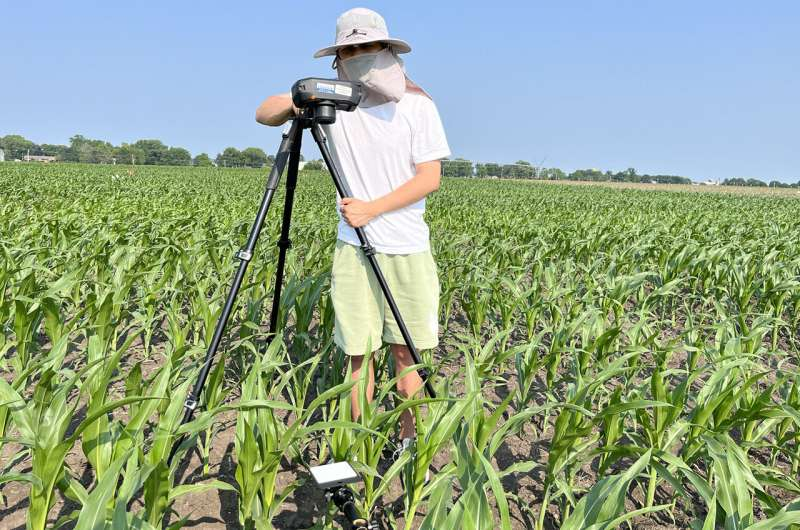
Researchers at the University of Illinois Urbana-Champaign have taken a major step toward making advanced crop analysis affordable and accessible for everyone. Their work explores how ordinary RGB cameras—the same kind found in smartphones—can be transformed into tools capable of performing tasks that traditionally require expensive multispectral or hyperspectral imaging systems. These high-end systems are widely used in agriculture to assess crop nutrients, chemical composition, and overall plant health. But with price tags often above $10,000, they are far out of reach for most farmers and small agricultural businesses.
The team’s latest research shows that with the right machine-learning models, RGB photos can be reconstructed to mimic multispectral or hyperspectral images, capturing valuable information beyond the visible spectrum—especially in the near-infrared range, which is essential for detecting chemical and physiological traits in crops. They published two studies detailing this breakthrough, focusing on sweet potatoes and maize, and even developed a prototype handheld device for real-time field use.
A Major Leap in Hyperspectral Reconstruction for Sweet Potatoes
One of the two new studies centers on creating a massive, publicly available dataset for hyperspectral reconstruction from RGB images. The dataset is called Agro-HSR, and it is specifically designed for agricultural research—something that has been missing in the field.
The dataset contains 1322 reconstructed image pairs from 790 sweet potato samples. Each sample includes RGB images and their corresponding hyperspectral reconstructions. Many sweet potatoes were imaged from both sides, further expanding the dataset and allowing for more robust model training.
For 141 of these potato samples, the researchers also measured key quality attributes, including:
- Brix (sugar content)
- Moisture content
- Dry matter content
- Firmness
These measurements allowed the team to check how well the reconstructed hyperspectral images could predict real chemical traits. The results showed strong correlations, suggesting that RGB-based hyperspectral reconstruction can be a reliable non-destructive alternative to standard lab testing.
The researchers evaluated five popular hyperspectral reconstruction models to see which performed best on the dataset. Two models—Restormer and MST++—consistently outperformed the others across all metrics, showing strong fidelity in reconstructing spectral information from simple RGB inputs.
What makes this dataset especially important is its focus on biological objects. Most publicly available hyperspectral reconstruction datasets involve inanimate objects like furniture or indoor scenes, which behave very differently under light than fruits, vegetables, or field crops. Sweet potatoes, like all biological samples, have complex textures, internal variation, and chemical heterogeneity. Agro-HSR fills this gap and gives researchers a realistic, agriculture-focused dataset to build practical machine-learning solutions.
How Reconstructed Hyperspectral Images Help Farmers and Industry
Hyperspectral imaging is widely used for analyzing crop quality because it provides detailed chemical information without damaging the samples. But until now, doing this at scale has been expensive and technically demanding.
With datasets like Agro-HSR and improved reconstruction tools, it becomes possible to:
- Evaluate sweet potato quality instantly without destructive lab tests.
- Sort and grade crops based on meaningful chemical attributes.
- Reduce waste during harvesting, storage, and transportation.
- Support large-scale breeding programs with faster phenotyping.
This kind of non-destructive, affordable analysis can benefit not only farmers but also food processing companies, exporters, and quality-control labs.
A New Model for Maize Growth Monitoring With RGB-to-Multispectral Reconstruction
The second paper introduces a new deep-learning model designed specifically for reconstructing 10-band multispectral images from RGB photos in maize fields. The model is called Window-Adaptive Spatial-Spectral Attention Transformer (WASSAT), and it was developed to handle the complexity of real-world agricultural environments—something many older models struggle with.
The researchers trained and tested their model on data collected from three locations:
- A field in Hengshui, China
- The U. of I. Plant Biology Greenhouse
- The U. of I. Vegetable Crops Research Farm
These sites provided a variety of conditions, including different soil fertility levels, different lighting environments, and even three stress levels created through flooding in the Illinois field.
Real outdoor images include soil, unpredictable lighting, overlapping leaves, and other noise. To address this, WASSAT combines spatial and spectral attention mechanisms with an adaptive windowing strategy that helps the model identify plants separately from the background. This leads to more accurate reconstruction of multispectral information from simple RGB images.
The reconstructed multispectral images were then used to estimate chlorophyll content, a reliable indicator of plant growth and physiological status. Chlorophyll data helps farmers understand nutrient needs, stress levels, and general plant health.
Across the tested datasets, the predicted chlorophyll values were well aligned with real measurements. This shows the potential of using ordinary cameras to monitor crop growth status in the field.
A Handheld Device That Converts RGB Photos Into Multispectral Images
One of the most practical outcomes of the maize study is a handheld device developed by the research team. This prototype allows a user to:
- Take an RGB photo in the field.
- Let the built-in model convert it into a multispectral image.
- (Future version) Directly display predicted chlorophyll content and growth status.
The goal is to create a device that requires no technical expertise. A farmer could simply point, click, and instantly see meaningful crop information without needing to process multispectral images manually.
This kind of low-cost tool can be incredibly useful for:
- Precision agriculture
- Real-time stress detection
- Fertilizer planning
- Growth monitoring
- Field experiments
- Educational or extension programs
The researchers plan to integrate a prediction model directly into the device so users won’t need to interpret spectral data themselves.
Why RGB-to-Spectral Reconstruction Is a Big Deal
Multispectral cameras are powerful because they capture wavelengths beyond red, green, and blue—especially in the near-infrared range, which reveals information about water content, leaf structure, sugar levels, pigments, and more. These biological traits are invisible to the naked eye and to traditional RGB cameras.
Being able to reconstruct this information from RGB images means:
- Huge cost reductions
- Non-destructive testing
- Fast, real-time field use
- Scalability in developing regions
- Lower barriers for precision agriculture
This technology can democratize crop analysis, making advanced tools available to all levels of farmers instead of just large-scale operations or well-funded labs.
Additional Background: How Hyperspectral and Multispectral Imaging Works
Hyperspectral imaging divides the light spectrum into dozens or even hundreds of very narrow bands. This creates a rich “spectral fingerprint” for each pixel. In agriculture, it can help determine:
- Water stress
- Nutrient deficiencies
- Disease presence
- Sugar and starch levels
- Chlorophyll concentration
- Ripeness and quality
Multispectral imaging, though less detailed, still uses more than the standard three RGB bands—commonly including near-infrared and red-edge bands.
Traditional hyperspectral equipment uses sensors and optics that are:
- Large
- Fragile
- Expensive
- Sensitive to lighting
- Difficult to operate
Machine-learning reconstruction brings these capabilities to low-cost devices by learning patterns between RGB and spectral signatures.
Research Source
Agro-HSR and WASSAT Studies – Computers and Electronics in Agriculture (2025)