Leopard Seal Mothers Show Remarkable Care for Deceased Pups in a Rare and Intriguing Antarctic Behavior
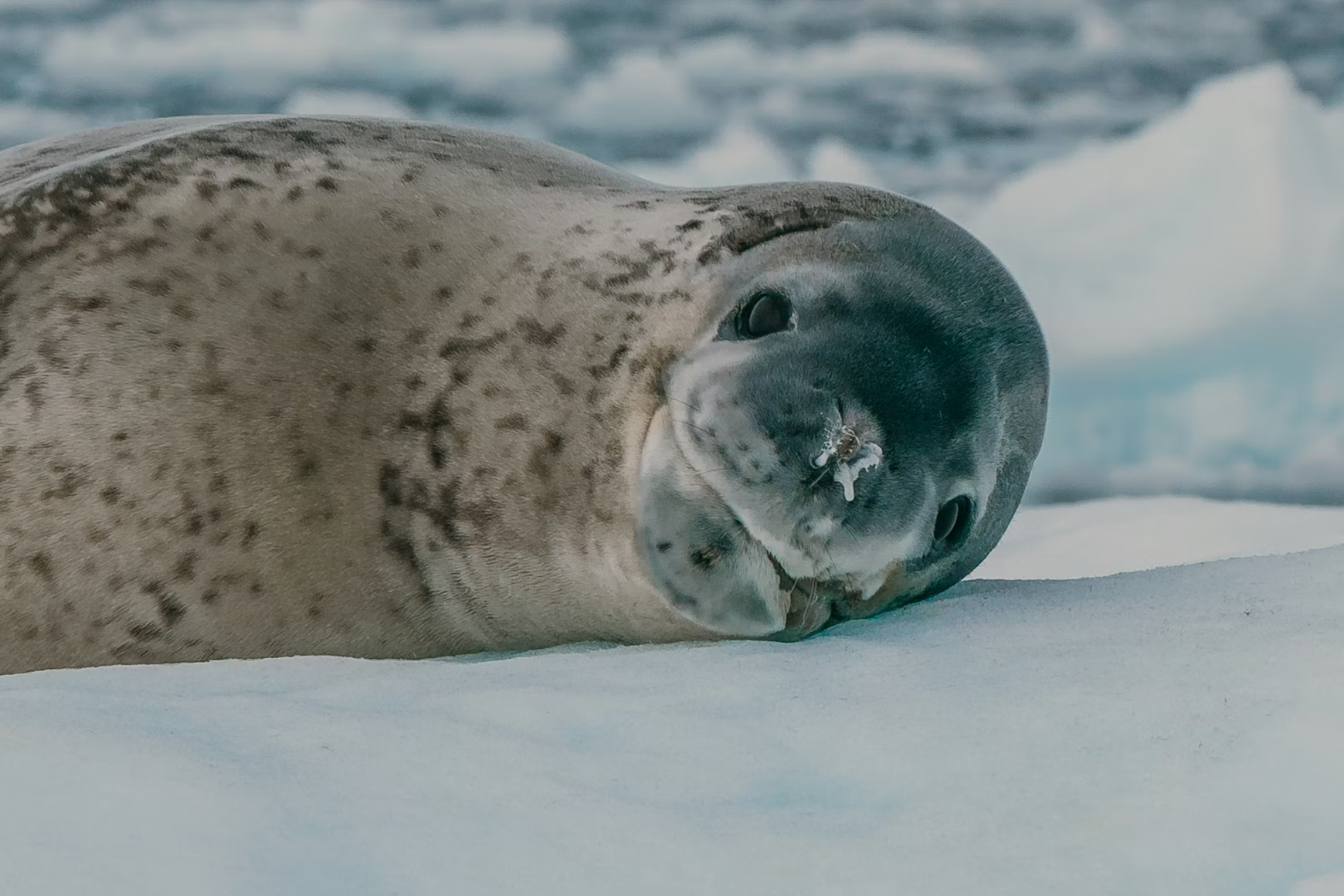
A recent study has revealed an extraordinary and rarely documented behavior in leopard seals, one of Antarctica’s most solitary and elusive marine predators. Researchers observed mother leopard seals engaging in postmortem attentive behavior, or PAB, meaning they continued caring for their deceased pups for unusually long periods. This discovery adds a surprising new layer to what scientists know about maternal instincts in wild mammals—especially in species known for their independence and harsh living environments.
The research, conducted by post-doctoral scientists Emily Sperou and Renato Borras-Chavez from the University of Rhode Island’s CEAL Lab, documents the longest and most extensively verified cases of PAB ever recorded among pinnipeds. Over multiple years, the team witnessed mother seals carrying, guarding, and attending to their lifeless pups for more than 20 days, even transporting them across icy waters and floes. One particular female was confirmed—through unique spot-pattern identification—to have displayed this behavior in three separate years, making it one of the very few recorded instances of repeated PAB by the same individual in any mammalian species.
What the Researchers Observed in Detail
The observations took place in remote regions of Patagonia, Chile, including Laguna San Rafael National Park and parts of Tierra del Fuego. These areas host small aggregations of leopard seals, and their isolation makes direct study extremely difficult.
To track individuals, the researchers relied on the distinct spot patterns of each seal’s hide, similar to matching fingerprints. Thousands of photographs were meticulously analyzed to confirm seal identities and ensure that the behaviors witnessed were indeed repeated by the same mother.
The behaviors recorded included:
- Carrying dead pups in the mouth across long distances
- Remaining close to the carcass for extended periods
- Territorial displays, such as protecting the body from other seals
- Mouthing and nudging, as though attempting to stimulate movement
- Transporting the corpse between ice floes
One case involved a female repeatedly dragging her pup across shifting icy surfaces for over three consecutive weeks, a major physical effort that offered no survival benefit. The researchers describe this as a maladaptive behavior—costly, energy-heavy, and without reproductive advantage.
Yet despite the apparent cost, the mothers did not abandon their pups.
What the Necropsy Revealed About Pup Mortality
A necropsy was performed on one of the pups once the mother finally left the body. The results provided some of the first early-stage anatomical data ever collected for a leopard seal pup. The necropsy showed signs of emaciation, suggesting that the pup died because it was not receiving enough milk.
This raises concerns because, according to field reports, no pups have been observed surviving to weaning in Chile. The study suggests several possible causes:
- Unstable ice platforms may prevent mothers from nursing effectively
- Mothers may face energetic challenges that limit milk production
- Small population sizes may create genetic vulnerabilities
- Environmental pressures could be reducing pup survival rates
Whatever the cause, the repeated pup deaths paired with lengthy maternal PAB make this population especially important to monitor.
Why This Discovery Is Scientifically Significant
Postmortem attentive behavior has been documented before—but rarely, and usually in highly social mammals such as chimpanzees, orcas, dolphins, elephants, and some terrestrial species like dingoes or giraffes. Among marine mammals, PAB is extremely difficult to document because animals spend most of their lives in the water.
Before this study, only six known cases of PAB existed across all pinniped species. The new findings in leopard seals represent:
- One of the longest PAB episodes ever recorded in any mammal
- The first verified recurring PAB by the same pinniped female
- The first detailed necropsy of a very young leopard seal pup linked to behavioral observations
- A major expansion in understanding of maternal behavior in a solitary marine predator
This is particularly unexpected because leopard seals are not social animals. Unlike elephant seals or sea lions, they do not live in large colonies or cooperative groups. Yet this solitary species may display one of the strongest known examples of maternal attachment after offspring death.
Possible Reasons Behind This Behavior
Researchers propose several explanations, and while none can be confirmed yet, all are biologically plausible.
1. Biological and Hormonal Influence
Like all mammals, leopard seals experience strong hormonal surges surrounding birth. Hormones responsible for bonding, care, and nursing don’t disappear immediately when a pup dies. The mother may be compelled by these lingering biochemical signals to continue performing maternal behaviors even without a living pup.
2. Evolutionary Byproduct of Maternal Instinct
A powerful instinct to care for offspring may sometimes persist inappropriately after death. If strong maternal care normally increases survival rates, then occasional maladaptive expressions of that care—such as PAB—may simply be side effects of a generally beneficial trait.
3. Environmental Stress and Confusion
Harsh Antarctic and sub-Antarctic conditions may disrupt normal maternal cues. If pups frequently die before weaning and environmental signals are chaotic, mothers may not receive clear behavioral triggers that usually lead to abandonment.
4. Cognitive or Emotional Response
There is ongoing debate over whether PAB indicates grief-like reactions in mammals. This study does not claim emotional interpretation, but the behavior remains consistent with responses seen in highly intelligent species.
Leopard Seals: Species Overview
Since this discovery is tied to the biology of the species, understanding leopard seals helps provide context.
A Solitary Apex Predator
Despite their sleek appearance, leopard seals are top predators, nearly as fearsome as orcas. Their diet includes penguins, fish, cephalopods, and even other seals.
Anatomy and Adaptations
- They have massive jaws capable of powerful bites.
- Their bodies are built for agility, with long, torpedo-like shapes.
- The distinctive spotted coats give them their common name.
These spot patterns, luckily, also make long-term individual tracking possible.
Reproduction
Little is known about their reproductive ecology because they breed in remote areas. Most pups are born on ice floes, making direct study rare. Typical maternal care for healthy pups includes:
- Nursing for several weeks
- Staying close while the pup remains immobile
- Frequent vocal communication
But none of these behaviors were enough to ensure pup survival in the Chilean population being studied.
Why This Behavior Matters for Conservation
Because pup survival appears extremely low in the study area, researchers highlight potential concerns:
- Climate change is altering ice stability, reducing nursery platforms.
- Small regional populations may become genetically vulnerable.
- High energy demands on mothers could worsen with warming oceans affecting prey availability.
Understanding maternal behavior—including maladaptive forms—helps scientists evaluate population health and anticipate changes in reproductive success.
Final Thoughts
The discovery of long-term postmortem attentive behavior in leopard seals opens important new questions about maternal biology, environmental stress, and the emotional or instinctive depth of wild animals. It also underscores how much remains unknown about species that live far from human observation. As researchers continue using new tools—including an upcoming algorithm designed to identify leopard seals by their spots—future studies may reveal more about why these mothers hold on so tightly to pups they’ve already lost.
Research Paper:
Postmortem attentive behavior in leopard seals: insights into mother–pup interactions
https://link.springer.com/article/10.1007/s00300-025-03433-2