Oregon Elk Show Promising Genetic Advantage Against Chronic Wasting Disease
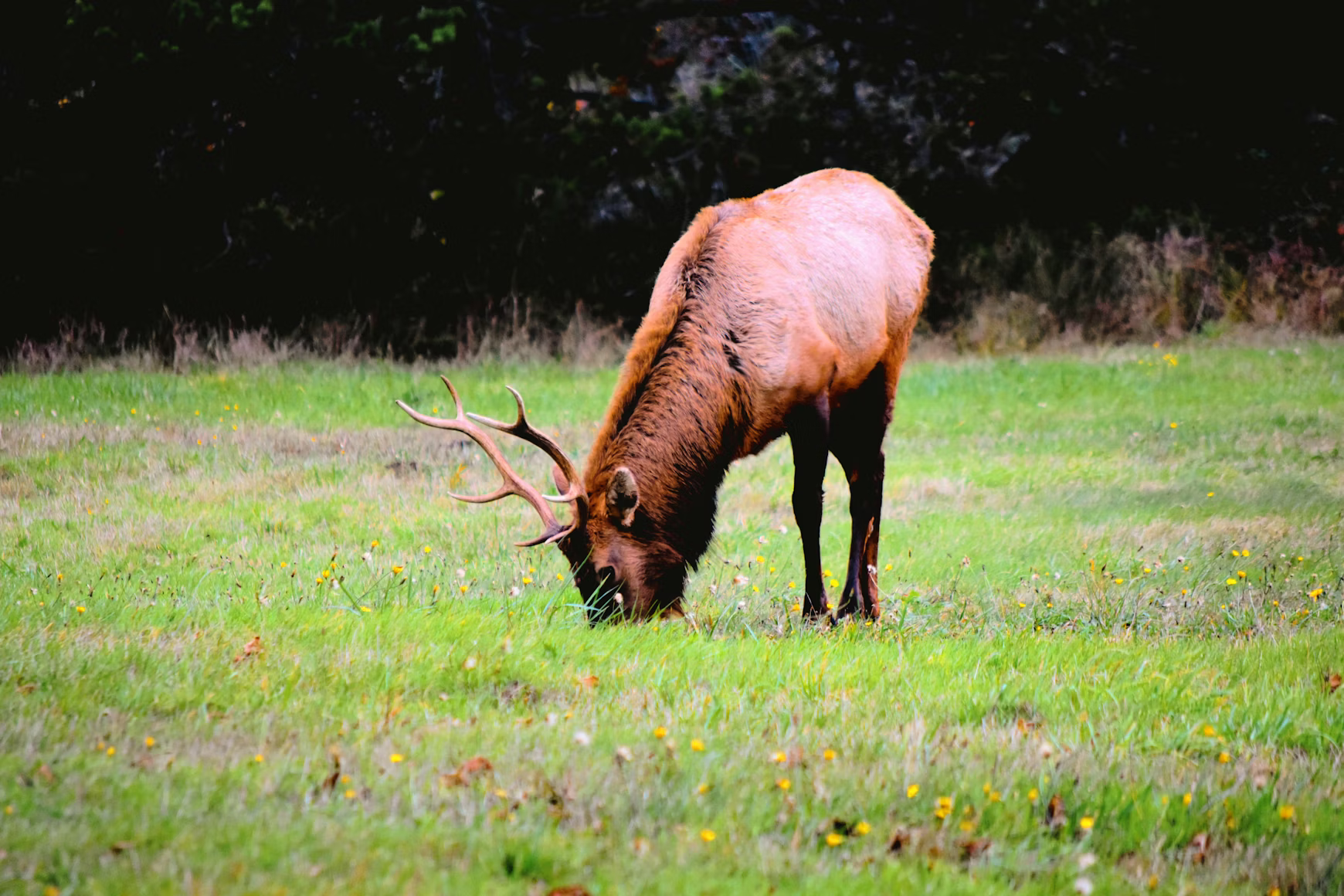
A new study has revealed that nearly half of Oregon’s elk population carries a genetic variant that could help slow the spread of Chronic Wasting Disease (CWD) once it reaches the state. While CWD has not yet been detected in Oregon, wildlife researchers consider its arrival almost inevitable, especially with confirmed cases now appearing just across the border in Idaho. This discovery offers a bit of good news for Oregon’s elk, even though it does not guarantee safety from the disease.
CWD is a fatal neurological illness caused by misfolded prion proteins. It affects elk, deer, and other cervids across North America. First identified in the late 1960s, the disease has expanded dramatically and is now present in dozens of U.S. states and Canadian provinces. Its rapid spread and environmental persistence have made it one of the most challenging wildlife diseases to control.
This latest research, conducted by scientists at the University of Illinois Urbana-Champaign, examined a specific gene known as PRNP, which encodes the prion protein. Certain variants of this gene have been linked to reduced susceptibility or slower disease progression in infected animals. In elk, a particular form of the gene—one that produces the amino acid leucine instead of methionine at a crucial location known as codon 132—has been associated with slower development of CWD symptoms.
Researchers sequenced the PRNP gene in 183 elk from across Oregon. The study included 82 Rocky Mountain elk from the eastern part of the state and 101 Roosevelt elk from the western regions. Notably, this is the first time Roosevelt elk have been genetically analyzed for prion-related variants. The results showed that 42% of Roosevelt elk and 49% of Rocky Mountain elk carried at least one copy of the leucine-encoding allele. These numbers are relatively high compared to other elk populations across the United States.
This genetic advantage matters because populations without protective PRNP variants can experience rapid, severe die-offs once CWD becomes established. Elk with the leucine variant still get infected and eventually die, but the progression of the disease is typically slower. That extra time may reduce how quickly infected animals spread prions into the environment or infect herd mates. It also gives wildlife agencies a longer window to identify and manage an outbreak.
The study also built on earlier findings about Oregon’s Columbian white-tailed deer, a rare subspecies found only in two regions of the state. Previous testing of these deer in Douglas County revealed an alarming fact: none carried the protective PRNP variant. This suggests that, if CWD spreads through elk first—as researchers consider likely—the deer could be at extreme risk.
Oregon’s wildlife officials have already established a robust testing program. The Oregon Department of Fish and Wildlife (ODFW) offers CWD testing for elk and deer harvested by hunters or recovered after vehicle collisions. Maintaining high testing numbers helps the agency detect any early sign of the disease entering the state.
If an infection were to be confirmed, ODFW’s strategy would involve reducing herd density in affected areas to minimize “nose-to-nose contact,” one of the primary ways the disease spreads. Managing density helps curb transmission, even though prions can also persist in soil, vegetation, and water for years. While there is no evidence that CWD infects humans, wildlife officials note that its presence can discourage hunting, potentially affecting local economies and community practices.
The new genetic findings help wildlife managers anticipate how CWD might behave if introduced to Oregon’s landscape. Knowing that nearly half of the elk population carries a potentially advantageous variant allows for more informed planning. Still, experts stress that this variant cannot stop CWD, only slow its progress. And because prions can spread between cervid species, elk infections could quickly create problems for more vulnerable species like the Columbian white-tailed deer.
What Exactly Is Chronic Wasting Disease?
To give readers more context, it’s useful to understand how CWD works. CWD belongs to a family of illnesses known as transmissible spongiform encephalopathies (TSEs). These diseases involve prions—proteins that fold incorrectly and encourage other proteins to misfold as well. Over time, these malformed proteins accumulate in the brain, causing severe neurological damage.
Common symptoms in infected animals include extreme weight loss, lack of coordination, drooling, apathy, and unusual behavior. The disease is always fatal, and there is no cure or vaccine. CWD is related to scrapie in sheep and Creutzfeldt-Jakob disease in humans, though there is currently no documented case of CWD jumping to humans.
Because prions shed through saliva, urine, feces, and even carcasses, the environment itself can become a long-term reservoir of infection. This makes prevention far easier than eradication.
Understanding the PRNP Gene and Its Role
The PRNP gene is present in all mammals and produces the normal prion protein. Variations in this gene can influence how susceptible an animal is to prion diseases. In elk, the critical location is codon 132, where the amino acid can be either methionine (M) or leucine (L). Elk with the leucine variant (L) generally have slower disease progression.
Genotypes can be:
- M/M – most susceptible
- M/L – intermediate susceptibility
- L/L – slowest progression
The Oregon elk population’s relatively high proportion of L-carrying elk may provide an important buffer as CWD approaches the state.
Why This Research Matters for Oregon and Beyond
Even though Oregon hasn’t detected CWD yet, most wildlife scientists believe the disease will eventually arrive. The proximity of cases in Idaho and the widespread national distribution of the disease strengthen this expectation.
The new study provides critical insight into how prepared Oregon’s elk may be. It highlights the need to:
- Continue or expand CWD surveillance
- Protect vulnerable species like Columbian white-tailed deer
- Plan rapid management responses
- Educate hunters and the public
CWD’s resilience in the environment makes it one of the most difficult wildlife diseases to combat. Any natural genetic factor that slows its spread is valuable, even if it is not a solution on its own.
Research Paper Link
PRNP variant frequencies in Roosevelt and Rocky Mountain elk (Cervus canadensis) from Oregon and their implications for chronic wasting disease
https://doi.org/10.1093/jhered/esaf096