Parasitic Ant Queens Manipulate Workers Into Killing Their Own Mother to Seize the Throne
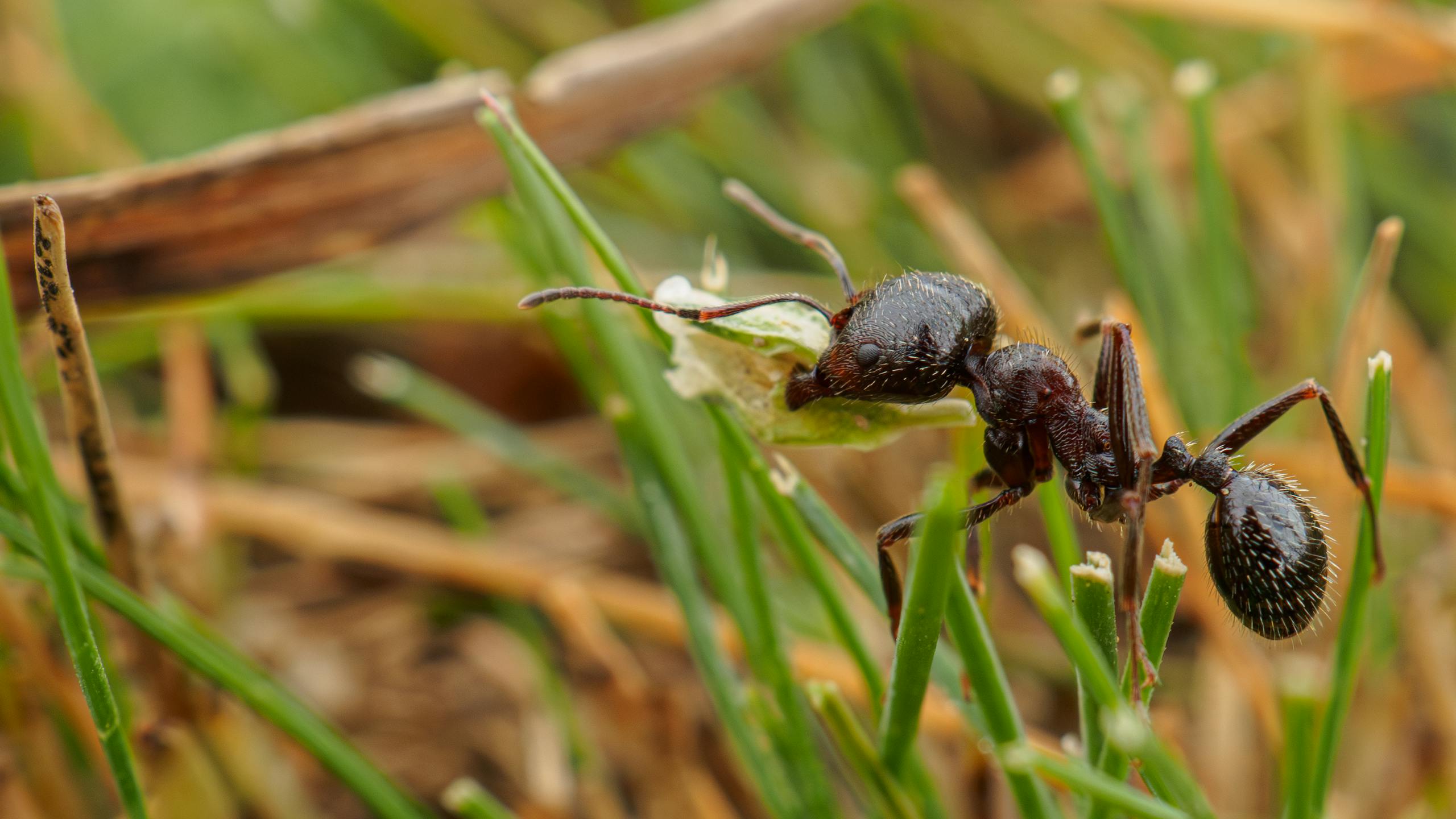
A newly published study has uncovered a remarkable and unsettling strategy used by two parasitic ant species to take over the colonies of closely related ants. Instead of fighting, these invading queens rely on chemical deception to make the host workers kill their own mother—the resident queen—so the impostor can claim the throne. The research, appearing in Current Biology on November 17, offers the most detailed documentation to date of this highly specialized form of social parasitism, and it expands our understanding of how far evolution can push the boundaries of insect manipulation.
The Species Involved and Why They Do This
The parasitic queens belong to Lasius orientalis and Lasius umbratus, both sometimes referred to in Japan as “bad-smell ants.” Their hosts are Lasius flavus and Lasius japonicus, which normally maintain stable colonies led by a single egg-laying queen. Like many ant species, these hosts rely heavily on chemical cues—particularly colony-specific odors—to identify nestmates, detect intruders, and maintain social order.
Instead of establishing a nest of their own, the parasitic queens infiltrate the colonies of these host species to exploit the existing workforce. This allows them to shortcut the strenuous early stages of colony founding, which often result in failure for queens that attempt to start colonies independently.
Chemical Camouflage: The First Step
To enter a colony without being attacked, the parasitic queen must first disguise herself. Before approaching the nest, she acquires the colony’s odor by rubbing against host workers found outside the nest or contacting materials that carry the colony scent. Ants operate in what researchers often call a “world of odors,” and smell is their primary method for determining friend or foe. Once the intruding queen smells like a member of the colony, the workers allow her inside.
This odor-matching technique is not new in the world of ant parasitism. But what happens next is what makes this newly described behavior so extraordinary.
A Chemical Trigger for Matricide
Upon locating the resident queen, the parasitic queen deploys a chemical attack—but not in the usual way. Instead of spraying to kill, she sprays to frame the host queen as an enemy.
In both Lasius orientalis and Lasius umbratus, the invading queen sprays the resident queen with a strong-smelling secretion that researchers believe is formic acid. This chemical is widely used as a defensive compound among ants in the subfamily Formicinae, and it has a harsh, pungent odor.
When the parasitic queen douses the host queen with this chemical, it covers or distorts the queen’s normal scent signature. Ant workers respond aggressively to unfamiliar or offensive odors, so when they detect their own queen emitting the wrong scent—especially one associated with threat or alarm—they attack.
What makes this behavior even more fascinating is how calculated it is. The parasitic queen retreats immediately after spraying, staying safely out of range so that the angry workers do not turn on her as well. She knows the fluid she used is dangerous not only to the host queen but to herself if workers associate her with the smell.
How the Matricide Unfolds
The study documented how these chemical attacks differ between the two parasitic species:
- In Lasius umbratus, a single queen could trigger matricide with only a couple of sprays. Workers responded quickly and violently.
- In Lasius orientalis, the process was slower and more methodical, sometimes requiring around 15 separate sprayings across nearly 20 hours. The workers took longer—up to four days—to fully kill their queen.
Regardless of the timing, the end result was the same: the host queen died not at the jaws of the intruder but at the hands of her own daughters, who had been chemically misled into treating her as an enemy.
The Parasitic Queen Takes Over
Once the host queen is dead and the panic subsides, the parasitic queen returns to the brood chamber. Because she still carries the correct colony odor (and because the workers are now queenless), they accept her. She begins laying eggs, and the workers care for her offspring as if they were their own.
From that point forward, the parasitic queen becomes the sole reproductive ruler of the colony—an entirely new monarch installed through deception rather than combat.
Why This Discovery Is Significant
Matricide in nature is rare, and when it does occur, it usually benefits either the mother (who sacrifices herself for her young) or the offspring (who gain nutrients or a reproductive advantage). What makes this newly described behavior exceptional is that neither the mother nor the offspring benefit. Only the parasitic queen wins.
This is the first detailed demonstration of a chemical strategy that manipulates host workers into killing their queen without the parasite needing to engage in direct combat. Prior to this, there were anecdotal reports that workers sometimes killed their queen when a parasite was present, but the mechanism was unknown. This study provides the first clear evidence of how it happens.
It also appears that both species evolved this strategy independently, suggesting that the ecological benefits of this takeover method may be strong enough to arise multiple times in evolution.
Why Formic Acid Plays Such a Key Role
Formic acid is a hallmark of ants in the Formicinae subfamily. These ants can spray it from a specialized gland, and it typically functions as:
- a chemical weapon
- a defense mechanism
- an alarm signal
By hijacking this chemical system, the parasitic queens essentially weaponize the host colony’s own communication tools. Because formic acid carries a strong aversive odor, even a small amount on the host queen is enough to disrupt normal recognition and provoke aggression.
While the researchers strongly suspect formic acid is responsible, chemical analysis has not yet definitively confirmed it. The smell, behavior, and known biology of these species, however, make it the most likely candidate.
Could This Happen in Other Species?
The researchers point out that this behavior may extend beyond the species they studied. They note that any insect society driven by chemical recognition could potentially be vulnerable to similar manipulation. Although formic acid is unique to certain ants, other chemicals used by ants, bees, or social wasps might serve comparable functions.
This raises broader questions about:
- how widespread chemically induced social collapse might be
- whether other parasitic insects use comparable strategies
- how colonies maintain stability despite these vulnerabilities
Future research may uncover similar behaviors in other species—or perhaps entirely new forms of manipulation that scientists haven’t yet imagined.
A Look at Social Parasitism in Ants
To give broader context, social parasitism is well known among ants. Some species raid and enslave workers from other colonies. Some live permanently inside foreign nests while doing little or no work. Queens from many parasitic species are adapted for stealth, infiltration, or aggressive takeover.
But this new discovery adds a layer of subtlety and sophistication. Instead of attacking or overpowering the host queen, these parasitic ants use behavioral manipulation, turning the colony’s own defensive instincts against itself.
What This Means for Our Understanding of Ant Societies
This research highlights how sensitive and finely tuned ant social systems are. A colony functions by cooperation and recognition, but those same systems can be exploited by species that evolve to slip through those chemical defenses.
It offers an important reminder that even highly efficient, tightly regulated societies can be vulnerable to deception—especially when that deception takes advantage of their strongest instincts.
Research Paper
Host daughter ants manipulated into unwitting matricide by a social parasitic queen
https://www.cell.com/current-biology/fulltext/S0960-9822(25)01207-2