Lethal Aggression in Chimpanzees Linked to Larger Territories and Better Infant Survival
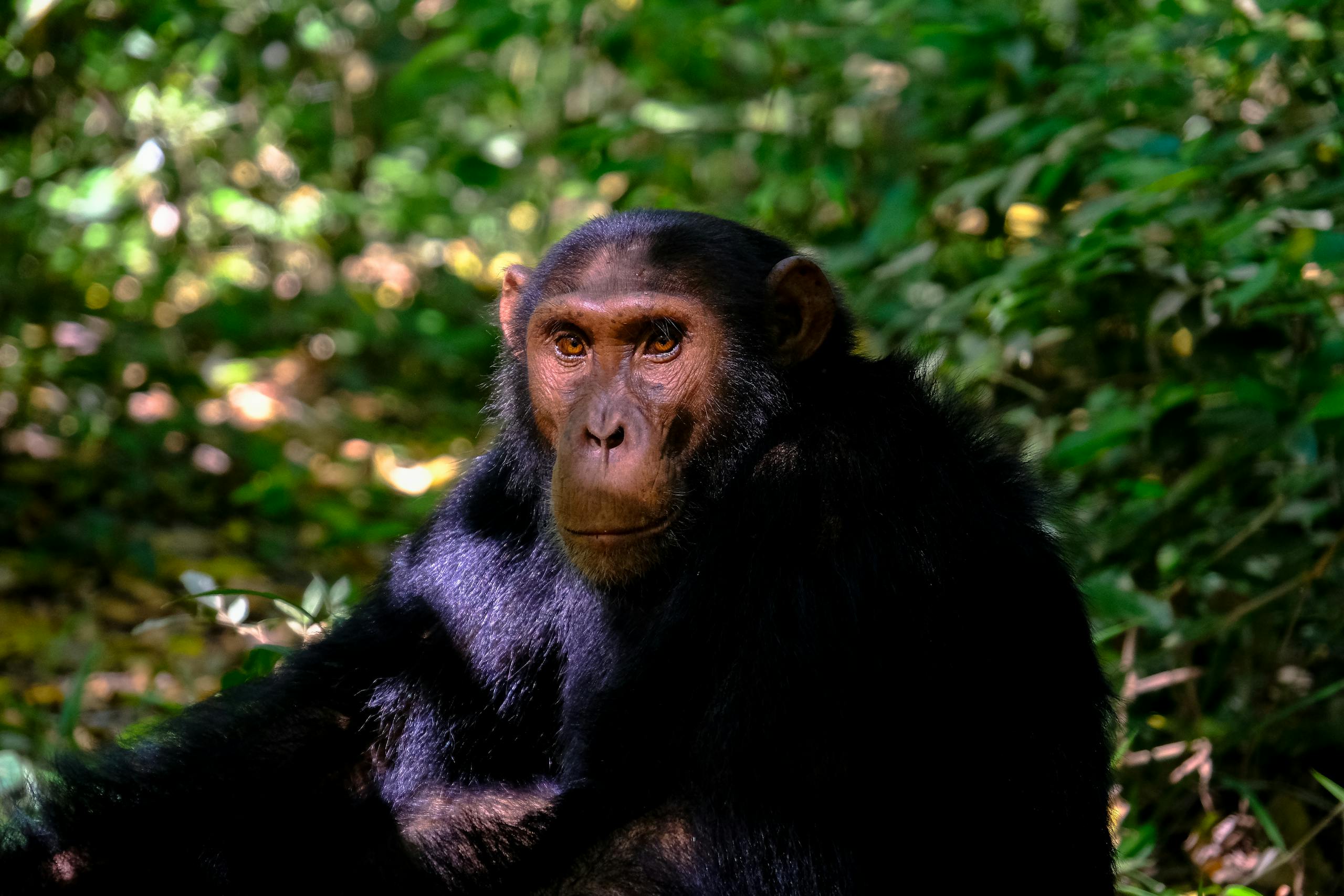
A new long-term study on wild chimpanzees has revealed a striking connection between lethal intergroup aggression, territorial expansion, and a dramatic rise in both female fertility and infant survival. The research focuses on the well-known Ngogo chimpanzee community in Uganda’s Kibale National Park—a group already famous among primatologists for its large size, coordinated patrols, and intense clashes with neighboring groups. This fresh analysis provides some of the clearest evidence to date that when chimpanzees gain territory through violent encounters, they also gain significant reproductive advantages.
The study, led by Brian Wood of UCLA along with colleagues from the University of Michigan, Yale University, and Arizona State University, was published in the Proceedings of the National Academy of Sciences in 2025. What makes this work particularly compelling is the multi-decade dataset behind it. Researchers have observed the Ngogo community for more than thirty years, giving them a rare opportunity to connect long-term patterns of aggression, ecological change, and reproductive outcomes in a single population.
According to the study, the Ngogo chimpanzees carried out a series of coordinated attacks over a span of years that resulted in at least 21 deaths of chimpanzees from neighboring groups. Following these incidents, the Ngogo community physically expanded its territory by 6.4 square kilometers, which amounted to a roughly 22% increase of their range. This change wasn’t gradual or ambiguous—the territorial jump occurred clearly and measurably, making it possible to directly compare reproductive trends before and after the expansion.
The reproduction data is where things become especially interesting. In the three years before the expansion, females at Ngogo produced 15 births. In the three years after, they produced 37 births, more than double the earlier rate. The boost didn’t end there. Infant survival improved dramatically: before expansion, young chimpanzees had around a 41% chance of dying before age three. After expansion, that risk plummeted to just 8%. The difference is so sharp that the authors describe it as one of the clearest demographic shifts ever recorded for a wild chimp community.
The researchers also calculated age-specific fertility rates, which help account for differences in the number of reproductive-age females and their ages. These rates likewise increased after the territorial gain. Their projections suggest that if a typical Ngogo female lived to age 50 and reproduced under the post-expansion conditions, she would be expected to produce around 7.4 offspring that survived to at least age three. Under pre-expansion conditions, that number would have been just 2.2. For evolutionary biologists, this is an enormous shift in what is known as fitness, meaning the number of surviving offspring an individual is expected to produce.
The question, of course, is why such a dramatic improvement occurred. The researchers tested several possible explanations. One hypothesis was that females might have been giving birth more frequently because infants were dying quickly—a well-known pattern in primates, where faster reproduction often follows high infant mortality. This idea was ruled out because infant survival actually improved. Another possibility was that food availability increased naturally or due to climatic cycles, but fruit abundance within Ngogo’s pre-expansion core area remained stable or even declined slightly after the territory grew. That meant ecological cycles alone could not explain the better reproductive performance.
The team concluded that the most likely explanation involves improved nutrition, reduced feeding competition, and lower risk from neighboring groups. When a chimpanzee community expands its territory, it typically gains access to more fruit trees, more foraging space, and more buffer zones that keep rival groups farther away. Nutritional condition is one of the strongest predictors of fertility and offspring survival in primates. Females that eat well ovulate more regularly, carry pregnancies more successfully, and produce more robust infants. Infants, in turn, thrive when mothers can maintain good physical condition. The Ngogo females, benefiting from expanded access to resources and reduced threats, likely experienced exactly this.
Territorial expansion following lethal aggression also tends to thin the ranks of rival groups—especially rival males—who pose a danger to infants. Infanticide is a documented threat in chimpanzees, practiced both within and between groups. With many neighboring males killed during the territorial conflict, Ngogo infants faced reduced external risk, contributing to the unusually high survival rates.
These findings also have deeper implications for understanding the evolutionary backdrop of chimpanzee—and potentially human—behavior. Chimpanzees and humans share a close evolutionary history, and both species exhibit forms of coalitionary aggression. While the authors emphasize that human societies have developed far more complex social norms, ethical frameworks, and conflict-resolution mechanisms, the biological underpinnings of territorial competition may have deep roots stretching back to our common ancestors. When resources are scarce, and when acquiring additional space yields clear reproductive advantages, natural selection can favor groups that cooperate aggressively.
The Ngogo results help clarify why coordinated violence evolved among chimpanzees in the first place. For decades, primatologists debated whether lethal aggression provided any measurable evolutionary benefit or whether it was merely a byproduct of social tension and opportunity. This study provides unusually strong, data-rich evidence that lethal aggression can directly translate into the ultimate evolutionary currency: more surviving offspring.
Beyond the main findings, it’s worth considering some broader facts about chimpanzee behavior and ecology to round out the picture:
The Social Structure of Chimpanzee Communities
Chimpanzees live in what researchers call a fission–fusion society. Large communities fragment into smaller subgroups that change composition throughout the day. Males typically stay in their birth groups, forming alliances and hierarchies, while females often transfer between communities. This structure creates conditions for complex cooperation among males—particularly during patrols along territorial boundaries.
Chimpanzee Territoriality
Territorial patrols are routine among many chimp communities. Males walk silently along borders, listening for rival groups. If they encounter isolated individuals from another group, especially males, attacks may occur. These aggressions are strategic rather than chaotic; chimps often outnumber their targets before striking. Over time, such killings reduce the size of neighboring groups, setting the stage for possible territorial takeover.
Infanticide in Chimpanzees
Infanticide plays a role in chimp social dynamics, though it is not random violence. In some cases, males kill infants they are unlikely to have fathered to bring the mother back into estrus sooner. Between groups, infants may be killed during raids or territorial clashes. The drop in such threats after the Ngogo expansion helps explain why infant survival soared.
Long-Term Field Research
Studies like this are possible only because researchers have spent decades observing the same populations under consistent methods. Longitudinal datasets allow scientists to detect patterns that would be invisible in short-term projects. The Ngogo community, in particular, has one of the richest long-term data records for any wild chimp group.
The Ethical Debate
It’s natural for readers to wonder whether lethal aggression means chimpanzees are “violent” in a moral sense. Researchers emphasize that chimp behavior should not be judged by human ethical standards. Their actions, while sometimes shocking to witness, arise from ecological pressures and evolved strategies—not concepts of right and wrong. At the same time, the study highlights why humans, unlike chimpanzees, have worked to develop cultural systems that reduce conflict and promote cooperation across groups.
The Ngogo study provides a clear window into the evolutionary logic behind intergroup aggression in one of our closest relatives. It shows how territorial gains achieved through violent means can cascade into better nutrition, higher fertility, and greater infant success—factors that, in evolutionary terms, define a group’s survival prospects. While humans have diverged significantly in our social complexity and moral reasoning, understanding the biological roots of such behavior can help illuminate where we came from and why cooperation and conflict have both shaped our species.
Research Paper:
https://doi.org/10.1073/pnas.2524502122