Thirty Years of Pacific Northwest Bird Research Reveals Their Remarkable Resilience to a Warming Climate
A new long-term study of birds in the Pacific Northwest has delivered a surprisingly hopeful message: despite three decades of warming temperatures, most mountain-dwelling bird species in this region appear to be stable, adapting, and even increasing in abundance at higher elevations. This finding comes from a unique 30-year “snapshot” comparison that revisited bird survey sites first studied in the early 1990s, providing rare insight into how wildlife responds to climate change over meaningful ecological timescales.
The project began when Benjamin Freeman, an Assistant Professor in the School of Biological Sciences at the Georgia Institute of Technology, came across a decades-old field study by researcher Louise Waterhouse. Waterhouse had documented bird communities across mountain habitats near Vancouver, British Columbia. Her work included detailed notes and hand-drawn maps of high-elevation sites—information that made a resurvey possible even after so much time had passed.
Freeman, who grew up in Seattle and typically studies tropical birds, recognized the extraordinary opportunity these maps offered. He set out to relocate and re-survey every one of Waterhouse’s original sites, essentially stepping back into the same forest clearings, ridgelines, and old-growth stands that had been studied 30 years earlier. This process wasn’t simple. Many of the sites could only be reached by trekking across rugged terrain, navigating snow-covered trails, and matching faint landscape features to Waterhouse’s hand-drawn sketches. Freeman described the experience as a kind of ecological scavenger hunt—equal parts challenging and rewarding.
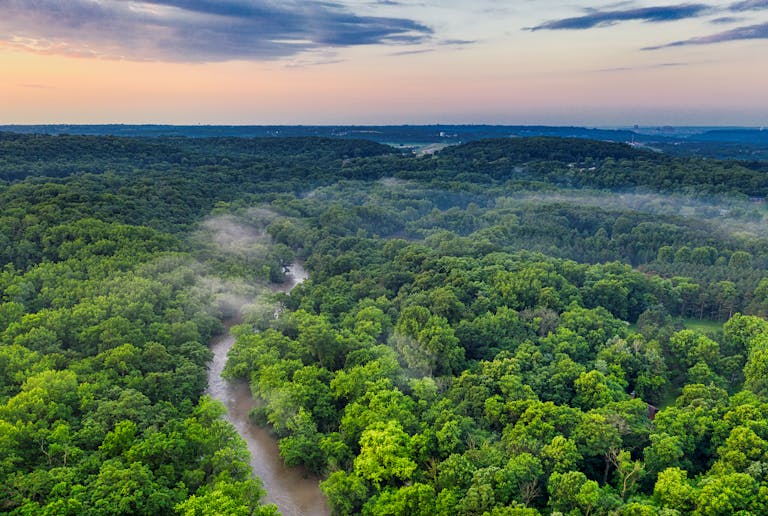
The fieldwork took place during late May through June, the peak breeding season when birds are most vocal and therefore easiest to detect. Even then, the mountains often remained covered in patches of lingering snow. Freeman began his hikes before dawn each day, moving through cold, quiet forests until the first chorus of birds signaled the start of the survey windows. These high-elevation habitats are dotted with old-growth forests, which in this part of the Pacific Northwest form pockets of ancient, unlogged ecosystems that feel untouched despite decades of environmental change around them.
Once the new bird counts were complete, Freeman and a team of collaborators—including researchers from The Nature Conservancy, the University of British Columbia, the Canadian Wildlife Service, the British Columbia Ministry of Water, Lands and Resource Stewardship, and the British Columbia Ministry of Forests—compared the 2020s data to the early-1990s baseline. Their results were published in the scientific journal Ecology under the title Pacific Northwest birds have shifted their abundances upslope in response to 30 years of warming temperatures.
The clearest trend was that temperatures in the region had risen across the three decades, yet most bird species had not declined. Instead, many species showed their highest abundance at higher elevations compared to the 1990s. Put simply, birds appear to be following cooler conditions upward as the climate warms—a predictable response, but one that could have led to trouble if species were losing ground elsewhere. What made the results striking was that lower-elevation populations remained largely intact rather than disappearing. This suggests a form of resilience: the species are expanding or strengthening their numbers at higher elevations while still maintaining their presence downslope.
Ecologists often talk about several possible responses to climate warming. One is the “escalator to extinction” scenario, in which species shift higher until they run out of mountain habitat and begin to disappear. Another is “upslope lean,” where species increase at upper elevations without retreating from lower ones. And a third is “persist-in-place,” meaning species remain stable across the entire elevation range. According to the data from this study, most Pacific Northwest birds fit the upslope-lean pattern, which is a much more encouraging outcome than the catastrophic escalator scenario.
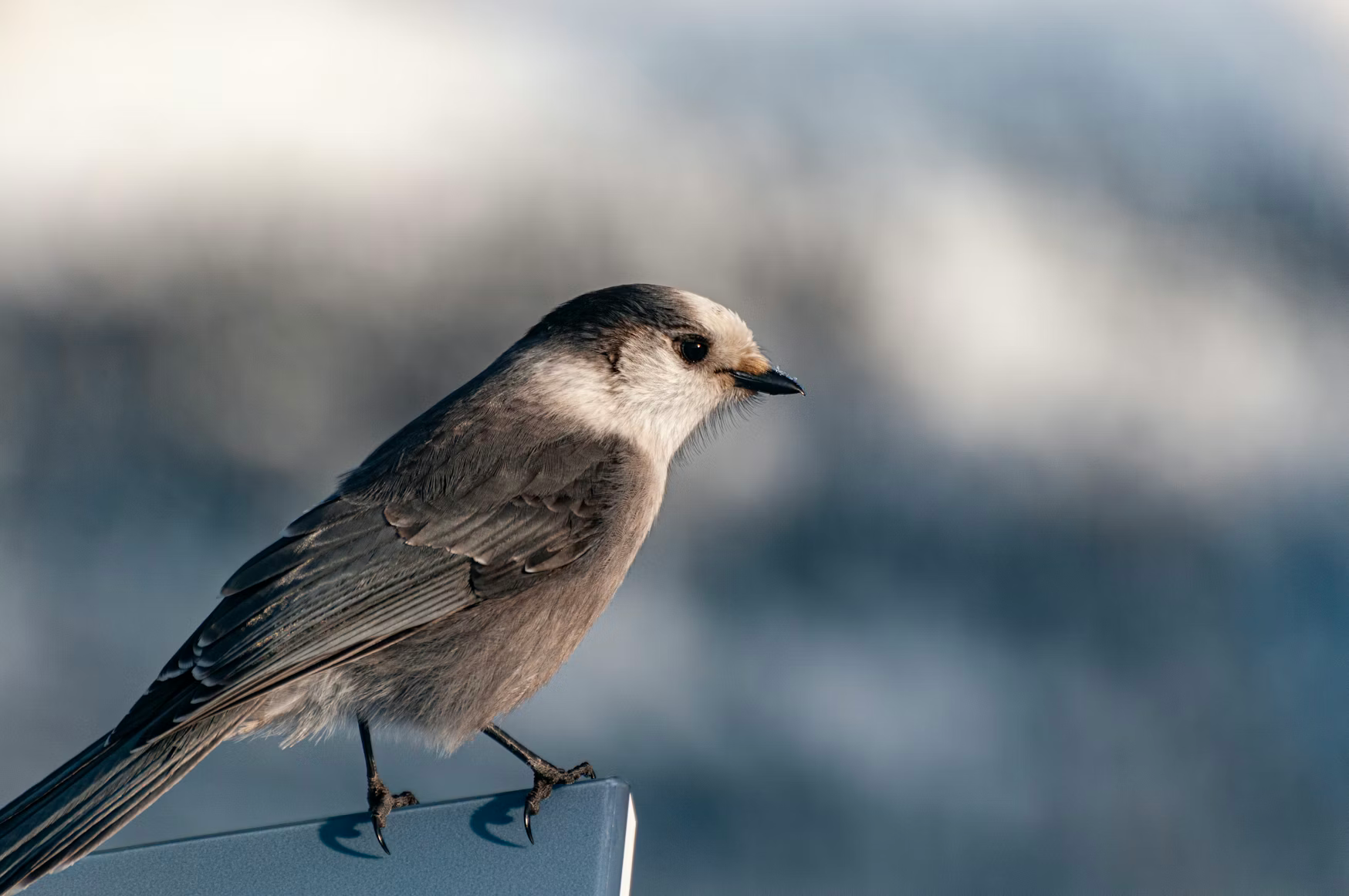
However, this doesn’t mean every species is doing well. The study highlights one notable exception: the Canada Jay, a gray-and-white bird known for its bold behavior and habit of following hikers in search of food. Canada Jays have shown significant declines in this region over the study period. Their sensitivity may be tied to warming winters, which can spoil their food caches. While the broader bird community appears resilient, species like the Canada Jay may need targeted conservation action to avoid long-term declines.
One possible explanation for the overall resilience may lie in the old-growth forests where much of the work took place. These ancient ecosystems provide stable, structurally complex habitats that can buffer wildlife from some climate impacts. Freeman and colleagues suggest that preserving wide swaths of mountain forest—including high-elevation regions—could help maintain this resilience as warming continues in coming decades.
The study also has broader implications beyond the Pacific Northwest. Freeman has conducted similar snapshot-style resurveys in other regions and notes a pattern: temperate ecosystems—like those in the Pacific Northwest and likely the Appalachian Mountains, where he is now studying birds with students—seem to support a higher proportion of resilient species. In contrast, tropical ecosystems tend to show the opposite trend, with many species vulnerable to even small temperature increases. This difference matters because tropical birds often live within much narrower temperature ranges and have fewer options for shifting their distributions.
These findings underscore the importance of maintaining detailed ecological records and returning to long-studied sites. Historical field notes, even those made without long-term intentions, can become invaluable tools for understanding how climate change reshapes ecosystems over time. The ability to compare two true “snapshots” separated by decades is rare in ecology and provides a stronger basis for detecting real population changes.
Beyond the specifics of this study, it’s also helpful to understand why elevation-related shifts are so central in climate research. Mountain ecosystems create natural gradients where temperature drops with altitude. This means that even small amounts of warming can push species upslope by dozens or hundreds of meters. Many bird species respond by changing where they breed, forage, or find suitable habitat. As long as there is enough mountain left above them, these shifts can continue without major harm. But where mountains are small or temperatures rise too quickly, species face much greater risk.
In the Pacific Northwest, the combination of tall mountain ranges and intact forest cover seems to be offering birds the room they need to adjust. Still, researchers emphasize that climate trends are accelerating and long-term monitoring will remain crucial. Every species responds differently, and the fate of vulnerable birds like the Canada Jay shows that resilience in a community does not guarantee resilience for all its members.
This study serves as both a hopeful update and a reminder of the need for ongoing conservation. Protecting mountain habitats, especially old-growth forests, may be one of the most effective strategies to support wildlife adaptation. And as more snapshot studies are completed in other regions, scientists may gain a deeper understanding of global patterns of resilience and vulnerability.
Research Paper:
https://doi.org/10.1002/ecy.70193