How Coffee Farmers Navigate Yield Swings and What Alternate Bearing Reveals About Sustainable Farming
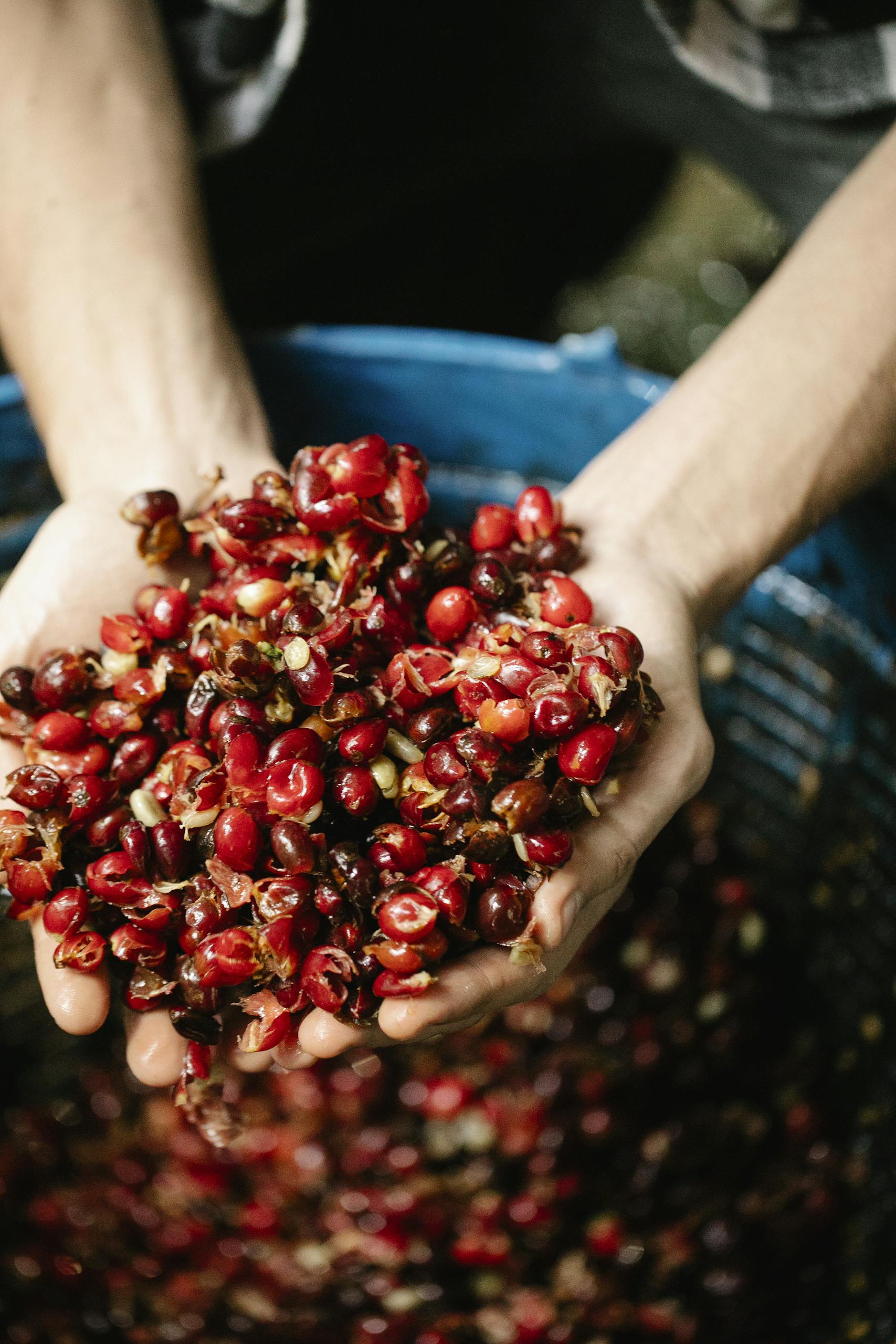
Coffee plants may look calm and steady from the outside, but the way they produce fruit tells a very different story. A single coffee plant can live 20 to 30 years, and across that lifespan it experiences a natural cycle of high-yield years followed by low-yield years. This pattern, known as alternate bearing, has puzzled farmers for centuries. A team of researchers from Northeastern University — Gabriela M. Garcia and Laura Kuhl — set out to understand how smallholder farmers experience and manage this unpredictable cycle, and what it means for sustainability, policy, and long-term resilience in agriculture.
Their research, published in Human Ecology, combines ecological insight with the lived experiences of farmers to reveal how perceptions shape management practices. It also explores the deeper ecological mechanisms behind alternate bearing and why it continues to challenge farmers even when they apply what appear to be the “right” strategies.
Understanding the Natural Ups and Downs of Coffee Production
At its core, alternate bearing is an intrinsic biological cycle built into many perennial crops, not just coffee. During an abundant year, a plant invests heavily in producing fruit, which temporarily drains its nitrogen reserves and other internal resources. It then takes a recovery year to restore those reserves, resulting in a low-yield season.
This isn’t about poor farming. It’s not because of a lack of fertilizer or irrigation. It’s simply part of how long-lived, resource-limited plants work.
In fact, Garcia’s previous research suggests that adding more fertilizer — especially nitrogen — does not flatten the cycle. Instead, it may intensify the highs without improving the lows. More nitrogen allows plants to push even harder during productive years, making the recovery years just as necessary, if not more so.
Yet despite the biological clarity, alternate bearing has long been misunderstood at the farm level. Many assume that low yield years must reflect insufficient management, especially when entire fields or regions experience low yields simultaneously. This assumption puts unnecessary pressure on farmers, especially smallholders whose livelihoods depend heavily on stable coffee production.
How Farmers Interpret Yield Variability
Garcia and Kuhl wanted to understand how smallholder farmers themselves make sense of these fluctuations. Their work uncovered an important distinction: farmers’ beliefs about the cause of variability directly shape their management strategies.
Farmers who believe the ups and downs come from external or extrinsic factors — such as rainfall, temperature, or pest pressure — tend to focus on strategies like:
- Irrigation improvements
- Pest and disease control
- Shade management
- Soil moisture techniques
These farmers view the low yield years as something that can be controlled or mitigated through better responses to environmental stress.
On the other hand, farmers who recognize alternate bearing as an intrinsic plant process tend to focus on different practices:
- Fertilizer applications
- Pruning and renovation
- Managing plant age distribution
- Resource adjustments
Some farmers go even further and try to stagger the ages or bearing cycles of their plants. By ensuring different fields or sections of land are in different phases of the cycle, they can average out the peaks and valleys of production across the whole farm.
However, this strategy has limitations. Coffee plants sometimes synchronize their cycles, meaning entire fields (or even entire regions) swing into low-yield phases at the same time. When this happens, not only do farmers face reduced income, but their vulnerability to extrinsic challenges like pests or drought increases dramatically.
The Importance of Synchrony in Coffee Farming
One of the most significant insights from the research is the role of synchrony — when many coffee plants match each other’s yield cycle. Synchrony makes low-yield seasons much more severe for farmers because they cannot rely on staggered fields to stabilize income.
Interestingly, synchrony can be influenced by both intrinsic plant biology and external shocks such as:
- Pest outbreaks
- Extreme weather events
- Environmental disturbances
These events can cause large groups of plants to respond in similar ways, tightening the alignment of their reproductive cycles. When everything syncs, the entire farm becomes more sensitive to outside pressures.
Why Alternate Bearing Is Hard to Manage
The study found that common practices — including fertilization, pruning, and other forms of resource management — do not reliably reduce alternate bearing at a farm-wide scale. In other words, even when farmers do everything “right,” the biological cycle persists.
One factor that did correlate with more stable yields was elevation. Farmers at higher elevations experienced less pronounced alternate bearing. This may be connected to lower pest pressure or microclimate differences, but researchers emphasize that more study is needed before drawing firm conclusions.
This highlights a broader challenge: alternate bearing is not simply an agronomic problem. It’s a complex biological and socioecological dynamic that intersects with regional conditions, economic constraints, and farmer decision-making.
Why a Socioecological Approach Matters
Garcia and Kuhl argue that to understand and manage alternate bearing effectively, we must look beyond the plant and consider the full socioecological system:
- Ecological dynamics (resource cycles, plant physiology)
- Farmer perceptions and knowledge
- Management practices
- Policy and support structures
- Regional economics and vulnerability
When policymakers or agricultural advisors assume low yields are the result of poor management, they overlook the inherent biological limitations farmers are working within. This leads to misaligned recommendations, unrealistic expectations, and socioeconomic pressure on smallholders.
Instead, an integrated approach should acknowledge:
- Alternate bearing is natural and unavoidable
- Farmers adapt based on their understanding of the system
- External shocks make cycles more precarious
- Social and institutional support is essential during low-yield years
This is especially true for smallholder farmers whose income depends heavily — sometimes entirely — on coffee.
What This Means for Public Policy and Support Systems
Because alternate bearing can cause sudden and synchronized drops in yield, the research highlights the need for stronger social and institutional safety nets. Some potential interventions include:
- Income stabilization programs
- Low-interest emergency loans
- Diversification support (intercropping, agroforestry)
- Cooperative risk-sharing systems
- More nuanced agricultural extension services
Policies must treat alternate bearing not as an avoidable problem, but as a structural reality of perennial crop farming.
Extra Insight: Alternate Bearing in Other Crops
Alternate bearing is not unique to coffee. Many other perennial crops exhibit similar cycles, including:
- Olive trees
- Apple trees
- Pistachios
- Avocado
- Mango
- Pears
In all these crops, the same basic principle applies: heavy fruiting years deplete internal resources, requiring rest years for recovery.
Farmers growing these crops also use strategies like pruning, fertilization, thinning, and staggering tree ages, but the cycle persists. Some fruit crops (like apples) have commercial thinning practices that help stabilize yield, but these methods aren’t easily transferable to coffee due to the structure of the plant and the economics of smallholder production.
Why This Research Matters for the Future of Sustainable Farming
Sustainable agriculture requires understanding the full system — biological, social, ecological, and economic. Alternate bearing serves as a powerful example of how plant-level dynamics ripple up to affect entire livelihoods, shaping decisions, strategies, and vulnerabilities.
By putting farmer experiences at the center, Garcia and Kuhl’s work helps bridge ecological theory with real-world farming realities. It shows that acknowledging intrinsic variability and supporting farmers accordingly is critical for building resilience — especially as climate change intensifies external pressures.
Research Paper: Confronting Intrinsic Yield Variability: How Coffee Farmers Understand, Manage, and Cope with Crop Alternate Bearing
https://link.springer.com/article/10.1007/s10745-025-00638-1