Equatorial Coral Reefs May Offer Natural Safe Havens During Intensifying Marine Heatwaves
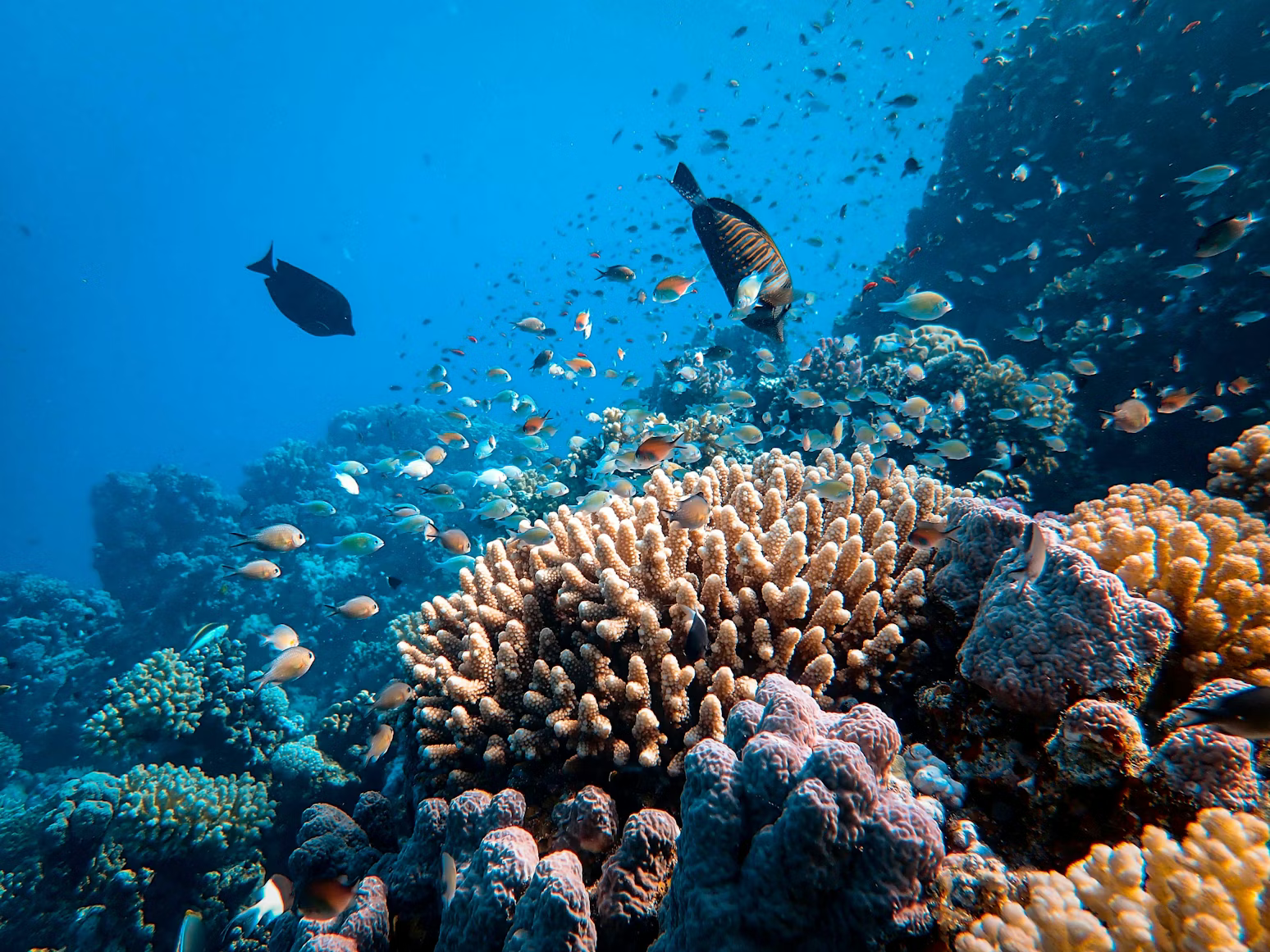
A new global analysis of coral bleaching suggests that some of the most important coral ecosystems on Earth—the equatorial reefs of the Coral Triangle—may be functioning as natural safe havens during marine heatwaves. This finding is based on a detailed study that examined coral bleaching patterns across 81 countries over nearly two decades, adding a hopeful layer to an otherwise worrying outlook for coral reefs worldwide.
The research team evaluated how reefs responded to marine heatwaves between 2002 and 2020, using data from 30,266 surveys conducted at 8,728 reef sites within a band stretching 35 degrees north and south of the Equator. Marine heatwaves are well-known to trigger widespread coral bleaching, which occurs when corals lose their symbiotic algae due to elevated water temperatures. These events can be devastating—bleached corals often die if stressful conditions persist. Under global warming, heatwaves have become hotter, longer and more frequent, making bleaching one of the biggest threats to coral reef survival.
Yet, the study found something surprising. While many reefs around the world faced severe bleaching, the equatorial zone—particularly the region known as the Coral Triangle, which spans Indonesia, Malaysia, the Philippines, Papua New Guinea, the Solomon Islands and Timor-Leste—experienced the weakest marine heatwaves overall across the 19-year analysis period. This region covers about 2.3 million square miles and contains more than three-quarters of the world’s coral species, making it the most biodiverse coral ecosystem on Earth. The new findings suggest it may also be one of the most resilient.
According to the analysis, the reduced bleaching in the Coral Triangle is likely connected to frequent cloud cover at the Equator. Clouds naturally block solar radiation, preventing extreme heating in surface waters. Because this region sits within the Intertropical Convergence Zone, cloud formation is especially common. In simple terms: even when the ocean warms, sunlight—the energy that pushes temperatures even higher—doesn’t penetrate as intensely as it does elsewhere.
The study didn’t stop at latitude. It also found that bleaching severity was reduced in reefs exposed to strong water currents, high wave energy, turbidity, and regular cloud coverage in general. These conditions help dissipate heat or reduce the amount of sunlight reaching corals. In many cases, reefs with these environmental traits performed better during heatwaves regardless of where they were located globally. This reinforces a broader conclusion: marine-heatwave refugia may not be limited to equatorial areas alone. They could appear anywhere the right combination of environmental factors exists.
Interestingly, the study also noted that reefs historically exposed to frequent heat stress sometimes bleached less severely than expected. This hints at possible acclimation or adaptation—corals might develop some level of tolerance after repeated exposure. While this isn’t a guarantee of long-term survival, it’s an important signal that coral responses to warming seas are more complex than previously understood.
Despite the largely positive findings for the Coral Triangle, the authors emphasized that the pattern isn’t universal. An important exception is the eastern Pacific, where equatorial reefs did not show reduced bleaching severity. This highlights how regional oceanography, circulation patterns and local environmental conditions play significant roles in determining whether a reef functions as a refuge.
The broader implication of this research is that certain equatorial reefs, especially within the Coral Triangle, may form a network of natural refugia—areas where corals are less likely to bleach even as marine heatwaves worsen. This doesn’t mean these reefs are protected from all threats. Issues like ocean acidification, pollution, overfishing, coastal development, and disease outbreaks continue to stress corals. But identifying refugia gives conservationists a clearer strategic focus. Protecting these areas could help preserve coral diversity and give global coral populations a fighting chance.
Understanding reefs that fare better under climate stress can also improve predictive models. Many projections have assumed equatorial reefs were among the most vulnerable due to warm baseline temperatures. The new data challenges that assumption and suggests that climate models should integrate localized environmental variables—like cloud cover or current strength—to more accurately forecast coral futures.
To give more depth to this topic, here’s some additional background on how coral bleaching works and why refugia matter.
What Actually Happens During Coral Bleaching?
Corals live in partnership with tiny algae called zooxanthellae that provide nutrients through photosynthesis. When sea temperatures rise too high for too long, corals become stressed and expel these algae. This turns corals white—hence the word bleaching—and cuts off their primary food source. If heat stress continues, corals starve or become overwhelmed by disease.
Marine heatwaves, especially those intensified by climate change, are the most common trigger for mass bleaching events. Even a sustained rise of 1–2 degrees Celsius above normal summer temperatures can set off bleaching. Because the frequency of heatwaves has increased, corals have less recovery time between events, making repeated bleaching even more deadly.
Why Some Reefs Act as Refugia
Refugia are natural “climate buffers.” They can occur for several reasons:
- Cloudy regions reduce sunlight-driven heating.
- Strong currents flush cooler deep water onto reefs.
- High turbidity (cloudy water) reduces light intensity.
- Wave-exposed reefs experience constant water mixing.
- Topography can create pockets of cool water.
- Historical heat exposure may promote heat-tolerant coral communities.
The Coral Triangle benefits from multiple overlapping refuge characteristics, which helps explain its comparatively mild bleaching severity.
The Importance of the Coral Triangle
Often called the “Amazon of the Seas,” the Coral Triangle is the global center of marine biodiversity. It contains:
- Over 75% of the world’s coral species
- More than 2,000 species of reef fish
- Crucial spawning grounds for tuna
- Nesting sites for endangered sea turtles
Because of its immense diversity and ecological importance, the survival of the Coral Triangle has global significance. If parts of this region function as long-term refugia, they could support coral recovery efforts for decades or even centuries, assuming they remain protected.
Challenges Ahead
Despite the hopeful findings, reefs everywhere—including refugia—face serious challenges:
- Continued global warming may overwhelm even the most resilient zones.
- Ocean acidification weakens coral skeletons.
- Pollution, sedimentation and destructive fishing practices degrade reef health.
- Disease outbreaks have become more common.
Refugia offer time—not immunity. Protecting these zones while reducing global emissions is still essential for coral survival.
The study’s authors stress that the existence of refugia should motivate conservation action rather than complacency. These regions could be the backbone of future reef recovery strategies.
Research Paper Link
Coral Bleaching: The Equatorial-Refugia Hypothesis
https://doi.org/10.1111/gcb.70594