Oregano Essential Oil Shows Strong Potential as a Natural Fire Ant Repellent
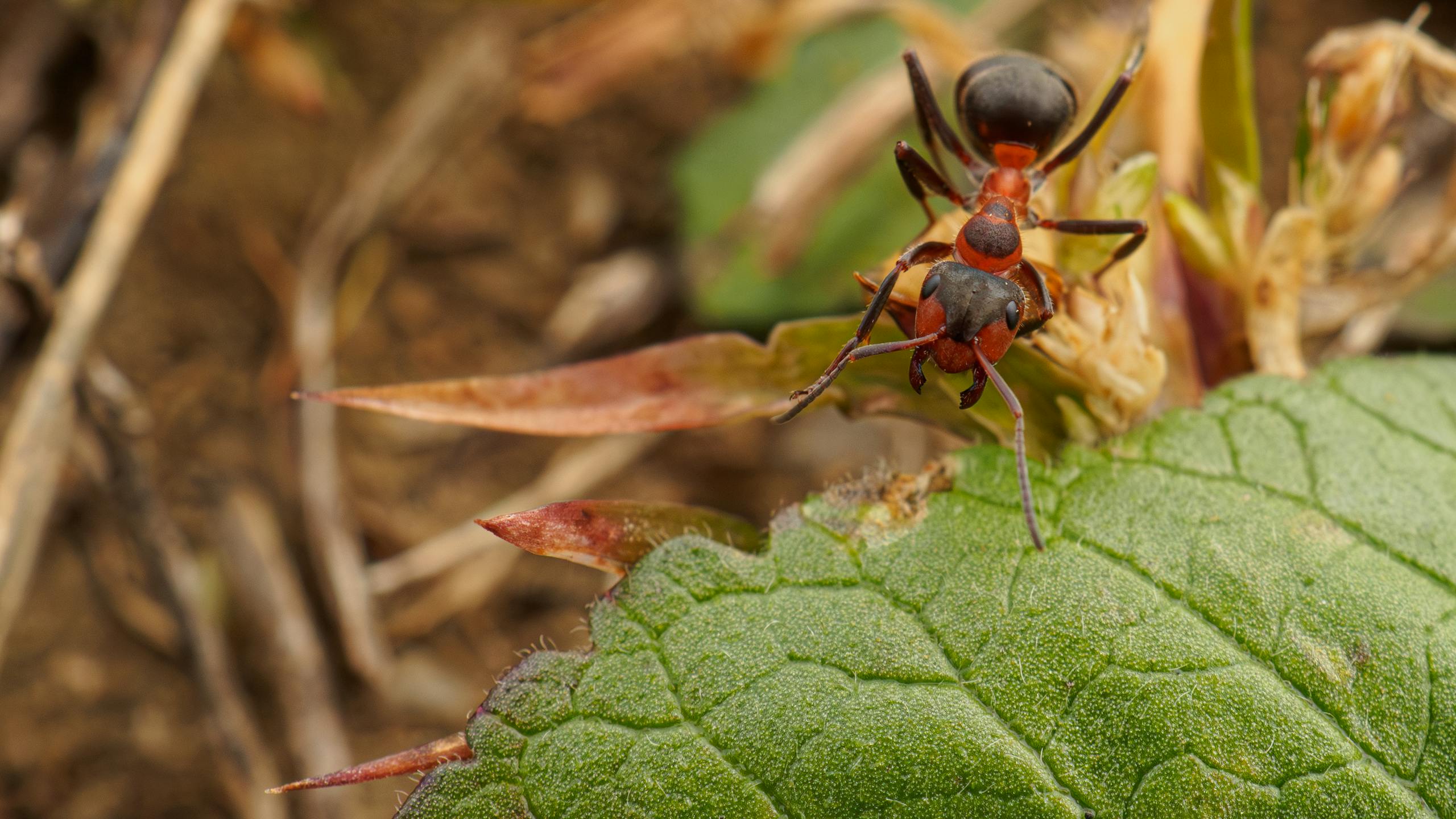
A new study from the University of Mississippi has revealed that oregano essential oil—a staple in many kitchens—may offer a safe and effective way to repel imported fire ants, one of the most destructive invasive pests in the United States. This discovery comes from researchers at the UM National Center for Natural Products Research, who have been working to identify plant-based alternatives to synthetic pesticides. Their findings add meaningful progress to a problem scientists have been trying to solve since fire ants arrived in the U.S. in the early 20th century.
Researchers have long been searching for ways to control the spread of these ants, which were first introduced through the port of Mobile, Alabama, and have since expanded from the Atlantic Coast to California. Today, they infest roughly 350 million acres across the southern United States. Their economic impact is massive—about $8 billion per year, affecting agriculture, livestock, property, and even human health. Fire ants are known for their painful stings, which lead to burning rashes and sometimes serious allergic reactions.
The recent Mississippi study, published in Pest Management Science, takes a close look at oregano essential oil as a potential solution. After screening various natural products, the team found that oregano oil contains strong repellent properties against fire ants. Through chemical analysis, they identified carvacrol—a naturally occurring compound—as the ingredient responsible for this effect. Carvacrol is already recognized as safe by the U.S. Food and Drug Administration, which adds to the promise of developing it into a widely usable pest-control product.
To better understand how carvacrol works, the researchers tested 21 structurally similar compounds, either purchased or synthesized in the lab. Their goal was to see whether slight chemical differences affected repellency. Many of these compounds showed activity, but none matched the strength of carvacrol itself. This suggests that carvacrol is uniquely suited for fire ant management compared to its analogs.
The team also conducted computer modeling to explore how these natural compounds might affect ants on a behavioral and sensory level. Fire ants rely heavily on pheromones, chemical signals essential for communication, nest building, and colony coordination. The models suggest that carvacrol and related compounds may disrupt the ants’ ability to detect these pheromones, making treated areas unsuitable for nesting or digging.
An important detail of this research is that oregano oil functions as a repellent, not a lethal pesticide. Researchers refer to this specific action as a digging suppressant—a compound that prevents ants from digging into soil to construct their underground nests. When an area is treated with a digging suppressant, ants avoid it altogether because the soil becomes inhospitable for colony establishment. Even without killing the ants, this technique can significantly reduce their presence in sensitive areas such as farms, gardens, and residential yards.
This non-lethal approach is valuable because it aligns with goals in sustainable agriculture. Many plant-derived chemicals, including carvacrol, are biodegradable and generally less harmful to humans, pets, wildlife, and beneficial insects compared to traditional pesticides. Reducing dependence on synthetic chemicals helps protect ecological balance while still managing invasive pests effectively.
The researchers emphasize that although oregano oil’s repellent effects are clear in controlled settings, the essential oil has not yet been tested on humans. More studies are needed to determine its safety and effectiveness for household or personal applications. There’s also the question of optimal usage in real-world environments. Even when effective compounds exist, factors like soil type, moisture, temperature, and application technique determine how well repellents perform outdoors. The team is working on understanding how to apply these natural repellents in the field to achieve reliable results.
This study highlights a gap that has existed in fire ant research: finding natural methods that can be deployed safely and effectively. While many natural products do not produce high ant mortality, they can still control populations by discouraging nest formation and reducing ant activity in targeted zones. Combining repellency with controlled mortality could lead to even more effective solutions. Scientists like Abbas Ali, a principal researcher on the project, have been studying natural products for years in order to develop alternatives that reduce environmental impact.
Beyond the specifics of this research, the topic opens up a wider conversation about plant-based pest management and invasive species control. Plant essential oils have long been known for their aromatic and antimicrobial properties, but in recent decades, researchers have increasingly explored them for insect-repellent and insecticidal uses. Compounds such as thymol, eugenol, citronellal, linalool, and geraniol have demonstrated repellent effects against mosquitos, ticks, and ants. Carvacrol belongs to this category of monoterpenoids, a family of volatile compounds responsible for the strong aromas found in herbs like thyme, oregano, and marjoram.
Fire ants themselves pose an unusual challenge. They are incredibly adaptable, aggressive, and resilient. Their colonies have complex hierarchies, and they communicate through a variety of pheromones that coordinate everything from brood care to foraging. Because of this, disruptors of their pheromone signaling pathways—like carvacrol—can be particularly effective. These disruptions don’t rely on poisoning, which means the ants are less likely to develop resistance, a common problem with synthetic pesticides.
Imported fire ants also build large underground colonies that can spread quickly and are extremely difficult to eradicate once established. Their ability to relocate nests rapidly in response to danger makes many chemical treatments short-lived. This is why repellents that prevent nest formation in the first place may play a crucial role in long-term management strategies.
Another benefit of natural repellents is their potential for integration into Integrated Pest Management (IPM) systems. IPM encourages the use of multiple complementary strategies—biological control, habitat modification, attractants, repellents, and minimal pesticide use—to manage pests in environmentally responsible ways. Carvacrol-based repellents could fit easily into such systems, providing a protective barrier around sensitive areas without harming the surrounding ecosystem.
Despite the promising results, researchers acknowledge that more testing is required, especially on issues such as longevity, weather durability, soil absorption, and compatibility with existing pest-control techniques. Because essential oils degrade faster than synthetic chemicals, optimizing formulations to extend their functional lifespan will be an important step toward commercial application.
Still, this discovery marks an exciting advancement in natural pest management research. A simple herb commonly used in Italian cooking may help solve a century-old invasive species challenge. If further studies confirm its effectiveness in field settings, oregano oil—or, more specifically, its active compound carvacrol—could soon become part of a new generation of plant-based fire ant repellents for farms, gardens, and homes.
Research Paper:
https://doi.org/10.1002/ps.70297