Researchers Identify Two Types of Brain Immune Cells That Can Drive or Prevent Anxiety in Mice

Anxiety disorders affect millions of people, yet scientists still don’t fully understand what causes anxiety inside the brain. A new study from the University of Utah offers a surprising and very specific insight: two different groups of microglia, the brain’s immune cells, appear to directly influence whether a mouse becomes anxious or stays calm. These findings challenge decades of assumptions that neurons alone regulate emotional behavior.
The research, led by postdoctoral scientist Donn Van Deren and senior investigator Mario Capecchi, was published in Molecular Psychiatry and reveals that microglia aren’t just supportive cells. Instead, two distinct microglial populations function like opposite controls, similar to a gas pedal and a brake pedal for anxiety. One group increases anxiety responses, while the other actively suppresses them.
This discovery represents a significant shift, because psychiatric medications today almost exclusively target neurons. Understanding how microglia influence behavior may shape new therapeutic approaches in the future.
A Clear Difference Between Two Microglial Groups
The story begins with earlier experiments in which researchers interfered with a specialized type of microglia called Hoxb8 microglia. When these cells were disrupted, mice started acting anxious. However, when scientists inhibited all microglia at once, including both Hoxb8 and non-Hoxb8 microglia, the mice surprisingly behaved normally.
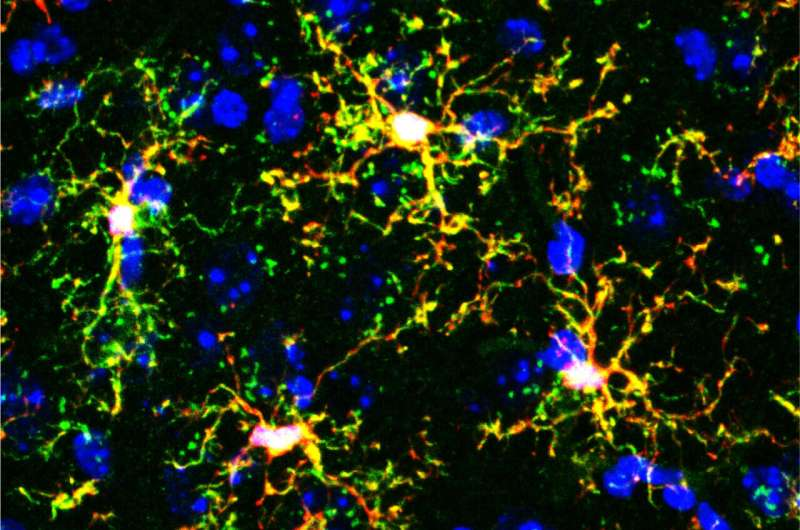
This inconsistency suggested that microglia weren’t all doing the same job. Instead, the two groups seemed to have opposing roles. Hoxb8 microglia appeared to help prevent anxiety, while the broader pool of non-Hoxb8 microglia seemed to promote it. But to confirm this, the researchers had to isolate the behavior of each group.
A Bold Experimental Approach: Microglia Transplantation
The key breakthrough came from a creative experiment involving mice that naturally lack microglia altogether. These mice provide a blank slate, allowing researchers to “add back” different types of microglia and observe the result.
The experiment had three main conditions:
- Mice receiving only non-Hoxb8 microglia
These mice began compulsively grooming themselves and avoided open spaces—classic signs of heightened anxiety in animal behavior studies. Without Hoxb8 microglia, the “accelerator” for anxiety was always active. - Mice receiving only Hoxb8 microglia
These mice showed no anxiety-like behavior. The presence of this cell type alone acted as a “brake”, keeping anxiety levels low even without other microglia present. - Mice receiving both microglial types
These mice behaved normally. Even though non-Hoxb8 microglia pushed the system toward anxiety, Hoxb8 microglia counterbalanced them. The combination created the natural equilibrium seen in healthy brains.
These results clearly demonstrated that the two microglial populations have opposite effects, directly influencing behavior without requiring manipulation of neurons.
Why This Is a Paradigm Shift
For decades, neuroscientists believed that conditions like anxiety originated in neuronal circuits—signals between brain cells that depend on neurotransmitters such as serotonin, dopamine, and norepinephrine. Microglia were traditionally viewed as “maintenance workers” that cleaned up debris, fought infections, or supported neurons.
But this study shows that microglia can directly shape emotional behavior. These cells don’t just support the brain—they actively regulate how an organism responds to anxiety-provoking situations.
Researchers also noted that humans possess microglial populations comparable to those in mice. That means this mechanism might also exist in people, though far more research is needed before drawing conclusions.
How Microglia Influence Behavior: A Growing Area of Interest
The idea that the immune system interacts with emotional or psychological processes isn’t entirely new, but it has gained traction in recent years. Microglia respond to inflammation, stress, injury, and infections. When activated excessively, they can contribute to neurodegeneration or chronic inflammation.
This new research adds an unexpected layer. Instead of simply reacting to injuries or pathogens, some microglia may modulate behavioral states themselves, shifting the balance between calmness and anxiety. The exact mechanisms—chemical signaling, interaction with neuronal circuits, or gene expression patterns—are still being explored.
Understanding these pathways may help scientists eventually develop medications that target microglia directly. Such treatments could complement or replace traditional anti-anxiety drugs, which often have side effects or limited effectiveness.
What This Means for Future Anxiety Treatments
The researchers emphasize that this discovery does not mean microglia-targeting therapies are around the corner. Translating mouse findings to humans is a long and difficult process. That said, the implications are promising.
Future therapies might:
- Strengthen the activity of Hoxb8 microglia to reduce anxiety
- Decrease the activity of non-Hoxb8 microglia
- Restore microglial balance in patients where it’s disrupted
- Use immunotherapy principles instead of traditional psychiatric drug approaches
If scientists can find safe ways to adjust the microglial “gas pedal” and “brake pedal,” it could lead to more precise treatments for anxiety disorders—perhaps with fewer side effects.
More About Microglia: The Brain’s Resident Immune Cells
To give additional context for readers, it helps to briefly understand microglia themselves.
Microglia Are Not Neurons
Microglia originate outside the brain during early development. They migrate into the brain from the embryonic yolk sac and act as the brain’s defense system. They constantly scan the environment, respond to injury, and help remove dead cells.
Microglia Shape Brain Development
They help prune unnecessary synapses during development, ensuring neural circuits form properly. If this pruning process is disrupted, it can lead to behavioral or cognitive issues.
Microglia Respond to Stress
Chronic stress is known to activate microglia. When overly active, they can release inflammatory molecules that affect how the brain functions. This connection may be part of why stress and inflammation are linked to anxiety and depression.
Microglia Are Diverse
Scientists used to believe microglia were a mostly uniform population. The new findings highlight significant functional diversity, opening the door to more discoveries about microglial subtypes.
What’s Next for This Research Area?
The next steps will likely involve:
- Identifying molecular signals that distinguish Hoxb8 from non-Hoxb8 microglia
- Mapping exactly how each subtype interacts with neurons
- Determining whether similar mechanisms affect human anxiety
- Studying whether microglial imbalance contributes to OCD-like grooming behaviors
- Testing whether microglial transplantation or modulation could one day be therapeutic
Researchers also want to explore how these cells behave in complex, real-life environments, not just controlled laboratory settings.
Final Thoughts
This research does not claim to offer a cure for anxiety, nor does it suggest that anxiety is solely caused by microglia. But it does provide a powerful new lens through which scientists can view anxiety-related behaviors. Instead of focusing exclusively on neurons, this study shows the importance of looking at how immune cells inside the brain influence emotional states.
The discovery that microglia can either heighten or suppress anxiety-like behaviors—acting as accelerators or brakes—is a major step toward better understanding the biological roots of anxiety. If similar mechanisms operate in humans, this could eventually inspire innovative treatments that work in entirely new ways.
Research Paper:
Defective Hoxb8 microglia are causative for both chronic anxiety and pathological overgrooming in mice
https://doi.org/10.1038/s41380-025-03190-y