New Research Shows the Human Brain Begins Life With Preconfigured Instructions for Understanding the World
A new study from researchers at the University of California, Santa Cruz suggests that the human brain isn’t a blank slate at birth but instead begins developing with built-in instructions for how to interpret and interact with the world. The findings come from experiments using human brain organoids—tiny, lab-grown models of early brain tissue—which allowed scientists to observe the first moments of neuronal activity long before real sensory experiences could play any role. This work provides rare insight into the brain’s earliest electrical behavior and raises important possibilities for studying neurodevelopment, disease, and even how evolution shaped our cognitive foundations.
Researchers focused on one central question: Do the earliest neural firing patterns emerge because of sensory experiences, or does the brain come preloaded with an internal framework? Because the earliest stages of human brain development occur in the protected environment of the womb, directly answering this has been extremely difficult. Organoids, however, offer a unique approach. Made from human stem cells, these 3D structures grow into simplified versions of brain tissue, complete with diverse neural cell types and a three-dimensional architecture that mirrors early development. Importantly, organoids have no access to sensory input, meaning any activity detected inside them must arise from intrinsic biological processes.
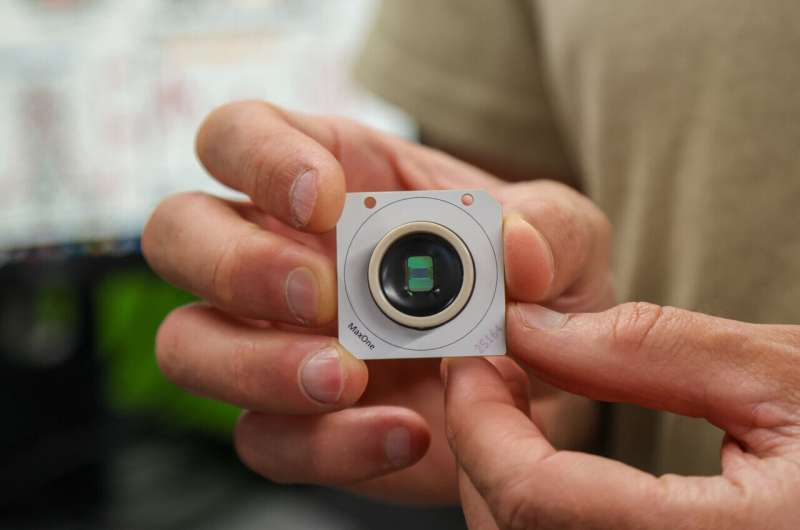
To capture this earliest activity, the research team placed organoids onto CMOS-based microelectrode array chips, which can detect the electrical activity of single neurons within small volumes of tissue. These specialized chips—similar in principle to those used in computing hardware—allowed precise recording of when individual neurons fired and how they interacted. As the organoids matured over the first few months, researchers observed spontaneous neural spikes that formed structured firing patterns, not random noise. These patterns resembled the well-known default mode of the human brain, a baseline pattern of internal activity that supports many future cognitive functions. The appearance of such patterns in organoids, without any external experience, supports the idea that the brain comes with a genetically encoded blueprint for processing information.
One notable discovery was the emergence of complex time-based sequences of neuronal firing. These sequences represent organized chains of activation that can later be molded into specific sensory responses. Even at this early stage, before a fetus could meaningfully sense vision, sound, taste, or smell, the neurons were already communicating in ways that suggested early circuit formation. The cells were forming connections, creating small networks, and demonstrating self-assembled electrical behavior that did not rely on any environmental prompting. This reinforces the idea that brain development follows internal rules and is not purely shaped by experience.
The research team pointed out that organoids provide capabilities that traditional flat 2D cultures cannot. In 2D cell models, neurons don’t achieve realistic diversity or architecture, making it difficult for circuits to form naturally. In contrast, 3D organoids allow neurons to remain in close contact, supporting genuine developmental interactions. This is crucial, because the patterns observed in this study depend on the ability of cells to grow into layered, interconnected networks. According to the researchers, this makes organoids extremely valuable for studying the “primordial version” of the brain’s operating system, long before sensory input reshapes it.
Understanding this early activity has wider implications. It may help explain how the brain builds internal representations of the world. The structured sequences observed could serve as scaffolding that later becomes specialized once sensory experiences begin. Evolution may have encoded these default patterns to allow humans to navigate and interpret the world efficiently from the earliest stages of life.
Beyond fundamental neuroscience, the study has direct relevance for medical research. Since organoids can be produced ethically in large quantities, scientists can use them to study the origins of neurodevelopmental disorders, many of which arise from disruptions in early brain wiring. The structured electrical sequences identified in the study could act as signatures that signal when development is going wrong. By comparing healthy organoids to organoids engineered with genetic mutations, toxins, or environmental stressors, researchers may be able to trace how disorders emerge and test interventions earlier than ever before. The study specifically mentions potential applications in understanding the effects of pesticides, microplastics, and other toxins on the developing brain.
The research also highlights the potential for developing therapies and drug-screening tools. Because organoids model human brain development more accurately than animal systems, they offer a powerful platform for testing pharmaceutical approaches before clinical trials. Scientists could evaluate how compounds influence neuronal firing patterns, identify early biomarkers of disease, and even explore gene-editing strategies more efficiently.
This project involved a broad collaboration, spanning UC Santa Cruz, UC San Francisco, UC Santa Barbara, Washington University in St. Louis, Johns Hopkins University, the University Medical Center Hamburg-Eppendorf, and ETH Zurich. The senior author, Tal Sharf, emphasized the importance of understanding these innate circuits, describing the early brain as having an emergent operating system built from evolutionary design.
Below are additional sections that expand on concepts relevant to this research, to help readers deepen their understanding.
What Are Brain Organoids?
Brain organoids are 3D clusters of neurons and supporting cells created from human stem cells. When scientists expose stem cells to specific biochemical signals, the cells begin organizing themselves into structures resembling early brain regions. Organoids cannot think, feel, or perceive, but they mimic many developmental processes, making them invaluable for research.
Key features include:
- Diverse cell types, including neurons and glia
- Layered structure, similar to early cortical development
- Spontaneous electrical activity, which increases as they mature
- Ethical scalability, meaning large numbers can be grown without harming living subjects
Researchers have used organoids to study diseases like microcephaly, autism-related genetic mutations, viral infections such as Zika, and brain evolution across species.
Why Electrical Patterns Matter in Development
Neurons communicate using electrical impulses. Early in development, spontaneous activity helps guide:
- Circuit formation
- Synaptic strengthening and pruning
- Migration of neurons to their correct locations
Because early brain activity shapes later functionality, disruptions in this period can lead to lifelong cognitive or sensory challenges. This is why observing intrinsic, pre-sensory electrical patterns is such a breakthrough—they reveal the brain’s initial instructions before experience modifies them.
How This Research Connects to Broader Neuroscience
The discovery aligns with long-standing observations in animal models, where early spontaneous activity plays a key role in building circuits for vision, hearing, and motor control. But demonstrating similar intrinsic organization in human tissue has been far more challenging. This study provides some of the strongest evidence yet that humans share this principle, and that our brains are equipped with preconfigured sequences designed to adapt and expand once sensory information arrives.
It also raises questions researchers are eager to explore:
- How do these sequences develop over longer timescales?
- Do they reorganize in predictable ways once sensory experiences begin?
- Could disruptions in these baseline patterns explain certain neurodevelopmental disorders?
Future experiments using organoids may help answer these questions, especially as recording technologies advance.
Reference
Preconfigured neuronal firing sequences in human brain organoids
https://doi.org/10.1038/s41593-025-02111-0