A New High-Resolution 3D Model Lets You Explore Easter Island’s Moai Quarry From Home
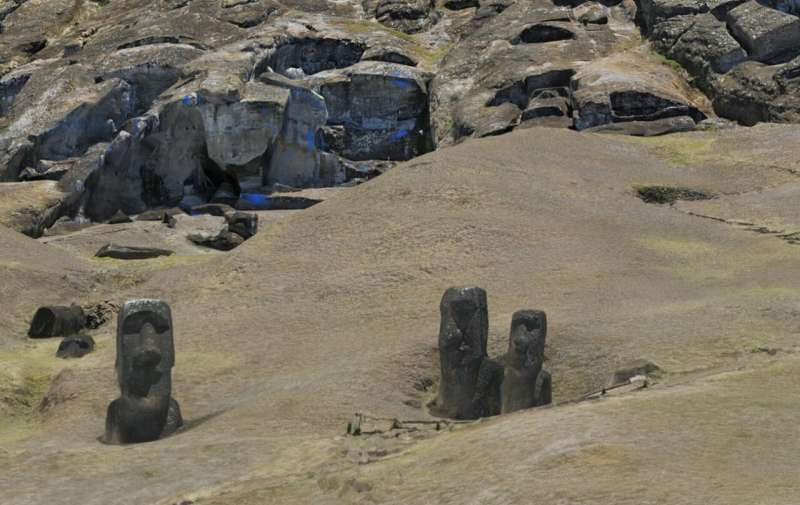
A first-of-its-kind high-resolution 3D model of Easter Island’s famous Rano Raraku quarry is now available online, giving the entire world front-row access to one of archaeology’s most iconic landscapes. Rano Raraku is the volcanic crater where nearly 1,000 moai statues were carved, yet only a small fraction of visitors ever get to see it in person. The site is remote, steep, and in many areas too dangerous to physically explore. Now, thanks to an ambitious research project led by specialists from Binghamton University, anyone can study the quarry up close and move through it freely in three dimensions.
The new model is the result of an enormous digital documentation effort that involved more than 20,000 aerial photographs, including 11,686 UAV images captured during around 30 drone flights in early 2024. These images were processed through advanced structure-from-motion photogrammetry, stitched together into a seamless, high-fidelity digital reconstruction. The process took months because of the sheer scale and complexity of the terrain, but the payoff is remarkable: the world now has access to the most detailed visual record of moai production ever created.
One of the main motivations for producing this model was the October 2023 wildfire that swept through parts of the quarry. Local community organizations expressed concern about potential long-term damage, so when the Binghamton team arrived in January 2024, they were asked to document the entire crater as thoroughly as possible. This sparked the full-scale mapping project that ultimately preserved the quarry’s details in extraordinary clarity.
The new digital model provides capabilities that even an on-site visit cannot offer. Users can zoom in on areas that would normally be inaccessible, view statues from above, examine carving pits, and trace production zones scattered across the crater. Rano Raraku’s geography makes much of the site difficult or unsafe to traverse, but the 3D environment removes these barriers entirely. It gives researchers and curious viewers new perspectives on features that have always been physically present but practically impossible to study.
This model is not just about accessibility—it also opens new research doors. The team used it to analyze 30 distinct workshop areas within the quarry, each with its own techniques and production patterns. Their findings reinforce an idea supported by earlier evidence: Easter Island’s statue carving was not run by a centralized authority. Instead, multiple independent clan-based groups appear to have worked side by side, each managing its own segment of the quarry. The 3D visualization makes this decentralized structure visually obvious, showing series of statues grouped according to separate, well-defined production zones.
The model also reveals fine-grained details about moai construction techniques. Many partially carved statues remain attached to the bedrock by keels along their backs—thin ridges of stone left intentionally until the final stages of separation. These features have always been present in the quarry but were difficult to document through traditional photographs or ground surveys. The new 3D environment captures them clearly, showing how sculptors worked underneath the figures from both sides until they were finally freed from the rock. This insight deepens our understanding of how carvers managed such large and heavy forms with simple tools.
Technological advances made this level of detail possible. Just a few years ago, photogrammetry of this scope would have been far less accurate and far more difficult to share publicly. The new model, however, is easily accessible on a desktop computer, giving scientists, educators, students, and general enthusiasts a shared platform to explore a culturally significant landscape. For archaeologists, it functions as a permanent digital record—one that is especially valuable in light of natural disasters, erosion, or other threats to the site’s preservation.
Rapa Nui community members have expressed mixed feelings about digital replicas, worrying that virtual access might discourage tourism to the island itself. But researchers involved in the project believe the opposite is likely. Static images cannot convey the scale and complexity of Rano Raraku, but the immersive 3D model may inspire more people to visit the island and experience the landscape firsthand. Rather than replacing in-person tourism, the model can spark deeper interest and appreciation.
Beyond the confines of this specific project, the creation of detailed archaeological 3D environments has become an increasingly important tool in cultural heritage preservation. Sites around the world face threats from climate change, wildfires, tourism, vandalism, and development. Digital documentation captures landscapes and artifacts in their current condition, providing a baseline for future conservation work and creating a resource that remains accessible even if the physical site changes. The Rano Raraku model serves as a powerful example of how technology can enhance understanding while safeguarding cultural heritage.
For readers unfamiliar with Easter Island’s broader context, Rapa Nui is located more than 2,000 miles from the nearest continent, making it one of the most remote inhabited places on Earth. The island’s moai statues, carved between the 13th and 17th centuries, are among the world’s most recognizable archaeological symbols. Each moai was created to honor ancestors, and many were transported miles from the Rano Raraku quarry to ceremonial platforms called ahu along the coastline. The engineering involved in carving and moving these massive figures—some weighing over 80 tons—has long captivated researchers.
The quarry was the heart of this production effort, functioning as a central landscape where sculptors shaped and perfected nearly all known moai. The new 3D model helps visualize this concentrated activity, revealing how densely packed the carving zones were and how many statues were left unfinished at various stages. These incomplete figures provide key information about production techniques, workflow organization, and the evolution of carving styles.
In addition, the decentralized workshop pattern fits well with what archaeologists know about Rapa Nui’s social structure before European contact. The island was divided into multiple clan territories, each with its own resources, lands, and leadership. The moai carving process reflects this organization: different groups likely carved their own statues, designed their own styles, and maintained their own sections of the quarry. The 3D model makes this pattern visible and easy to study in ways that were previously impossible.
Researchers plan to continue analyzing the digital environment to answer new questions about statue production, quarry organization, labor requirements, and cultural practices. Meanwhile, the public can explore the model to learn about one of the world’s most intriguing archaeological sites. The project demonstrates how modern technology can bridge the gap between remote cultural heritage and global audiences, offering both educational value and scientific insight.
Research Paper:
https://journals.plos.org/plosone/article?id=10.1371/journal.pone.0336251