Stanford Researchers Explore Whether the Hot Hand Is Real Through Jeopardy Contestants’ Behavior
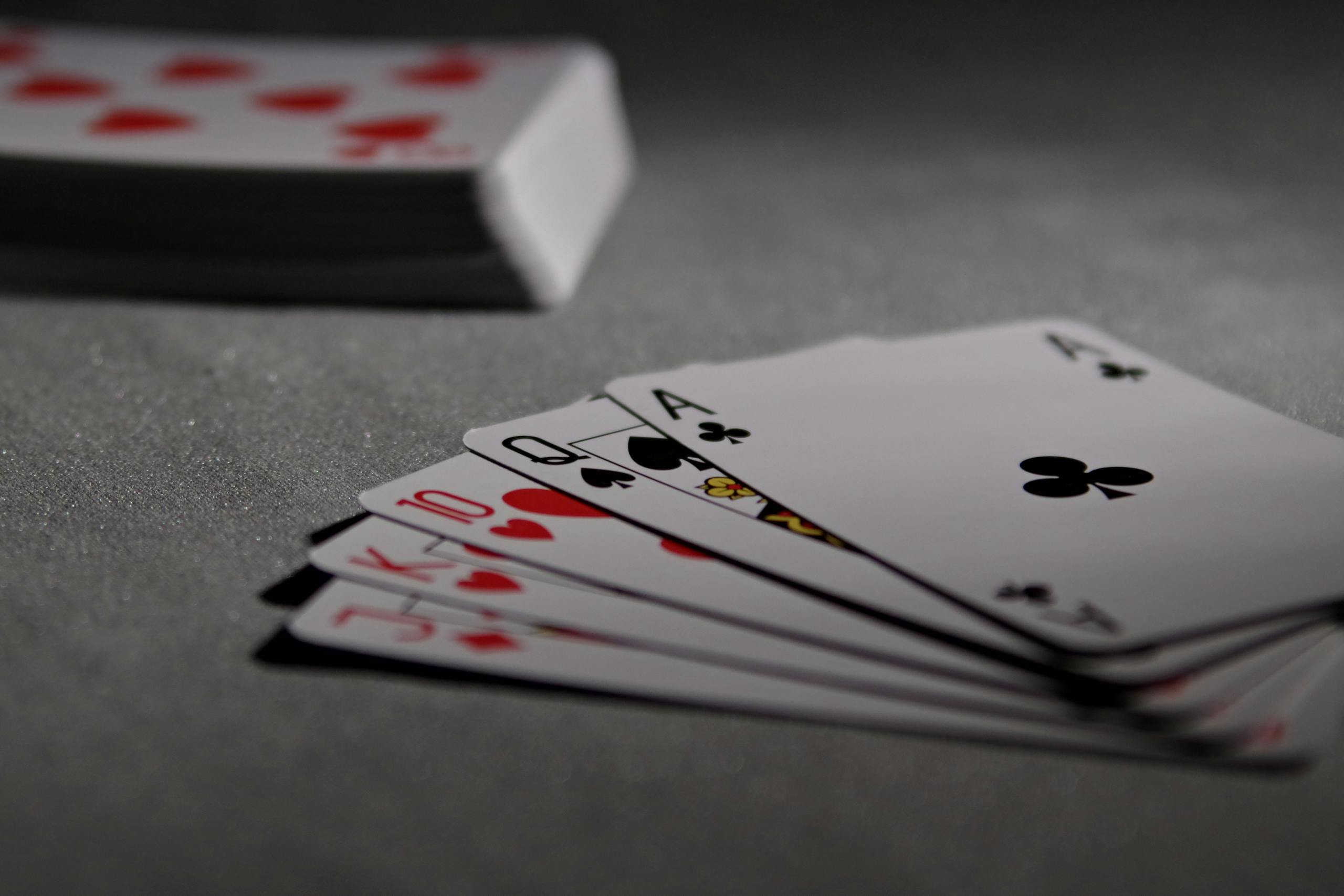
The idea of the hot hand—the belief that someone who’s performing well will keep performing well—has been around forever. Gamblers swear by it, athletes talk about it constantly, and people in everyday decision-making often feel it too. But does it actually exist? A team of Stanford researchers, Sridhar Narayanan and PhD student Anthony Kukavica, set out to explore this question in a surprising place: the long-running quiz show Jeopardy!
Their research offers one of the clearest real-world looks at how people behave when they think they’re “on a roll,” and whether that belief matches reality. What makes their study especially interesting is how they used Jeopardy’s structure—particularly its Daily Double feature—to examine both belief and performance at the same time. The result is a detailed picture of a cognitive bias that influences not just game show contestants but also professionals in high-stakes environments.
Why Jeopardy! Is the Perfect Hot Hand Laboratory
Previous attempts to measure the hot hand have struggled for several reasons. Lab experiments lack real consequences, and real-world athletic performance is hard to isolate because athletes can change their behavior based on opponents, fatigue, or strategy.
Jeopardy! avoids many of those issues. It’s a cognitive game with repeated actions, meaningful stakes, and clear right-or-wrong outcomes. Contestants also face time pressure, competition, and the psychological weight of previous successes or failures. All of these make it a rich environment for studying performance streaks.
Narayanan and Kukavica had access to an enormous dataset—235,000 clues from about 3,900 episodes, going back to 2004. The archive was largely created by devoted fans and is now maintained with the help of AI tools. This dataset recorded not only the clues and answers but also contestant information, outcomes, and wagers. That provided the researchers with a unique opportunity to examine behavior in a way previous hot hand studies could not.
The Role of Daily Doubles in Understanding Belief
The most important component of the study was Jeopardy’s Daily Double. These special clues appear randomly on the board, and a contestant who finds one must decide how much money to wager before seeing the clue. That wager reveals exactly how confident they are in their own performance at that moment.
To test for the hot hand, the researchers identified how many clues a contestant had answered correctly immediately before hitting a Daily Double. If they had answered several in a row, they were classified as being in a “hot” state. The question became: Do contestants bet more when they feel hot, and are they actually more likely to be right?
The answer to both questions was yes—but not equally.
Contestants tended to wager $100 to $500 more on Daily Doubles when they were on a streak. This shows a clear belief in the hot hand effect. At the same time, they really were a little more likely to respond correctly—about 1% to 8% more, depending on the situation.
But here’s the gap: the increase in performance was much smaller than the increase in wagering behavior. In other words, contestants believed in the hot hand much more strongly than the data supported. The average “hot streak” also tended to be short—about 1.3 questions long before a Daily Double appeared—yet contestants still behaved as if they were on a sustained roll.
This mismatch between belief and reality is one of the most important findings of the study.
How Profession and Background Affect Hot Hand Bias
Jeopardy! contestants come from an impressively wide range of professions, which gave the researchers another unique angle. They compared contestants based on whether their jobs typically required analytical or quantitative skills.
What they found was intriguing:
- Contestants in less analytical professions had stronger beliefs in the hot hand.
- Even those in highly analytical fields—software engineers, economists, statisticians—still overestimated the effect.
This suggests that the hot hand bias cuts across levels of expertise and training. Even people who specialize in logic and numbers aren’t immune to psychological streak-based thinking.
Why the Hot Hand Effect Happens at All
The researchers also examined why contestants might perform slightly better when “hot.” Two possible explanations were considered:
- Confidence — You trust yourself more after doing well.
- Focus and concentration — You’re mentally sharper, quicker, and more locked in.
Jeopardy! conveniently provides a way to test this. The game includes advertisement breaks between rounds. Confidence is unlikely to disappear during a short break, but focus and concentration can fade without continuous engagement.
The data showed that the hot hand effect weakened after commercial breaks. This suggests that the performance boost likely comes more from sustained concentration than from confidence. As soon as contestants get a moment to relax, the streak effect diminishes.
This insight is valuable because it points toward the cognitive mechanisms behind the hot hand—mechanisms that could be relevant in fields far beyond game shows.
Broader Implications of the Research
The results have wide-reaching implications. Many professionals regularly make decisions based on their recent successes:
- Stock traders may increase risk after a run of good trades.
- Doctors might make quicker diagnostic decisions after accurate calls.
- Air-traffic controllers rely heavily on sustained focus and could misjudge their own moment-to-moment sharpness.
Understanding the hot hand—and the difference between actual improved performance and perceived improved performance—can help improve training, decision-making processes, and awareness of cognitive bias.
The study also highlights how human psychology works under uncertainty. People naturally look for patterns, even when those patterns are small or short-lived. That tendency can be beneficial in some cases but dangerous in others.
What the Hot Hand Really Means
The Stanford research shows that the hot hand effect does exist, even in cognitive tasks like answering trivia questions under pressure. However, the effect is small, and people consistently overestimate its strength.
In Jeopardy!, this leads contestants to gamble more than their true performance improvement can justify. In the real world, similar overestimations can lead to risky decisions in finance, medicine, sports, and beyond.
By revealing the psychological forces at play, the study not only reshapes how we understand the hot hand but also opens the door to new research on how concentration, confidence, and cognitive biases shape human behavior under pressure.
Want to Read the Original Research?
Rational and Irrational Belief in the Hot Hand: Evidence from “Jeopardy!”
https://papers.ssrn.com/sol3/papers.cfm?abstract_id=5062536