Most Modern Dogs Carry Hidden Wolf DNA Including Tiny Breeds Like the Chihuahua
New research from the American Museum of Natural History and the Smithsonian’s National Museum of Natural History reveals a surprising genetic truth about our canine companions: most modern dogs still carry traceable post-domestication wolf ancestry, even tiny breeds like the chihuahua. This finding reshapes long-held assumptions about how isolated dogs and wolves have been since domestication and shows that wolf genes have continued to influence dogs in subtle but meaningful ways.
What the Study Found
Scientists analyzed more than 2,700 genomes from wolves, ancient dogs, modern breed dogs, village dogs, and related canids. These samples spanned a timeline stretching from the late Pleistocene period all the way to the present. Although dogs split from an extinct population of gray wolves roughly 20,000 years ago, the research suggests that low-level wolf gene flow continued even after domestication.
The team discovered that about two-thirds of today’s breed dogs contain detectable wolf ancestry within their nuclear genome, arising from crossbreeding events roughly 1,000 generations in the past. In addition, all village dog genomes analyzed in the study carried wolf ancestry. Village dogs live near human settlements but roam freely, making them genetically distinct from tightly controlled modern breed lines.
A small number of breeds showed especially high wolf ancestry. Czechoslovakian wolfdogs and Saarloos wolfdogs—breeds intentionally created by crossing dogs and wolves—had the most, ranging from 23% to 40% of their genomes. These levels were expected due to recent hybridization.
But the study also identified surprising cases among non-hybrid breeds. The Great Anglo-French Tricolor Hound carried 4.7–5.7% wolf ancestry, the highest among traditional dog breeds, despite no clear documentation of deliberate wolf crossbreeding. The Shiloh Shepherd, which emerged from breeding programs involving wolfdogs and other hybrids in the US, showed around 2.7% wolf ancestry. Meanwhile, the Tamaskan, a breed developed in the UK in the 1980s to mimic a wolf-like appearance using sled dog lines like huskies and malamutes, had about 3.7% wolf ancestry.
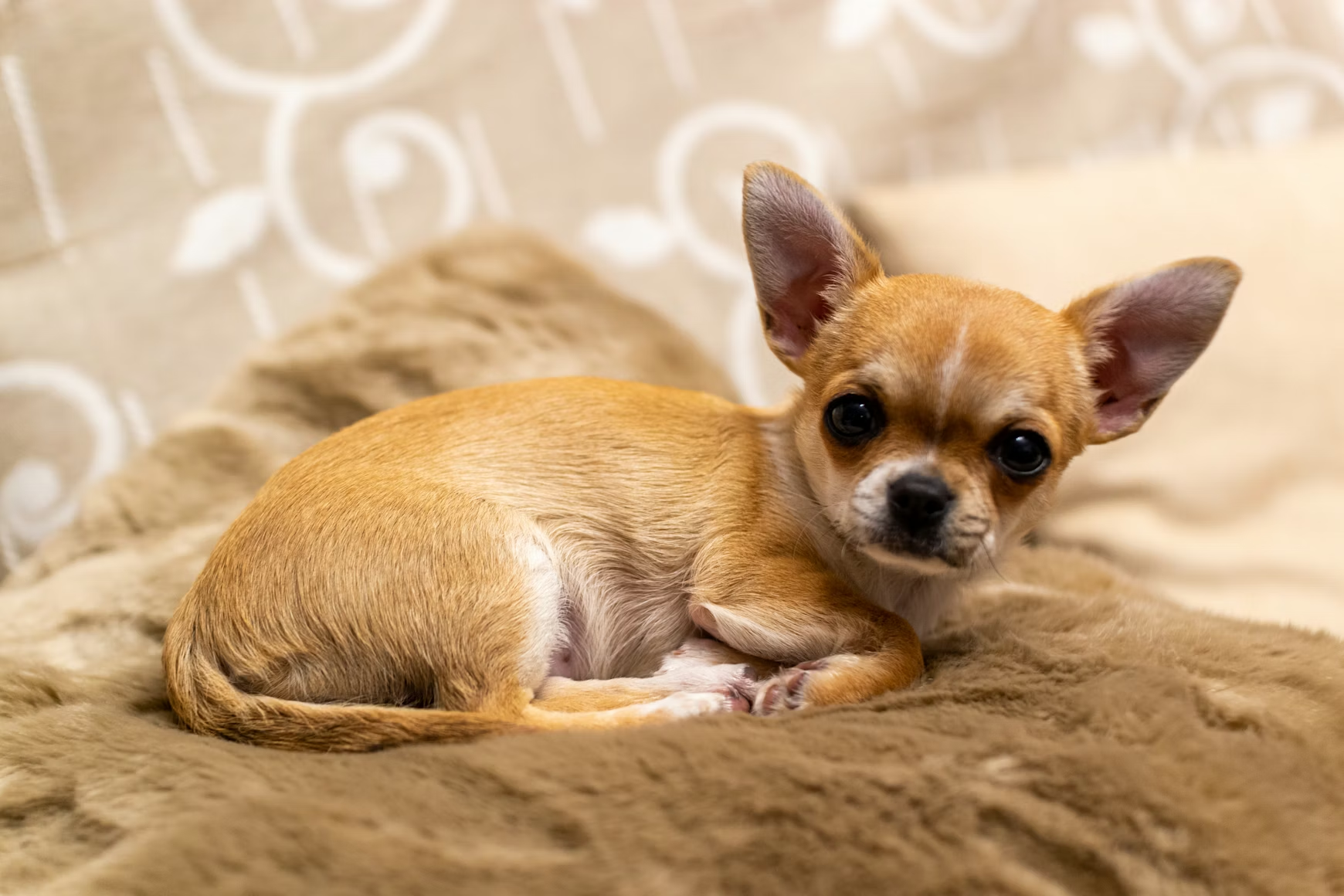
One of the most fascinating examples came from the smallest end of the canine spectrum: the chihuahua, which carries around 0.2% wolf ancestry. While tiny, its genome still reveals traces of ancient wolf gene flow, showing that wolf ancestry persists regardless of a breed’s size or shape.
Patterns in Wolf Ancestry Across Breeds
The researchers identified several consistent patterns in how wolf DNA is distributed among modern dogs:
- Larger breeds tended to have higher wolf ancestry than smaller breeds.
- Dogs bred for work, such as Arctic sled dogs, some hunting breeds, and traditional pariah dogs, displayed more wolf ancestry.
- Breeds like terriers, gundogs, and scent hounds generally had the least.
Interestingly, some large guardian breeds that you might expect to show elevated wolf ancestry had none detectable. Breeds such as the Neapolitan Mastiff, Bullmastiff, and St. Bernard fell into this category. The wide variation suggests that wolf ancestry entered lineages sporadically and was retained or lost differently depending on breeding practices, population histories, and genetic drift.
Personality Traits and Wolf Ancestry
The study also explored how modern organizations, such as kennel clubs, describe dog breed personalities and compared these descriptors to levels of wolf ancestry. While these observation-based descriptions are not scientific measurements, they do highlight interesting correlations.
Breeds with low wolf ancestry were more commonly described as:
- friendly
- eager to please
- easy to train
- courageous
- lively
- affectionate
On the other hand, breeds with higher wolf ancestry were often described as:
- suspicious of strangers
- independent
- dignified
- alert
- loyal
- reserved
- territorial
Terms such as intelligent, calm, cheerful, and dedicated appeared frequently across both groups, suggesting that these traits are not strongly tied to wolf ancestry. Importantly, the researchers emphasize that these descriptions do not demonstrate that wolf genes directly create certain behaviors. The correlations merely offer hypotheses for future behavioral genetics research.
Wolf Genes and Adaptations in Modern Dogs
Aside from behavior, the study uncovered several examples of functional adaptations influenced by wolf gene segments.
Among village dogs, wolf ancestry was enriched around olfactory receptor genes, which suggests these genetic regions helped enhance their sense of smell. For dogs living near humans and depending on scavenging for survival, an improved ability to detect food would be an advantageous trait.
Another major adaptation involved high-altitude survival. Tibetan mastiffs carry a Tibetan wolf-derived gene variant that improves tolerance to low-oxygen environments. This genetic contribution is similar to how humans in Tibet and other high-altitude regions carry adaptive genetic variants inherited from archaic hominins.
These examples show that wolf genes did not disappear only because domestication began. Instead, dogs appear to have retained or re-incorporated wolf variants when those variants proved useful for survival in diverse human-dominated environments.
How Dogs and Wolves Remain Connected
Although dogs and wolves can still interbreed and produce fertile offspring, such hybrid events are rare in nature. Domestication, selective breeding, and human control over dog reproduction have maintained distinct gene pools. However, this study shows that complete separation never truly happened. Small amounts of wolf ancestry persisted, likely through occasional interbreeding in the past, especially in regions where dogs and wolves shared territory.
The findings overturn the previously common assumption that for a dog to be genetically “dog,” it must have virtually no wolf DNA. Instead, it now seems that dogs can tolerate—and even benefit from—small quantities of wolf ancestry without losing their domestic identity.
Additional Information About Dog–Wolf Genetics
To give readers a broader understanding, here are some key points that help contextualize the study’s discoveries:
Dog Domestication Is Still a Scientific Mystery
Despite decades of research, the exact place and process of dog domestication remain unresolved. Genetic, archaeological, and behavioral studies have produced multiple competing theories. Some evidence points to Central Asia, some to Eastern Europe, and some to Siberia. The new findings about repeated low-level gene flow complicate the picture even further, showing that the story of dog origins is not linear.
Ancient Dogs Were More Genetically Varied
Before the rise of modern dog breeding in the 19th century, dogs displayed far more genetic diversity and fewer strict breed boundaries. Occasional wolf-dog hybridization likely slipped into populations unnoticed, especially among free-roaming or working dogs.
Wolf Populations Have Also Changed
The wolves alive today are not identical to those that existed 20,000 years ago. Many ancient wolf lineages went extinct, and modern wolves have gone through population bottlenecks, habitat loss, and human persecution. This means that modern wolves are not perfect genetic representatives of the wolves that originally gave rise to dogs.
Why This Study Matters
This research paints a fuller picture of how intertwined the histories of dogs and wolves truly are. It highlights how wolf genes may have contributed to dog survival strategies—from adapting to different climates to enhancing sensory abilities—long after domestication began. It also encourages a more nuanced view of wolves, which are often misunderstood or demonized. In reality, wolves and dogs share a deep and ongoing genetic legacy that helped shape the remarkable diversity of dogs we cherish today.
Research Reference:
A legacy of genetic entanglement with wolves shapes modern dogs – https://doi.org/10.1073/pnas.2421768122