Ancient Indus Valley Civilization Likely Declined Due to Century-Long Mega Droughts, New Climate Study Reveals
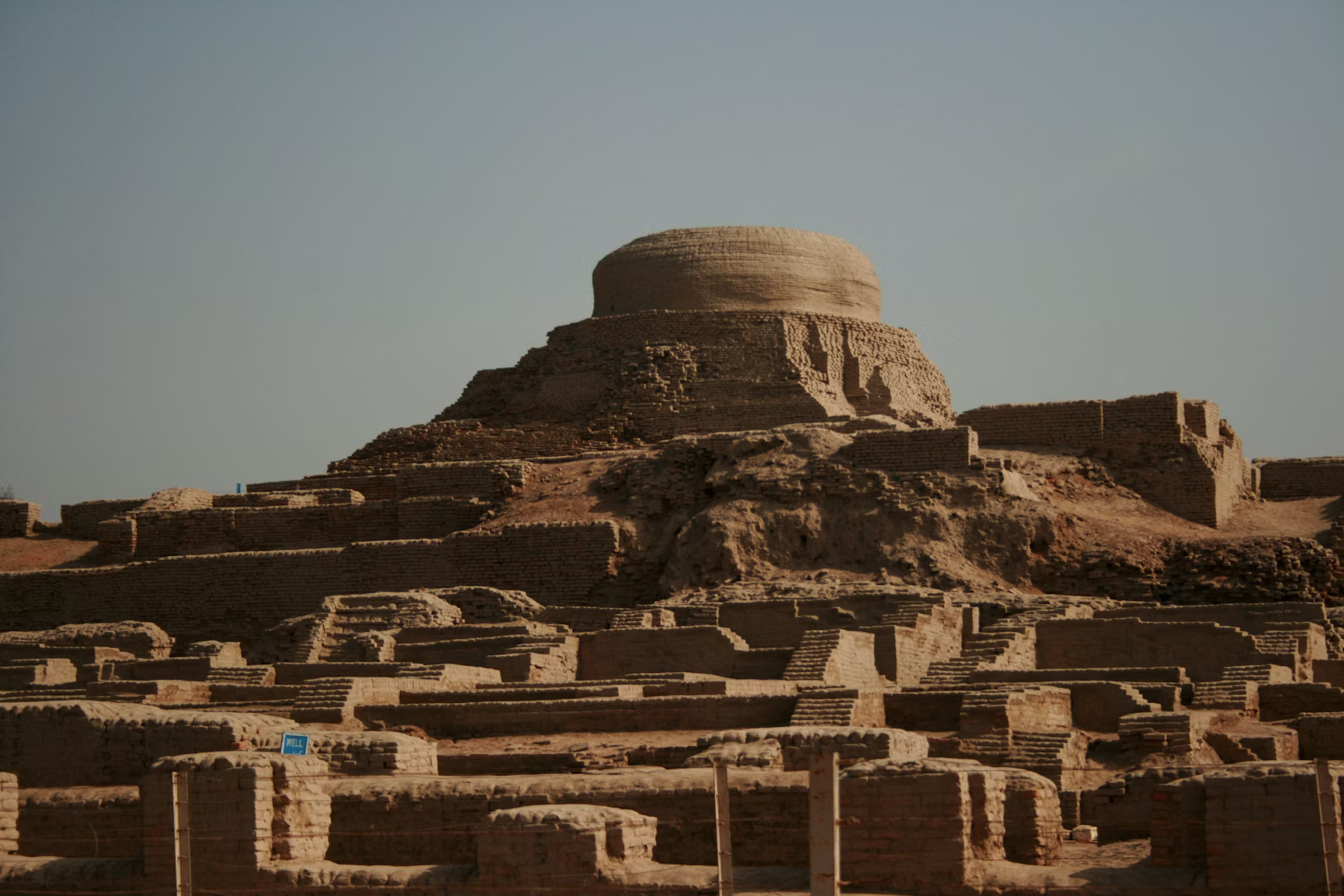
New scientific research is offering one of the clearest explanations yet for the long and gradual decline of the Indus Valley Civilization (IVC)—one of the world’s earliest and most sophisticated urban cultures. According to a recently published study in Communications Earth & Environment, the civilization appears to have faced repeated, long-lasting droughts that steadily weakened its ability to sustain large cities, agriculture, and complex water systems.
Rather than collapsing suddenly due to invasion, disease, or a single catastrophic event, the Indus Valley Civilization seems to have slowly transformed and dispersed under the pressure of worsening climate conditions. The findings highlight how deeply environmental stress can shape human societies over long periods of time.
A Brief Overview of the Indus Valley Civilization
The Indus Valley Civilization existed roughly between 5,000 and 3,500 years ago, stretching across what is now modern-day Pakistan and northwest India, primarily along the Indus River and its tributaries. Alongside ancient Egypt and Mesopotamia, it is considered one of the three great early civilizations of the Old World.
At its peak, between about 4,500 and 3,900 years ago, the civilization featured large planned cities such as Harappa and Mohenjo-daro, advanced brick architecture, sophisticated drainage systems, standardized weights, and extensive trade networks. What has puzzled archaeologists for decades is why such a well-organized society began to decline—and why it did so gradually rather than abruptly.
How Scientists Reconstructed the Ancient Climate
The new study, led by Vimal Mishra and colleagues, used a combination of advanced climate simulations and multiple sources of paleoclimate evidence to reconstruct environmental conditions across the Indus region between 5,000 and 3,000 years ago.
To ensure accuracy, the researchers combined several independent data sources:
- Climate model simulations covering temperature and rainfall patterns
- Geochemical analysis of stalactites and stalagmites from two Indian caves, which preserve long-term records of rainfall
- Water level records from five lakes located in northwest India, offering clues about past hydrological conditions
By merging these datasets, the team was able to build a detailed picture of how the region’s climate changed over thousands of years.
Clear Evidence of Warming and Declining Rainfall
The analysis revealed two major long-term trends across the Indus Valley region:
- An overall temperature increase of about 0.5°C
- A decline in average annual rainfall of roughly 10% to 20%
While these numbers may seem modest at first glance, sustained changes of this magnitude can have serious consequences for river flow, crop productivity, and water availability—especially in societies that rely heavily on seasonal monsoon rains.
Four Major Droughts That Lasted Nearly a Century Each
One of the most striking findings of the study is the identification of four prolonged drought events between approximately 4,450 and 3,400 years ago. Each of these droughts lasted more than 85 years, and some extended well beyond a century.
These were not localized dry spells. The researchers found that each drought affected between 65% and 91% of the entire Indus Valley Civilization region, making them large-scale and persistent environmental crises.
The final drought identified in the study lasted 113 years, from about 3,531 to 3,418 years ago—a period that aligns closely with archaeological evidence showing widespread deurbanization and population dispersal.
How Droughts Changed Where People Lived
The study also sheds light on how people responded to increasing water stress. During the earlier phase of the civilization, between 5,000 and 4,500 years ago, settlements were often located in areas that received relatively higher rainfall.
As droughts became more frequent and intense after 4,500 years ago, settlement patterns began to change. Communities increasingly shifted closer to the Indus River, likely seeking more reliable water sources as rainfall-fed streams and smaller rivers became less dependable.
This shift suggests adaptation rather than immediate collapse. Instead of abandoning the region entirely, people adjusted their living arrangements to cope with worsening environmental conditions.
A Slow Decline, Not a Sudden Collapse
One of the key conclusions of the research is that the Indus Valley Civilization did not fall apart because of a single event. Instead, the civilization appears to have gradually transformed over centuries, with prolonged droughts acting as a major contributing factor.
Large urban centers slowly lost population, trade networks weakened, and people moved into smaller, more dispersed rural settlements. This process of slow unraveling fits well with archaeological evidence showing continuity in some cultural practices even as cities declined.
Why Water Was So Central to Indus Society
Water management was a defining feature of the Indus Valley Civilization. Cities were built with carefully planned drainage systems, wells, reservoirs, and standardized infrastructure designed to handle both water supply and waste.
However, even the most advanced water systems have limits. Century-scale droughts would have reduced river flow, lowered groundwater levels, and made large urban populations increasingly difficult to support. Over time, the balance between population size and available water likely became unsustainable.
What This Study Means Beyond Ancient History
Beyond explaining the fate of an ancient civilization, the study offers a broader lesson about how long-term climate change can reshape societies. Rather than dramatic overnight collapses, environmental stress often works slowly, narrowing choices and forcing gradual adaptations.
The Indus Valley case shows how persistent, multi-decade droughts can erode even highly organized and technologically advanced societies. It also highlights the importance of understanding regional water systems and climate resilience—an issue that remains highly relevant today.
Research Reference
Communications Earth & Environment – Vimal Mishra et al., River drought forcing of the Harappan metamorphosis
https://www.nature.com/articles/s43247-025-02901-1