Satellite Mapping Reveals Rapid Shifts in Antarctic Glacier Grounding Lines and Why It Matters for Sea Levels
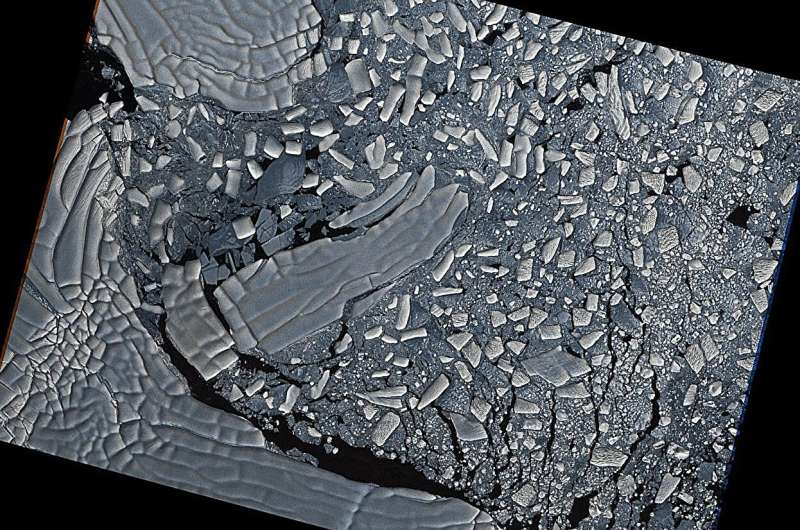
Scientists are getting an unprecedented look at how Antarctica’s massive glaciers are changing, thanks to advanced satellite radar technology and a large international collaboration. A newly released scientific dataset now offers the most detailed and precise mapping of Antarctic glacier grounding lines ever produced, shedding light on how quickly ice is retreating and what that could mean for future sea level rise.
At the heart of this research is a simple but critically important boundary: the grounding line. This is the point where a glacier stops resting on bedrock and begins floating on the ocean. Small changes at this boundary can have outsized consequences for how much ice flows into the sea.
Understanding Grounding Lines and Why Scientists Track Them
On Earth today, there are only two continental-scale ice sheets—one covering Antarctica and the other Greenland. These vast ice sheets formed over thousands of years as layers of snowfall compacted into ice. Antarctica’s ice sheet alone holds enough frozen water to raise global sea levels by many meters if it were to melt completely.
The grounding line plays a crucial role in controlling how ice moves. When this line shifts inland, glaciers encounter deeper bedrock and often become thicker, allowing more ice to flow into the ocean. When it moves seaward, ice discharge can slow. Because of this, tracking grounding line movement is a key way scientists assess glacier stability and long-term sea level trends.
A Major Leap Forward in Satellite Observation
The new dataset comes from observations collected by the COSMO-SkyMed satellite constellation, operated by the Italian Space Agency. This system uses synthetic aperture radar, allowing it to see through clouds, operate in darkness, and function year-round—essential capabilities for monitoring Antarctica’s harsh and remote environment.
The COSMO-SkyMed mission was first launched 17 years ago, but around five years ago, it began a dedicated effort to closely observe Antarctic glaciers. After extensive processing and interpretation, scientists were able to detect tiny vertical movements in ice caused by ocean tides, which reveal the exact location of grounding lines.
This work relied on a technique known as Differential Interferometric Synthetic Aperture Radar, or DInSAR. Among all existing methods for grounding line detection, DInSAR stands out because it works in all weather conditions and can detect rapid grounding line migrations with remarkable accuracy.
What the New Dataset Includes
The research team analyzed 794 satellite images covering more than 74 glaciers across East Antarctica, West Antarctica, and the Antarctic Peninsula. These observations span from July 2020 to March 2022, providing a consistent and high-resolution snapshot of glacier behavior across much of the continent.
One of the most striking findings is that in some regions, grounding lines are retreating by as much as 700 meters per year, which is roughly half a mile annually. This rate of movement highlights just how dynamic Antarctic glaciers can be when influenced by ocean tides, warming waters, and ice dynamics.
Importantly, the dataset fills major gaps left by previous satellite missions, which often struggled to map fast-flowing glaciers accurately or consistently. For the first time, researchers can monitor these glaciers at a continental scale using high-frequency radar data.
Why This Matters for Sea Level Rise
Antarctica is already a significant contributor to global sea level rise, and its influence is expected to grow as the climate warms. When grounding lines retreat inland, glaciers generally lose more ice to the ocean. Over time, this added ice raises sea levels, affecting coastal communities worldwide.
The relationship is straightforward: inland grounding line retreat usually means increased ice discharge, while stabilization or outward movement can slow ice loss. By providing precise measurements of grounding line locations, this dataset helps scientists reduce uncertainties in sea level rise projections, which are essential for climate planning and risk mitigation.
The Role of International Collaboration
This research was made possible through cooperation between the University of Houston, the Italian Space Agency, and NASA, among others. Such international partnerships are increasingly important in Earth observation, where large-scale datasets, specialized expertise, and advanced technology must come together.
The project also demonstrates the long-term value of sustained satellite missions. COSMO-SkyMed’s radar system provides scientists with what is effectively a near–real-time lens into Antarctica’s evolution, something that was simply not possible a few decades ago.
Open Data for the Global Scientific Community
One of the most important aspects of this effort is that the entire grounding line dataset has been made freely available to researchers worldwide. Open access allows scientists to integrate the data into climate models, compare it with older observations, and refine predictions about how Antarctic glaciers will behave in the coming decades.
This openness also encourages cross-disciplinary research, linking glaciology with oceanography, climate science, and coastal risk assessment.
Extra Context: How Radar Satellites See Ice Move
Radar satellites like COSMO-SkyMed work by sending microwave signals toward Earth and measuring how those signals bounce back. When the surface moves—even by a few millimeters—the returning signal changes slightly. By comparing multiple images taken days apart, scientists can detect subtle vertical motion caused by tides lifting floating ice.
This sensitivity is what allows DInSAR to pinpoint grounding lines so precisely. Unlike optical satellites, radar systems are unaffected by polar darkness or cloud cover, making them ideal for long-term Antarctic monitoring.
Looking Ahead
As climate change continues to warm the oceans surrounding Antarctica, grounding lines are expected to become even more dynamic. Datasets like this one provide a critical baseline for future comparisons, helping scientists determine whether glacier retreat is accelerating, slowing, or stabilizing in different regions.
In practical terms, this research strengthens our ability to anticipate sea level rise, plan coastal defenses, and understand one of the most complex components of the Earth’s climate system. The better we understand grounding lines today, the better prepared we are for the changes ahead.
Research paper:
https://doi.org/10.1038/s41597-025-06023-3