Why Many Coral Reef Fishers Remain Below a Living Wage Despite Declining Fish Stocks
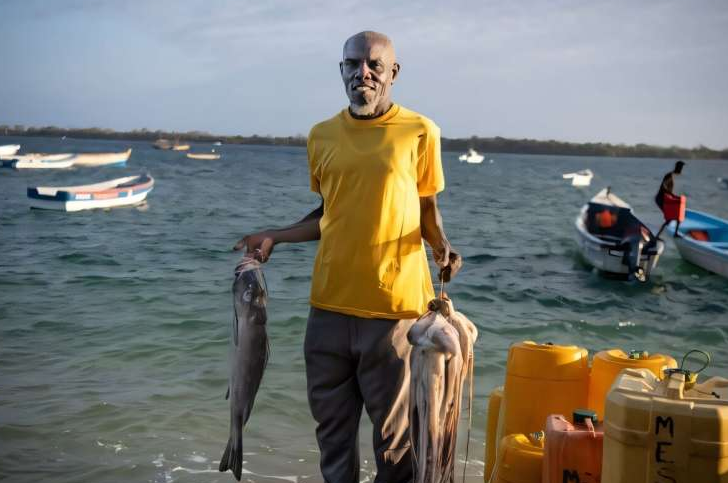
A new scientific study has taken a hard, data-driven look at a question that has troubled conservationists, policymakers, and fishing communities for decades: why do so many coral reef fishers remain poor even as fishing pressure stays high and fish populations decline? The research, led by the Wildlife Conservation Society (WCS) and published in the journal Coral Reefs, reveals that a complex mix of ecological differences, economic thresholds, and market incentives is quietly trapping reef fishers below living wage levels while simultaneously preventing coral reefs from recovering.
Across the tropics, millions of people depend on coral reef fisheries for food and income. Coral reefs are among the most biologically productive ecosystems on Earth, yet overfishing is widespread, especially along densely populated coastlines. Despite decades of fisheries management efforts, poverty remains deeply entrenched in many fishing communities. This new study helps explain why.
What the Study Examined and Why It Matters
The research was conducted by Dr. Tim McClanahan, Director of Marine Science at WCS, and Jesse Kosgei, a WCS research scientist based in Kenya. The team analyzed three years of highly detailed landing-site data from two very different reef systems along the Kenyan coast: high-productivity coastal fringing reefs and lower-productivity offshore island reefs.
The researchers did not limit themselves to simple catch statistics. Instead, they examined a wide range of variables, including fishing effort, areas fished, fish prices, and daily fisher revenues. These economic data were then compared against poverty thresholds and living wage benchmarks. To understand what reefs could sustainably produce, the team paired the economic data with fish population growth models, allowing them to estimate long-term sustainable yields rather than just short-term catches.
This combined ecological–economic approach is one of the study’s major strengths. Traditional fisheries assessments often treat ecosystems as uniform and focus primarily on biological limits. This research shows that human income thresholds play an equally powerful role in shaping fishing behavior and ecological outcomes.
Productivity Differences That Don’t Translate Into Better Incomes
One of the study’s key findings is that not all reefs are equally productive. Coastal fringing reefs naturally produce more fish than offshore island reefs. These fringing reefs can, in theory, support higher sustainable catches and generate more revenue.
However, the reality on the ground looks very different. Despite the ecological advantage of fringing reefs, fishers working in both reef systems earn nearly the same income. In both cases, earnings hover just above the poverty line but remain below a true living wage.
This result challenges earlier fisheries models that assumed similar productivity across reef systems. By ignoring ecological variation, those models often produced unrealistic estimates of sustainable yields, leading to management strategies that failed to improve livelihoods or reef health.
Why Fishers Keep Fishing Even When It No Longer Pays Well
The study reveals a critical behavioral pattern: fishers tend to reduce effort or leave fishing only when their income drops below the poverty threshold. As long as they can meet basic survival needs, many continue fishing, even if their income is insufficient to support long-term stability, savings, or family needs.
At the same time, rising fish prices play a powerful role. As fish become scarcer, their market value increases. This means fishers can earn roughly the same amount of money while catching fewer fish. While this may sound like good news, it actually masks a deeper problem. The fisheries themselves are becoming less productive, and fewer fishers can be supported over time.
This price-driven feedback loop keeps fishing pressure high enough to prevent fish stocks from recovering to their maximum growth potential. In other words, the system stabilizes at a level that sustains poverty while degrading the ecosystem.
Lost Potential in Kenyan Reef Fisheries
The consequences of this dynamic are especially clear in Kenya’s coastal fringing reefs. According to the study, these reefs are currently losing more than twice their potential yield and revenue due to continued overfishing. Even though some fishers have gradually reduced effort over the past 25 years, the reductions have not been sufficient to allow meaningful stock recovery.
Offshore island reefs face their own challenges. While they require a smaller reduction in fishing effort to recover compared to fringing reefs, they are experiencing disproportionate losses of vulnerable and schooling fish species, which are particularly important for ecosystem stability and food security.
Why Common Policy Solutions Often Fail
One of the most important conclusions of the study is that income-focused interventions alone are unlikely to solve the problem. Policies such as fishing gear subsidies, fuel subsidies, or price incentives may temporarily boost earnings, but they often encourage continued overfishing and delay ecological recovery.
In some cases, these measures can actually make things worse by allowing fishers to remain in an economically marginal system longer than they otherwise would. The result is a prolonged period of low income, declining fish stocks, and increasing vulnerability for fishing households.
What the Research Suggests Instead
The study argues for a shift in fisheries management priorities. Rather than focusing solely on short-term income support, policies should aim to reduce fishing effort to sustainable levels while actively supporting long-term recovery.
Key recommendations include:
- Reducing overall fishing pressure to allow fish populations to rebuild
- Protecting key fish aggregations, which are critical for reproduction
- Banning or restricting capture of depleted species
- Designing fisheries management rules that explicitly aim to meet living wage goals, not just biological targets
When fish biomass is allowed to recover, reefs can support higher catches over time, improve food security, and generate better incomes with less effort.
Why Reef Fisheries Matter Beyond Kenya
While this study focuses on Kenya, its implications extend far beyond East Africa. Coral reef fisheries support hundreds of millions of people globally, particularly in tropical developing nations. These fisheries are central to local diets, employment, and cultural identity.
Healthy reefs also provide broader benefits, including coastal protection, tourism revenue, and biodiversity conservation. When reef fisheries collapse, the social and ecological consequences ripple outward, affecting entire regions.
A Path Toward Recovery and Fair Livelihoods
The researchers emphasize that fisheries recovery is both necessary and achievable. Rebuilding fish stocks can lift families out of poverty, but it requires political will, community engagement, and alternative livelihood opportunities for those who reduce or leave fishing.
Understanding the hidden forces that lock fishers into low-income systems is a crucial first step. By recognizing how economic thresholds, market prices, and ecological limits interact, policymakers and communities can move toward solutions that benefit both people and nature.
Ultimately, the study delivers a clear message: overfishing persists not because fishers want to degrade reefs, but because the system leaves them few viable alternatives. Addressing that reality is essential for creating resilient reefs and sustainable coastal livelihoods.
Research Paper: https://link.springer.com/article/10.1007/s00338-025-02779-7