Global Shipping Changes Are Quietly Reshaping Clouds and Climate Around the World
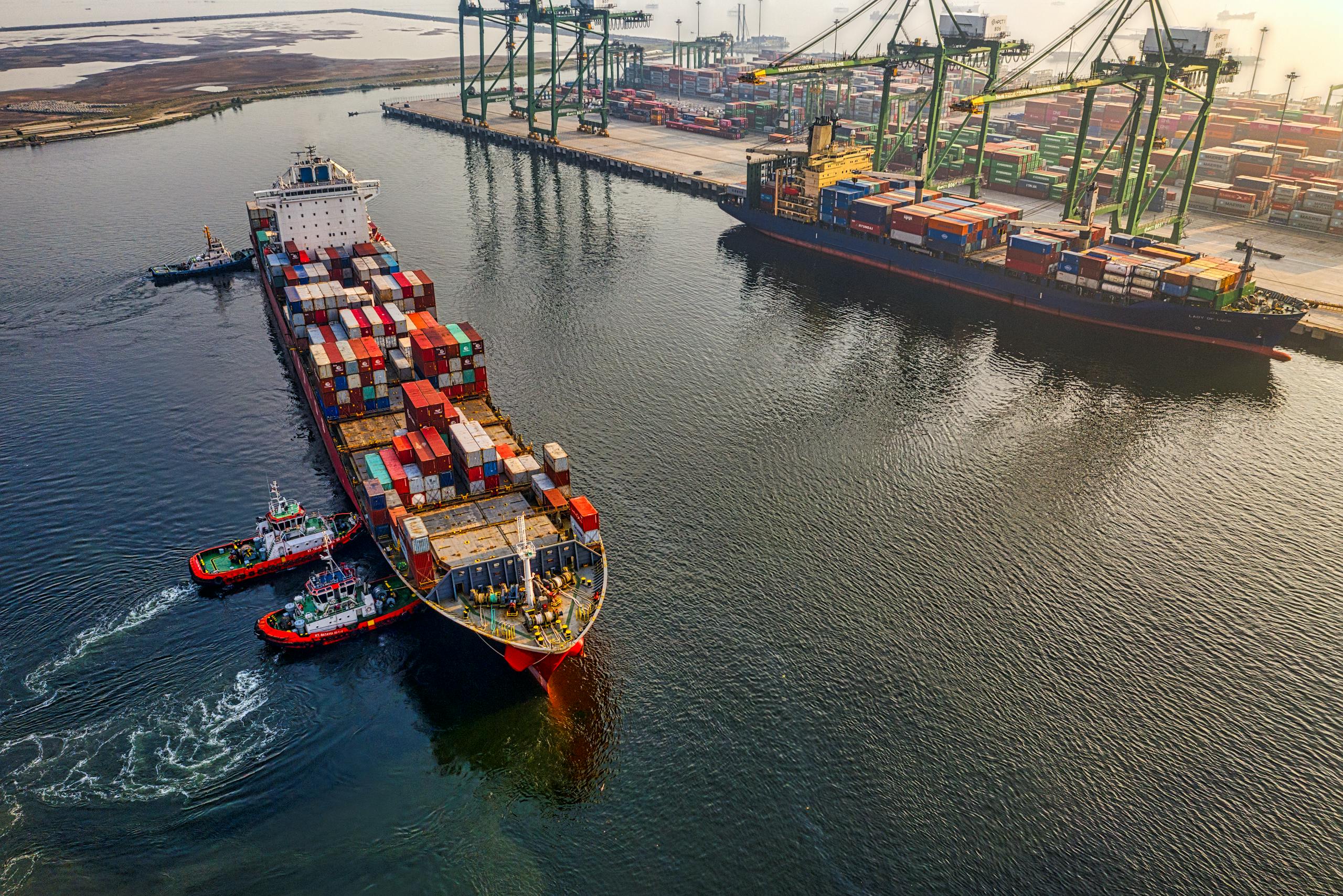
The global shipping industry is usually discussed in terms of trade, geopolitics, and supply chains. But new scientific research shows that when shipping routes change, the effects don’t stop at ports or economies — they can reach all the way into the atmosphere. A recent study by researchers at Florida State University reveals how cleaner ship fuels and sudden rerouting of vessels are directly altering cloud formation, with important consequences for climate science, climate modeling, and environmental policy.
This research takes advantage of a rare real-world situation where global shipping patterns changed abruptly, not because of weather or regulations, but due to conflict in a key maritime corridor. The result is one of the clearest measurements yet of how much ship pollution influences clouds — and how much that influence has weakened since new fuel rules came into effect.
How a Shipping Crisis Became a Climate Experiment
In late 2023, attacks near the Bab al-Mandab Strait severely disrupted traffic through the Red Sea. This narrow passage normally carries a large share of global shipping, connecting Europe and Asia via the Suez Canal. As security risks increased, many shipping companies rerouted vessels thousands of kilometers south, sending them around the Cape of Good Hope at the southern tip of Africa.
This sudden detour caused a sharp increase in ship traffic across the South Atlantic Ocean, a region known for its persistent low-lying cloud cover. For atmospheric scientists, this unexpected shift created something extremely rare: a large-scale natural experiment.
Because the rerouting was driven by conflict rather than climate, weather, or policy decisions, researchers could isolate the impact of ship emissions on clouds without many of the usual complications that make atmospheric research so difficult.
Why Clouds and Ship Pollution Matter
Ships emit tiny particles called aerosols, especially sulfate particles produced from sulfur in marine fuels. These aerosols act as cloud condensation nuclei, helping water vapor form cloud droplets. When more aerosols are present, clouds tend to contain more numerous but smaller droplets, making them brighter and more reflective.
Brighter clouds reflect more sunlight back into space, creating a cooling effect on Earth’s surface. For decades, this pollution-driven cooling has partially masked the warming caused by greenhouse gases. Scientists estimate that aerosol-cloud interactions have hidden roughly one-third of human-caused warming.
However, these interactions are also one of the largest uncertainties in climate projections. Unlike carbon dioxide, which remains in the atmosphere for centuries, aerosols last only days or weeks and vary dramatically by location. Clouds themselves are complex, dynamic, and difficult to predict, making their response to pollution hard to quantify.
The IMO 2020 Fuel Rule Changed Everything
In January 2020, the International Maritime Organization (IMO) implemented a major regulation requiring ships to reduce the sulfur content of their fuel by about 80%. The goal was to improve air quality and protect human health, especially in coastal regions and near major ports.
Earlier research had already shown visible changes after the regulation. Satellite images revealed fewer “ship tracks” — the bright cloud streaks created by pollution from vessels. Cloud droplets in major shipping corridors became larger and fewer, indicating weaker aerosol influence.
What remained unclear was the exact scale of this change. Estimates varied wildly, with some studies suggesting only minor declines in cloudiness and others proposing dramatic reductions of up to 80%.
Using NO₂ to Separate Traffic From Pollution Effects
The rerouting around the Cape of Good Hope provided a way to resolve this debate. Researchers tracked nitrogen dioxide (NO₂) over the southeastern Atlantic using satellite data. NO₂ is emitted by ship engines but is not affected by sulfur fuel regulations, making it a reliable indicator of ship traffic volume.
Satellite observations showed a clear spike in NO₂ during 2024, confirming that shipping activity in the region had roughly doubled. This allowed scientists to compare cloud behavior under heavy ship traffic both before and after the sulfur regulations.
By examining how cloud droplet numbers responded to the same level of shipping activity, researchers could isolate the impact of cleaner fuels alone.
What the Study Found
The results were striking. Even with roughly twice as many ships passing through the region in 2024, the effect on cloud droplet formation was only slightly weaker than what was seen before 2020. However, when emissions were normalized using NO₂ levels, the findings became clear.
The ability of ship emissions to alter cloud properties had dropped by approximately 67% since the IMO sulfur cap took effect. In other words, for the same amount of shipping activity, modern vessels running on cleaner fuel now produce far fewer cloud-forming particles than they did just a few years ago.
This provides strong, direct evidence that sulfur reductions have dramatically weakened shipping’s influence on clouds.
Why This Matters for Climate Science
Aerosol-cloud interactions are the single biggest source of uncertainty in estimates of Earth’s energy balance. Climate models must accurately represent how clouds respond to changes in pollution to predict future warming.
This study helps narrow those uncertainties by providing a real-world measurement of cloud sensitivity to aerosol changes. It gives climate scientists a much stronger constraint on how quickly cooling effects from pollution disappear as air quality improves.
These findings are also relevant to ongoing debates about the causes of recent marine heat waves, particularly in the Atlantic Ocean during 2023 and 2024. Some scientists suspect that reduced cloud reflectivity after IMO 2020 may have allowed more sunlight to warm ocean surfaces, contributing to unusually high sea temperatures.
Health Benefits Come With Climate Trade-Offs
While aerosols can cool the planet, they come at a serious cost. Sulfur particles are linked to respiratory illnesses, cardiovascular disease, and premature death. The IMO fuel regulation is estimated to have already prevented tens of thousands of early deaths worldwide by improving air quality.
This highlights a complex reality: policies designed to protect human health can also alter climate dynamics. Cleaner air may slightly accelerate warming in the short term by removing pollution-driven cooling, even as it delivers enormous public health benefits.
Rather than arguing against such regulations, scientists emphasize that understanding these effects allows policymakers to make better-informed decisions and design climate strategies that account for both air quality and long-term warming.
What This Means Going Forward
The shipping rerouting caused by conflict may be temporary, but the insights gained from it will last. By turning an unexpected global disruption into a scientific opportunity, researchers have improved our understanding of how human activity shapes clouds and climate.
As the world continues to reduce pollution from shipping, industry, and transportation, studies like this help clarify how quickly the atmosphere responds — and what that means for future warming.
Cleaner fuels may mean fewer clouds and slightly more sunlight reaching the ocean, but they also mean healthier air, clearer skies, and more accurate climate predictions.
Research paper:
https://acp.copernicus.org/articles/25/16401/2025/acp-25-16401-2025.html