Scientists Are Searching for Alien Technology Using Technosignatures on Distant Planets
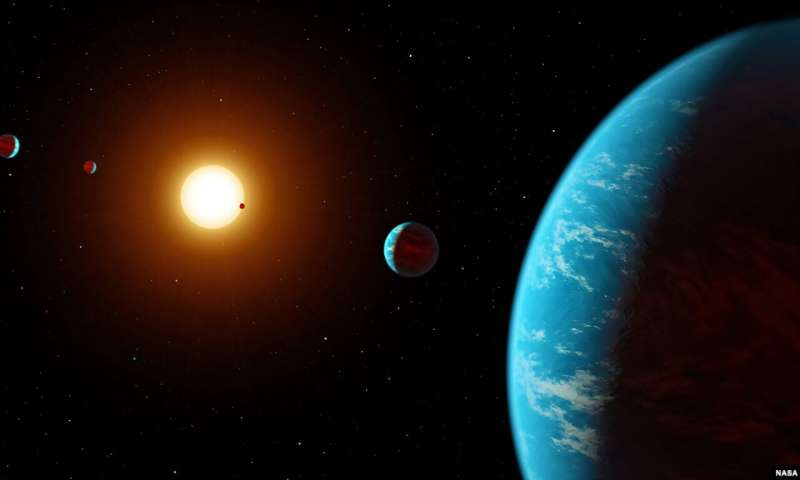
The question of whether aliens exist has fascinated humanity for centuries, but in recent years it has shifted firmly into the realm of serious science. Thanks to rapid advances in astronomy, researchers are now exploring a promising new approach to answering this question: the search for technosignatures, or detectable signs of advanced technology created by intelligent civilizations beyond Earth.
Over the past three decades, astronomers have identified more than 5,000 exoplanets, planets that orbit stars outside our solar system. This surge in discoveries began in 1995 with the detection of the first planet orbiting a Sun-like star, a breakthrough that later earned its discoverers a share of the 2019 Nobel Prize in Physics. Among these thousands of worlds are several Earth-sized planets located in their stars’ habitable zones, regions where temperatures could allow liquid water to exist on the surface. Since water is considered essential for life as we know it, these planets have become prime targets in the search for life beyond Earth.
For years, the main focus of this search has been on biosignatures, chemical or physical indicators of simple life forms. These include gases like oxygen or methane in a planet’s atmosphere that could be produced by living organisms. However, scientists are now asking a deeper question: what if life elsewhere didn’t just exist, but advanced far enough to build technology?
This is where technosignatures come in. Technosignatures refer to observable evidence of technological activity, such as industrial pollutants in an atmosphere, unusual heat patterns, or reflective surfaces that might indicate large-scale energy systems. Unlike vague anomalies or speculative sightings, technosignatures are rooted in known laws of physics and chemistry, making them measurable and testable with scientific instruments.
Astrophysicist Adam Frank of the University of Rochester, along with collaborators from institutions including Pennsylvania State University, Florida Institute of Technology, and NASA’s Goddard Space Flight Center, has played a leading role in developing this field. Their team created the first online technosignature library, a resource designed to guide astronomers as they analyze data from distant planets. This library maps out specific wavelength ranges where certain technological byproducts might appear, such as atmospheric pollutants or light reflecting off energy-harvesting surfaces like solar panels.
One of the biggest challenges historically faced by SETI (the Search for Extraterrestrial Intelligence) has been deciding where to look. With thousands of known exoplanets now cataloged, that problem has changed dramatically. Instead of scanning the sky blindly, scientists can focus on planets that already meet key criteria for habitability. According to researchers, this shift marks a major turning point in the search for intelligent life.
The reasoning behind technosignatures is surprisingly practical. Any civilization capable of advanced technology must generate and manage energy. And while alien life may look very different from life on Earth, it cannot escape the fundamental constraints of physics. There are only so many ways to produce energy, modify environments, or alter planetary atmospheres. This universality allows scientists to apply knowledge gained from Earth-based laboratories to distant worlds light-years away.
Rather than relying on sensational ideas like UFO sightings or unexplained aerial phenomena, researchers emphasize that the most reliable path forward lies in careful analysis of exoplanet data. Modern telescopes are now powerful enough to study the atmospheres and surface characteristics of distant planets, opening the door to detecting both biosignatures and technosignatures.
A recent example highlighting this progress is the study of K2-18b, a planet located about 124 light-years from Earth. This world is classified as a “sub-Neptune” planet and has roughly eight times the mass of Earth. Scientists believe it may possess a thick hydrogen-rich atmosphere covering a vast, deep ocean that could extend hundreds of miles below the surface. This type of planet does not exist in our solar system, making it an entirely new category for researchers to study.
Using advanced telescopes, astronomers have detected tentative evidence of dimethyl sulfide in K2-18b’s atmosphere. On Earth, this chemical is produced exclusively by ocean-dwelling microorganisms such as plankton. While the findings are still preliminary and require further confirmation, they represent one of the most intriguing hints yet that life-related processes may be occurring on another world.
Despite these exciting developments, scientists urge caution. Detecting a chemical or signal does not automatically mean life—or technology—is present. Multiple observations, independent verification, and careful modeling are essential before drawing any conclusions. The history of astronomy is full of false alarms that were later explained by natural processes.
Another key challenge is the issue of timing. Even if intelligent civilizations are common in the universe, they may be short-lived on cosmic timescales. For humans to detect them, our technological era would need to overlap with theirs. If advanced civilizations tend to collapse or evolve beyond detectable technologies relatively quickly, the galaxy could appear silent even if life is widespread.
Scientists also caution against imagining aliens in familiar forms. The human body plan is the result of countless evolutionary accidents, and there is no reason to expect alien life to resemble us. Life elsewhere could be radically different, both biologically and culturally, shaped by environments unlike anything on Earth.
Even if evidence of an intelligent civilization were discovered, direct communication would be extremely difficult. A planet 124 light-years away would require messages to travel 124 years in one direction, making real-time conversation impossible. Instead, scientists expect that any discovery would involve studying alien civilizations from afar, reconstructing aspects of their history and behavior through long-lasting technosignatures.
Beyond the immediate search, this work connects to broader research into how civilizations interact with their planets. Previous studies have explored how technological societies might alter planetary climates, how civilizations could be classified based on their energy use, and whether a long-extinct technological civilization on Earth would still be detectable millions of years later. These ideas help frame the search for alien technology within a larger understanding of planetary evolution.
Thanks to improved telescope technology, rapidly expanding exoplanet catalogs, and a growing emphasis on both biosignatures and technosignatures, humanity is entering a new and unprecedented phase in the search for life beyond Earth. While no confirmed evidence of alien life has been found yet, scientists agree that the tools and strategies now in place make the coming decades especially promising.
Research paper reference:
https://arxiv.org/abs/1809.03606