Humanity Has Now Identified Over 40,000 Near-Earth Asteroids and the Search Is Accelerating
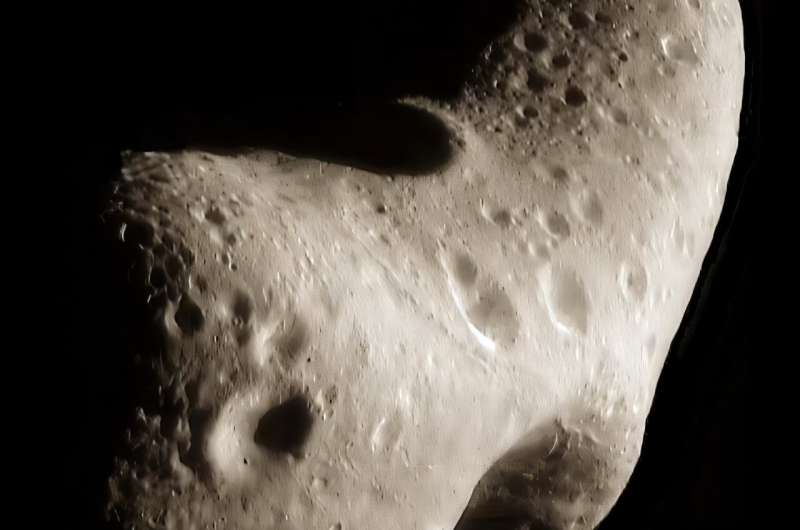
Humanity has quietly crossed a major space-safety milestone: astronomers have now identified more than 40,000 near-Earth asteroids. These objects are rocky remnants left over from the violent formation of the solar system, and their orbits bring them close to Earth’s path around the Sun. While the number itself may not sound dramatic at first, it represents decades of steadily improving technology, global cooperation, and a growing commitment to planetary defense.
Near-Earth asteroids, often abbreviated as NEAs, are defined by proximity rather than size. Any asteroid whose orbit comes within roughly 45 million kilometers of Earth’s orbit qualifies, whether it is just a few meters across or several kilometers wide. Some are harmless cosmic neighbors, while others deserve careful monitoring due to their potential impact risk.
From One Discovery in 1898 to Tens of Thousands Today
The story of near-Earth asteroid discovery began in 1898, when astronomers detected asteroid Eros, the first known object of its kind. For most of the twentieth century, discoveries were rare. Astronomers typically found only a handful of near-Earth asteroids each year, largely because observations relied on small telescopes and manual sky surveys.
That slow pace changed dramatically in the 1990s and early 2000s, when dedicated asteroid-hunting survey telescopes came online. These instruments were designed to systematically scan large portions of the sky night after night, looking for faint, fast-moving points of light that could indicate nearby space rocks.
The growth in numbers tells the story clearly. Around the year 2000, scientists had cataloged about 1,000 near-Earth asteroids. By 2016, that number had climbed to 15,000. In 2022, the total reached 30,000. By November 2025, the count passed the 40,000 mark, with an astonishing 10,000 new discoveries made in just the last three years.
Why Asteroid Discoveries Are Speeding Up
The recent acceleration is not a coincidence. Several new facilities and technologies are dramatically improving our ability to detect and track near-Earth objects.
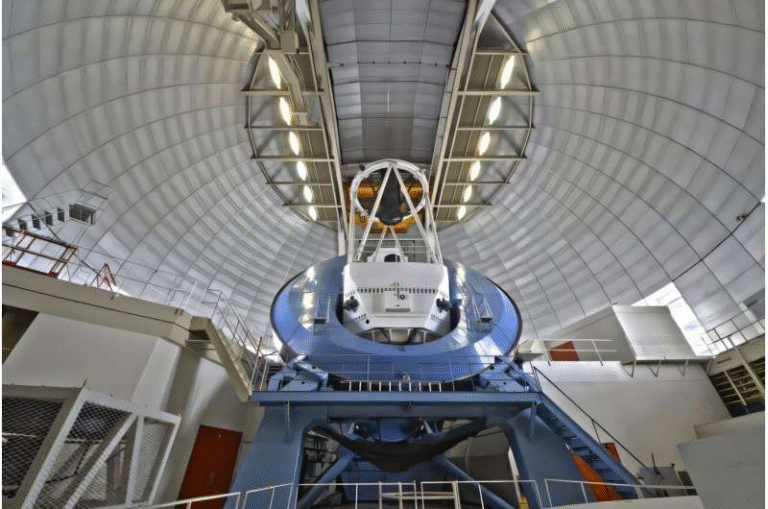
One of the most important additions is the Vera C. Rubin Observatory in Chile, which officially began operations in 2025. Although it is not exclusively dedicated to asteroid hunting, its powerful wide-field camera and rapid sky-survey capabilities allow it to spot tens of thousands of new asteroids as part of its broader mission to map the universe.
At the same time, the European Space Agency’s Flyeye telescopes are adding another layer of protection. These telescopes use a unique design that mimics an insect’s compound eye, allowing them to observe wide areas of the sky at once. This makes them especially good at detecting fast-moving or faint objects that may slip past traditional surveys.
Behind the scenes, advanced software systems process these observations almost instantly. Each new asteroid discovery triggers a cascade of calculations to determine its orbit and predict where it will be years, decades, or even centuries into the future. Scientists assess whether there is any chance, even a very small one, that the object could impact Earth within the next hundred years.
How Dangerous Are These 40,000 Asteroids?
The idea of tens of thousands of nearby asteroids can sound alarming, but the reality is far more reassuring.
Out of the known population, nearly 2,000 near-Earth asteroids currently have a non-zero probability of impacting Earth within the next century. However, these probabilities are typically well below one percent, and most of the objects involved are very small. If they were to enter Earth’s atmosphere, many would burn up harmlessly or cause only minor local effects.
The most dangerous asteroids are those larger than one kilometer in diameter, which could cause global devastation if they struck Earth. The good news is that these large objects are also the easiest to detect, and scientists believe that the vast majority of them have already been found and carefully tracked.
The real challenge lies in mid-sized asteroids, roughly 100 to 300 meters wide. These objects are much harder to detect but could still cause serious regional damage if they impacted Earth. Current estimates suggest that scientists have identified only about 30% of these mid-sized asteroids, meaning there is still significant work ahead.
Crucially, none of the 40,000 known near-Earth asteroids pose any foreseeable threat based on current calculations.
Planetary Defense Is About More Than Watching the Sky
Finding asteroids is only part of the planetary defense effort. Scientists are also developing and testing ways to deflect dangerous objects if one were ever found on a collision course with Earth.
A major step forward came in 2022, when NASA deliberately crashed a spacecraft into the asteroid Dimorphos as part of the DART mission. The impact successfully altered the asteroid’s orbit, proving that deflection is possible.
Building on that success, the European Space Agency’s Hera mission is now traveling to Dimorphos to study the aftermath in detail. By analyzing how the asteroid responded to the impact, scientists hope to turn asteroid deflection from a promising idea into a reliable planetary defense technique.
Understanding Near-Earth Asteroids Beyond Impact Risk
Near-Earth asteroids are also scientifically valuable. They offer clues about the early solar system, preserving material that has changed very little over billions of years. Studying their composition helps scientists understand how planets formed and how water and organic materials may have reached Earth.
Some near-Earth asteroids are also of interest for future space exploration and resource utilization. Because they are relatively close, they could one day serve as stepping stones for deeper missions into space or as sources of raw materials.
The Road Ahead for Asteroid Discovery
With new observatories coming online and detection techniques improving, the number of known near-Earth asteroids is expected to keep rising rapidly. Future space-based infrared telescopes, such as NASA’s planned NEO Surveyor mission, will be especially effective at spotting dark asteroids that are difficult to see with ground-based optical telescopes.
What began with the discovery of a single asteroid in 1898 has become a global, coordinated effort involving scientists, engineers, and space agencies around the world. Each new asteroid added to the catalog strengthens humanity’s ability to understand, predict, and, if necessary, respond to potential cosmic hazards.
Crossing the 40,000 mark is not an endpoint. It is a clear sign that our ability to monitor the space around Earth is improving, and that planetary defense is no longer science fiction but an active and evolving field of research.
Research reference:
https://www.nasa.gov/planetarydefense/neowise-near-earth-object-research