A New Electrode Design Could Finally Make Green Hydrogen Cheaper and Longer-Lasting
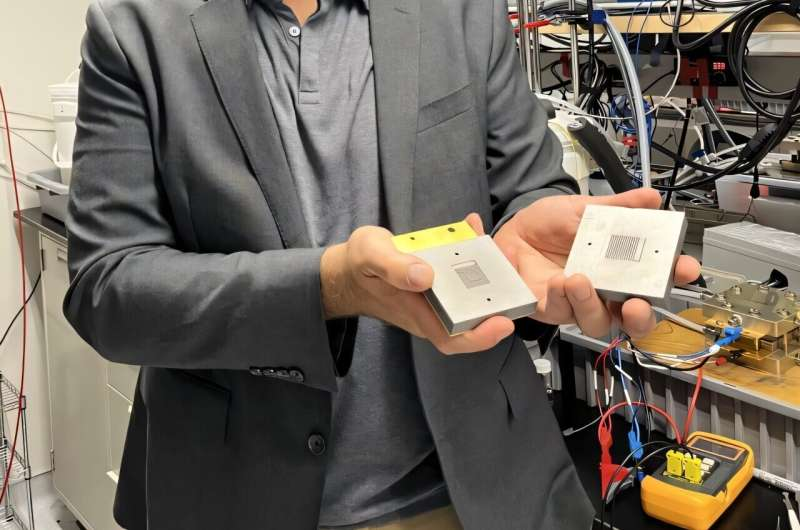
Green hydrogen has long been seen as a key piece of the clean energy puzzle, but one stubborn problem has kept it from truly taking off: cost. Now, researchers at the University of California, Berkeley have developed a new electrode design that could dramatically reduce wear in membrane electrolyzers, potentially making green hydrogen far more affordable and durable than it is today.
This research, published on October 16 in the journal Science, focuses on a specific type of hydrogen-producing device called an anion-exchange membrane water electrolyzer (AEMWE). By rethinking how the electrodes inside these systems are built and protected, the researchers report a huge reduction in degradation, one of the biggest barriers to commercial adoption.
Why Green Hydrogen Still Struggles to Compete
Hydrogen already plays a major role in modern industry. It is widely used as a chemical feedstock for fertilizers, in refining processes, and increasingly as a fuel for heavy-duty transport, such as trucks and buses. It is also gaining attention as a way to store energy for long periods, helping stabilize electrical grids powered by wind and solar.
The problem is how hydrogen is made. Today, most hydrogen comes from natural gas or coal, processes that release large amounts of carbon dioxide and come with all the usual environmental costs of fossil fuels.
In contrast, hydrogen can be produced cleanly using electrolyzers, which split water into hydrogen and oxygen using electricity. When powered by renewable energy, this process produces no direct emissions, with oxygen gas as the only byproduct. Despite this advantage, hydrogen from water electrolysis remains too expensive to compete with fossil-based hydrogen in most applications without subsidies.
One promising way to lower costs is to pair electrolyzers with cheap but intermittent renewable electricity, such as wind and solar. However, this creates another challenge: electrolyzers must be cheap to build and durable, because they will not run continuously and must handle frequent starts and stops.
The Main Weakness of Existing Electrolyzers
Shannon Boettcher, a professor of chemical and biomolecular engineering and chemistry at UC Berkeley, has been working for years on new electrolysis technologies that use ion-conducting polymers instead of liquid electrolytes. These systems offer a pathway to lower costs, but durability has been a major issue.
The core problem lies in electrode degradation, especially at the anode, where oxygen is produced. In these systems, electrons are pulled from hydroxide ions to form oxygen gas. Unfortunately, this process can also strip electrons from the polymer itself, leading to oxidative degradation.
This kind of damage is similar to what happens in batteries as they age, where unwanted side reactions slowly break down materials and reduce performance. In electrolyzers, this degradation causes the electrodes to fail far too quickly for commercial use.
A Quick Look at the Main Electrolyzer Types
To understand why this new work matters, it helps to look at the three main types of electrolyzers in use or development today.
Liquid alkaline electrolyzers use a hot, caustic solution similar to drain cleaner. They are relatively efficient and already being scaled up, particularly in China. However, their harsh electrolytes make maintenance difficult, and their ceramic separators struggle at high production rates or under intermittent operation.
Proton exchange membrane (PEM) electrolyzers use a solid, acidic polymer membrane that both conducts ions and separates hydrogen from oxygen. These systems are compact and efficient, but the acidic environment is extremely corrosive. As a result, they rely on very expensive materials, including iridium electrodes and fluorocarbon-based “forever chemicals” to maintain stability.
Anion-exchange membrane electrolyzers, the focus of this research, aim to combine the best features of both approaches. They use a solid polymer membrane like PEM systems but operate in an alkaline environment, allowing the use of low-cost materials and avoiding precious metals. Until now, their Achilles’ heel has been durability.
How the New Electrode Design Solves the Problem
Boettcher and his team decided to tackle degradation where it hurts the most: the anode electrode. This is the site of oxidation and the primary location where polymer breakdown occurs.
Inspired by decades of battery research, the team developed a method to protect the polymer from harmful side reactions. Their solution involves mixing the organic ion-conducting polymer with an inexpensive inorganic material based on zirconium oxide.
When incorporated into the electrode, this inorganic polymer forms a protective passivation layer around the anode. This layer shields the more fragile organic polymer from losing electrons during oxygen production, dramatically slowing degradation.
The results are striking. The researchers observed a roughly 100-fold decrease in degradation rate. While the technology is not yet fully ready for commercial deployment, this represents the largest improvement the team has seen so far.
What the Electrode Actually Looks Like
The anode itself is built by depositing a cobalt-based catalyst onto a steel wire mesh. This mesh is then fully coated with the new polymer mixture containing both organic and inorganic components. The cathode, where hydrogen is produced, is added afterward, forming a compact sandwich-like structure.
Importantly, the system is designed to operate with pure water, avoiding the need for corrosive liquid electrolytes. This improves safety, reduces maintenance, and simplifies system design.
Why This Matters for Cost and Scale
If this design continues to improve, the implications could be significant. According to Boettcher, achieving this level of durability opens the door to a five- to tenfold reduction in the cost of membrane electrolyzers.
Lower costs would make it realistic to deploy these systems as flexible loads on the electrical grid, soaking up excess renewable electricity when supply is high and producing hydrogen for later use. That hydrogen could then fuel industrial processes, heavy vehicles, or even help with seasonal energy storage.
This approach could finally allow green hydrogen to outcompete fossil fuels without subsidies in many applications.
The Bigger Picture for Hydrogen and Energy Storage
Hydrogen is often described as a missing link in the clean energy transition. While batteries work well for short-term storage, they struggle with long-duration and seasonal needs. Hydrogen, by contrast, can be stored for long periods and transported over long distances.
However, challenges remain. Hydrogen production, storage, and shipping are all expensive, and infrastructure is still limited. That said, progress in electrolyzer technology has been rapid, and advances like this one help address the most critical bottleneck: durability at low cost.
Collaboration and Commercial Pathways
The research was conducted by a team including Shujin Hou, Yang Zhao, Minkyoung Kwak, Kelvin Kam-Yun Li, Peiyao Wu, Anthony Ekennia, Joelle Frechette, and Gregory Su, with contributions from Berkeley Lab, Stanford, and the University of Delaware. The work also involved Versogen, a Delaware-based company focused on commercializing advanced electrolyzer technologies.
Boettcher, who holds the Theodore Vermeulen Chair in Chemical Engineering, continues to refine the technology, aiming to eliminate remaining degradation mechanisms and further improve performance.
Research Paper Reference
Durable, pure water–fed, anion-exchange membrane electrolyzers through interphase engineering
https://www.science.org/doi/10.1126/science.adw7100