Georgia State Researchers Reveal the Cellular Blueprint Behind How the Brain Thinks and Feels
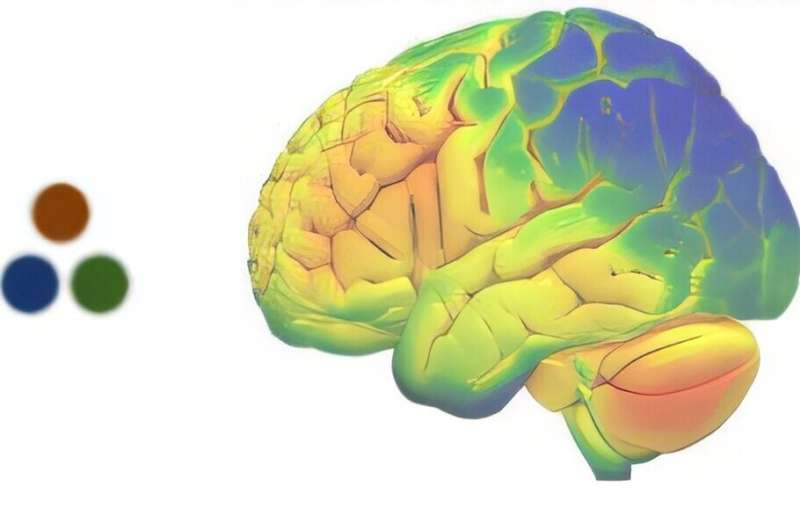
Brain science has long struggled with a fundamental question: how do the brain’s tiniest building blocks give rise to complex thoughts, emotions, and behaviors? A new study from Georgia State University brings researchers closer than ever to answering that question by mapping how microscopic cellular and molecular features form the large-scale brain networks that shape how we think and feel.
Published in Nature Communications, the research presents one of the most detailed attempts yet to bridge the gap between micro-level brain biology and macro-level brain organization. By combining advanced brain imaging, genetic information, and molecular data, the team has uncovered a biological framework that explains how brain networks emerge and function.
Connecting the Smallest Brain Components to Big Ideas
At the center of this research is the idea that the brain’s large communication networks are not random or abstract patterns. Instead, they are built upon a hidden biological architecture rooted in cells, molecules, and energy systems.
Functional MRI (fMRI) scans have long shown that different regions of the brain synchronize their activity into networks involved in perception, cognition, and emotion. These are known as intrinsic connectivity networks, or ICNs. Until now, scientists could see these networks in action but lacked a clear understanding of how they were physically constructed at a cellular and molecular level.
The Georgia State team tackled this challenge by aligning brain imaging data with detailed maps of cell types, neurotransmitters such as serotonin and dopamine, and mitochondria, the structures responsible for producing energy within cells. The result is a multi-layered view of the brain that links biology directly to function.
A Multi-Institutional Effort Led by the TReNDS Center
The study was led by Vince Calhoun, a Distinguished University Professor at Georgia State University and a Georgia Research Alliance Eminent Scholar. Calhoun also holds faculty appointments at Georgia Tech and Emory University and leads the Center for Translational Research in Neuroimaging and Data Science, known as the TReNDS Center.
The TReNDS Center is a collaborative, tri-institutional research hub focused on combining data science, neuroscience, and neuroimaging. This unique setup allowed the researchers to integrate massive datasets spanning imaging, genetics, and molecular biology.
The lead author of the study is Guozheng Feng, a postdoctoral research associate at the TReNDS Center. Other contributors include Jiayu Chen, a research assistant professor whose work focuses on how genes influence brain structure and function.
How the Researchers Built the Brain’s Biological Map
To build their cellular blueprint, the team combined several cutting-edge approaches:
- Dynamic brain imaging, which captures how communication between brain regions changes over time rather than remaining static
- NeuroMark, a specialized framework developed at the TReNDS Center to identify consistent and reproducible brain networks
- Genetic and transcriptomic data, showing where specific genes are active across the brain
- Molecular imaging, mapping neurotransmitter systems and mitochondrial distributions
By layering these datasets, the researchers could see how chemical gradients and cellular distributions align with well-known brain networks.
One of the most important analytical tools used in the study was mediation analysis. This statistical method allowed the team to test whether brain networks actively serve as intermediaries between biological features and behavior, rather than simply being correlated with both.
The results showed that certain networks do act as biological bridges, helping translate molecular and cellular properties into cognitive and emotional outcomes.
Why Brain Networks Matter for Mental Health
The findings have major implications for understanding mental health and neurological disorders. Conditions such as depression, schizophrenia, and Alzheimer’s disease often involve both molecular imbalances and disruptions in brain networks. Until now, these two aspects were often studied separately.
This research shows that they are deeply connected.
If large-scale brain networks are built upon specific cellular and molecular foundations, then damage or imbalance at the microscopic level can directly affect how these networks function. This could explain why some networks are particularly vulnerable in certain disorders.
Understanding which biological systems support specific networks may help researchers identify early warning signs of disease and uncover why symptoms differ so widely from one person to another.
Insights Into Aging and Cognitive Resilience
Beyond mental illness, the study also sheds light on cognitive aging. Some people remain mentally sharp well into old age, while others experience significant decline. The researchers suggest that differences in cellular organization and molecular balance may help explain this variability.
If certain biological features strengthen or stabilize brain networks, they may protect cognitive function over time. This opens the door to future research on how lifestyle, genetics, and environment influence brain resilience.
Toward Personalized Brain-Based Treatments
One of the long-term goals of the research is to move toward personalized neuroscience. By linking an individual’s biological profile to the way their brain networks function, doctors may eventually be able to tailor treatments more precisely.
Instead of treating disorders based only on symptoms, clinicians could target the specific networks and biological systems most affected in each person. This approach could improve outcomes and reduce side effects.
The researchers envision creating individualized brain maps that connect cellular biology with functional brain activity, offering a more complete picture of brain health.
What Are Intrinsic Connectivity Networks?
Intrinsic connectivity networks are groups of brain regions that consistently activate together, even when a person is not performing a specific task. These networks are involved in essential functions such as:
- Attention and focus
- Emotional regulation
- Memory and learning
- Sensory processing
Examples include the default mode network, which is active during rest and self-reflection, and networks involved in visual or motor processing. This study shows that these networks are not just functional patterns but are grounded in physical biological organization.
Why Mitochondria and Neurotransmitters Are Important
Two key biological components highlighted in the study are neurotransmitters and mitochondria.
Neurotransmitters like dopamine and serotonin are chemical messengers that allow neurons to communicate. Their distribution across the brain influences mood, motivation, and cognition.
Mitochondria provide the energy needed for brain activity. Regions with higher energy demands may require denser or more efficient mitochondrial systems. The alignment between mitochondrial maps and brain networks suggests that energy availability plays a crucial role in how networks are organized.
A Step Closer to Understanding the Brain as a System
This research does not claim to answer every question about the brain. However, it represents a major step toward understanding how multiple levels of organization work together as a system.
By showing that functional brain networks are grounded in cellular and molecular architecture, the study helps unify previously disconnected areas of neuroscience. It also provides a foundation for future work exploring how biology, networks, and behavior interact over time.
As tools for imaging and data analysis continue to improve, studies like this bring us closer to a more complete and practical understanding of the human brain.
Research paper: https://www.nature.com/articles/s41467-025-66291-w