Spatial Touchstone Brings Long-Needed Quality Control and Standards to Spatial Transcriptomics

Spatial transcriptomics has rapidly become one of the most exciting tools in modern biology, allowing scientists to see not just which genes are active, but exactly where those genes are expressed inside tissues. From tumors to developing brains, this technology has opened doors to insights that were nearly impossible just a few years ago. But with that rapid growth has come a major problem: lack of standardization and quality control. A new global initiative called Spatial Touchstone is now stepping in to fix that.
Published in Nature Biotechnology, the Spatial Touchstone project is a large, multi-institution effort co-led by Jasmine Plummer, Ph.D., Director of the St. Jude Center for Spatial Omics and a member of the Department of Developmental Neurobiology at St. Jude Children’s Research Hospital. The project introduces a public reference repository, standardized protocols, and open-source software tools designed to help researchers evaluate the quality of their spatial transcriptomics data and compare results across labs and platforms with confidence.
Why Spatial Transcriptomics Needed a Quality Reset
Spatial transcriptomics technologies have advanced incredibly fast. New platforms, new chemistries, and higher-resolution imaging have become available in a short time. While this progress has been exciting, it has also created fragmentation. Different laboratories use different protocols, instruments, and analysis pipelines, often without a clear sense of what “good” data should look like.
Unlike older technologies such as bulk RNA sequencing or single-cell RNA sequencing, spatial transcriptomics has lacked baseline quality metrics. Researchers often analyze enormous imaging datasets without knowing whether issues in the data come from the tissue sample, the machine, the technician, or the analysis itself. This makes comparisons across institutions difficult and increases the risk of spending months analyzing data that may not meet acceptable quality standards.
Spatial Touchstone was created specifically to address this gap by defining what quality means in spatial transcriptomics.
The Core Idea Behind Spatial Touchstone
At its heart, Spatial Touchstone acts as a reference framework for the entire spatial transcriptomics field. The project collected publicly available spatial transcriptomics imaging data and combined it with newly generated, carefully curated datasets produced by participating institutions. These datasets serve as benchmarks that researchers can use to evaluate their own experiments.
The goal is not to force every lab into a single rigid workflow, but to provide clear expectations around performance, reproducibility, and data quality. By doing this, the project aims to maximize the return on investment for spatial transcriptomics experiments, which often involve terabytes of data and significant financial and computational resources.
What’s Inside the Spatial Touchstone Dataset
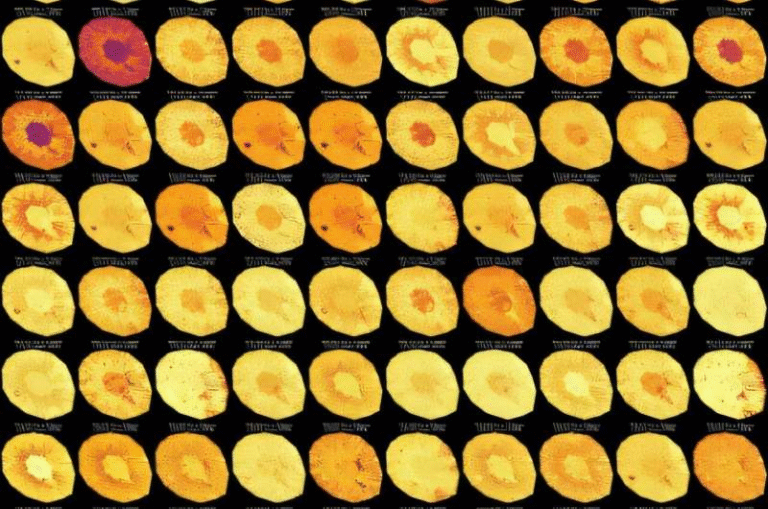
The Spatial Touchstone reference dataset includes samples from six tissue types:
- Breast
- Prostate
- Colon
- Appendix
- Ileum
- Pancreas
These tissues represent both healthy and diseased states, giving researchers realistic examples of how spatial transcriptomics data should look across biological conditions. Importantly, the samples were generated across multiple institutions and using two spatial transcriptomics platforms, with cross-institute replicates included. This design allows the dataset to capture real-world variability while still defining reliable performance ranges.
By analyzing this large, diverse collection of samples, the project provides critical insight into questions that previously had no clear answers, such as how many transcripts are typically detected per cell in different tissues and how spatial signal quality varies by platform.
Spatial QM: Measuring Quality with Real Metrics
Alongside the dataset, the project introduces Spatial QM, an open-source software package designed to compute standardized quality metrics for spatial transcriptomics data. Instead of relying on subjective visual inspection, Spatial QM provides quantitative measures that describe how well a dataset performed.
These metrics help researchers understand whether their samples fall within expected ranges based on tissue type and platform. By comparing experimental data to the reference dataset, labs can identify problems early and avoid downstream analysis on low-quality samples.
This approach mirrors what has long existed in other genomics fields, where standardized quality checks are considered essential rather than optional.
The Spatial Touchstone Portal Makes QC Accessible
To make quality control easier and more accessible, the team also created the Spatial Touchstone Portal (STP), a user-friendly application that allows researchers to screen their own preliminary data against the reference benchmarks.
Through the portal, users can view metrics organized by tissue type and platform, helping them quickly determine whether a sample passes or fails quality thresholds. This is especially important given the massive size of spatial transcriptomics datasets, where full analysis can require extensive time and computational power.
The portal is designed to support early decision-making, enabling researchers to determine whether it’s worth moving forward with a dataset before committing major resources.
Standard Operating Procedures for Reproducibility
The final pillar of the project is the Spatial Touchstone Standard Operating Procedures (STSOP). These SOPs cover a wide range of steps, from tissue preparation to imaging data acquisition. While individual labs may have unique workflows, the STSOPs provide tested, reliable protocols that promote consistency and reproducibility.
By making these protocols openly available, the project lowers barriers for new labs entering the field and helps established labs troubleshoot persistent quality issues. If a sample repeatedly fails quality checks, the SOPs offer a proven alternative approach.
Why This Matters for Biomedical Research
Spatial transcriptomics plays a critical role in understanding cellular microenvironments, including tumor architecture, immune infiltration, and brain development. Poor-quality data can easily lead to misleading conclusions, wasted resources, or irreproducible findings.
Spatial Touchstone helps ensure that discoveries made using spatial transcriptomics are built on solid, comparable data. This is especially important for large collaborative projects and translational research, where consistency across sites is essential.
A Quick Primer on Spatial Transcriptomics
For readers new to the field, spatial transcriptomics combines gene expression profiling with imaging, allowing scientists to see where genes are active within intact tissue sections. Unlike traditional RNA sequencing, which averages signals across cells, spatial methods preserve spatial context, revealing how neighboring cells interact and organize.
As the technology continues to evolve, having shared benchmarks and quality standards will be essential for maintaining trust in the results.
Looking Ahead
The Spatial Touchstone project is designed to grow. While the current dataset focuses on six tissues and two platforms, future expansions may include additional tissues, disease models, and technologies. Community participation will play a key role in refining and expanding the benchmarks.
By bringing quality control, standardization, and transparency to spatial transcriptomics, Spatial Touchstone represents a major step forward for the field.
Research Paper Reference
Standardized metrics for assessment and reproducibility of imaging-based spatial transcriptomics datasets, Nature Biotechnology (2025)
https://doi.org/10.1038/s41587-025-02811-9