How Brain Activity Changes Throughout the Day and What It Reveals About Fatigue and Mental Health
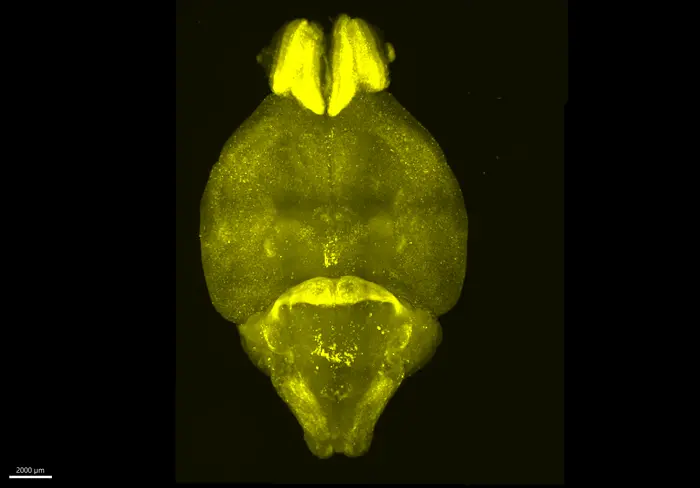
Scientists have long known that the brain does not function the same way all day and night, but understanding how and where those changes happen across the entire brain has remained a major challenge. A new international study led by researchers at the University of Michigan has now provided one of the clearest pictures yet of how brain activity shifts throughout the day. Using advanced imaging, genetics, and computational analysis, the team mapped which neurons and brain networks are active at different times, offering valuable clues about fatigue, sleep, and even potential links to mental health.
The research, published in PLOS Biology, focuses on mouse brains and introduces a powerful new framework that tracks brain-wide activity at single-cell resolution. While the experiments were conducted in animals, the findings and methods have implications that extend far beyond mouse neuroscience.
A New Way to See the Brain Over Time
At the heart of the study is a novel experimental and computational approach designed to answer a deceptively simple question: which parts of the brain are active at different times of the day?
To tackle this, the research team combined several cutting-edge techniques. Scientists in Japan and Switzerland developed an advanced genetic tagging method that causes neurons to glow when they are active. These tagged brains were then imaged using light sheet microscopy, a technique capable of producing highly detailed 3D images of entire mouse brains.
This allowed researchers to see activity patterns across the whole brain rather than focusing on just one region or cell type. Meanwhile, the University of Michigan team developed the mathematical and computational tools needed to analyze and interpret the enormous volume of data generated by these images.
Together, these methods made it possible to track changes in brain activity across multiple time windows during the mice’s waking period, revealing how neural networks reorganize as wakefulness increases.
What Happens to the Brain as the Day Goes On
One of the most striking findings of the study is that the brain does not simply become more or less active as time passes. Instead, it reorganizes which regions and networks are in control.
In mice, which are nocturnal animals, activity patterns follow a clear progression. Early in the waking period, neural activity is strongest in subcortical regions, the deeper parts of the brain involved in basic processes such as arousal, motivation, and sensory integration. As wakefulness continues, activity gradually shifts outward toward the cortex, the brain’s outer layer responsible for higher-order functions like decision-making, planning, and complex cognition.
This transition suggests that different neural systems take the lead at different times, similar to how a city’s traffic patterns change between morning rush hour and late evening. The brain, in other words, is constantly reassigning control to different networks depending on how long an organism has been awake.
Fatigue Leaves a Measurable Signature
A major motivation behind the study was understanding fatigue, a condition that affects performance, safety, and mental health but is notoriously difficult to measure objectively.
The researchers observed what they describe as profound changes in brain activity as wakefulness extends. These changes appear to be reversed or “corrected” during sleep, reinforcing the idea that sleep plays a critical role in restoring normal brain function.
Importantly, the study raises the possibility that fatigue could have identifiable biological signatures in the brain. Currently, humans rely largely on subjective feelings to judge how tired they are, which is often unreliable. Objective measures of fatigue could have significant real-world applications, particularly for people in high-stakes professions such as pilots, surgeons, and emergency responders.
Networks, Not Just Neurons
Another key insight from the study is that behavior and mental state cannot be explained by single neurons or isolated brain regions. Instead, they emerge from interactions between large-scale networks that change dynamically over time.
The researchers found that specific brain areas act as activity hubs, coordinating communication across the brain. These hubs shift location as wakefulness progresses, reinforcing the idea that the brain is a highly flexible and adaptive system.
The study also examined differences in activity among various types of neurons, including excitatory and inhibitory cells, and how their balance changes throughout the day. These details add depth to our understanding of how overall brain function evolves with time awake.
Possible Links to Mental Health
Although the study does not directly investigate psychiatric disorders, the authors believe their findings could have important implications for mental health research.
Many psychiatric conditions, including depression, bipolar disorder, and anxiety disorders, are closely linked to disruptions in sleep and circadian rhythms. The discovery that brain networks reorganize so dramatically across the day suggests that timing and network balance may play a crucial role in mental well-being.
Understanding these patterns more deeply could eventually help researchers identify abnormal activity signatures associated with certain disorders, opening new avenues for diagnosis or treatment.
From Mouse Brains to Human Applications
The experimental techniques used in this study cannot be applied directly to humans, but the computational framework developed by the team is highly adaptable. According to the researchers, similar analytical approaches could be applied to human brain data collected using EEG, PET, or MRI scans, which measure brain activity at a coarser scale.
This flexibility also makes the framework useful for studying other animal models of neurological diseases such as Alzheimer’s and Parkinson’s, where changes in brain networks over time are a central feature.
A Truly Global Collaboration
The study was made possible through collaboration between teams in the United States, Japan, and Switzerland, supported by organizations such as the Human Frontier Science Program. Each group contributed unique expertise, from experimental biology and imaging to mathematics and computational neuroscience.
The paper is also dedicated to Steven Brown, a senior co-author and respected chronobiology researcher who passed away in a plane crash during the project. His contributions to sleep and circadian research were instrumental in shaping the study.
Why This Research Matters
This work represents a significant step toward understanding the brain as a dynamic, time-dependent system rather than a static organ. By showing how neural activity patterns shift throughout the day, the study provides a foundation for future research into fatigue, sleep, mental health, and brain disorders.
Perhaps most importantly, it highlights the idea that when brain activity occurs can be just as important as where it occurs.
Research Paper:
https://journals.plos.org/plosbiology/article?id=10.1371/journal.pbio.3003472