Light-Based Brain Therapy Shows Promise in Reducing Opioid Cravings and Preventing Relapse
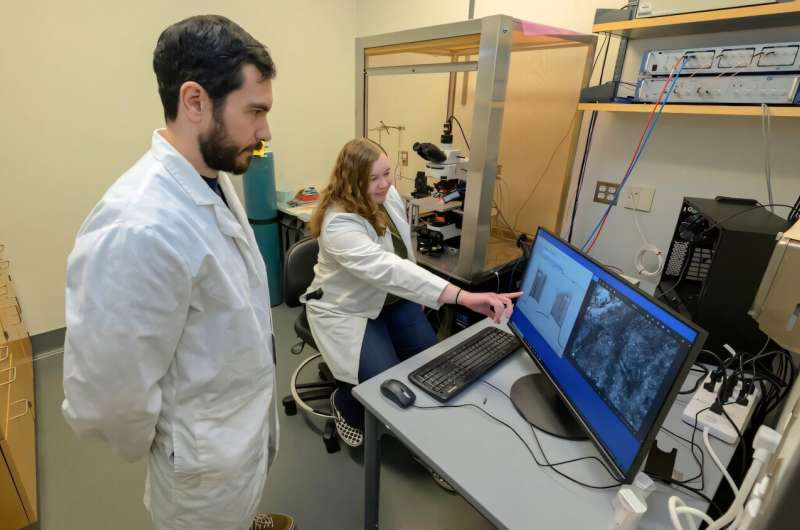
Researchers at Washington State University (WSU) have identified a specific brain circuit that plays a major role in opioid relapse, opening the door to more targeted and potentially more effective treatments for opioid use disorder. Their findings suggest that directly weakening a neural connection involved in craving and cue response can significantly reduce drug-seeking behavior, at least in preclinical models.
The study, published in the Journal of Neuroscience, focuses on how communication between two brain regions—the prelimbic cortex and the paraventricular thalamus—drives relapse after a period of abstinence. By reducing activity in this pathway, researchers were able to dramatically lower heroin-seeking behavior in rats, even when the animals were exposed to drug-associated cues.
A Closer Look at the Brain Circuit Behind Relapse
The brain circuit at the center of this research connects the prelimbic cortex, a region involved in decision-making and goal-directed behavior, with the paraventricular thalamus, an area known to process motivational states and drug-associated cues. While the paraventricular thalamus has long been linked to addiction and relapse, what was less clear was why it becomes so strongly activated when individuals encounter reminders of drug use.
The WSU team discovered that signals from the prelimbic cortex are a key upstream driver of this activation. In other words, the prelimbic cortex appears to push the paraventricular thalamus into a heightened state that promotes craving and relapse. Importantly, this same neural pathway exists in humans, making the findings especially relevant for future clinical applications.
Why Relapse Remains One of the Biggest Challenges
Opioids remain the leading cause of drug overdose deaths in the United States, with more than 79,000 deaths reported in 2023 alone. One of the most difficult aspects of opioid addiction treatment is preventing relapse after detoxification or initial recovery.
Research shows that nearly 60% of individuals relapse within one week of completing inpatient detoxification, and up to 77% relapse within six months after short-term inpatient treatment when medication-assisted therapies are not used. These numbers highlight a critical gap in existing treatment approaches, particularly when it comes to managing cravings triggered by environmental cues.
How the Researchers Tested Their Theory
To better understand and control this brain pathway, the research team used a preclinical rat model designed to closely mimic human opioid use and relapse patterns. The rats were trained to self-administer heroin and then underwent a period of abstinence before researchers measured drug-seeking behavior.
The team used two advanced neuroscience techniques to reduce activity in the prelimbic cortex–paraventricular thalamus pathway.
Chemogenetics: Turning Down Neural Activity
The first approach involved chemogenetics, a technique that allows scientists to selectively control specific neurons. Researchers introduced a designer receptor—a genetically engineered protein—into neurons in the prelimbic cortex that project to the paraventricular thalamus.
Once this receptor was activated using a specialized drug that does not affect other brain cells, activity in the pathway was reduced. The result was a significant decrease in heroin-seeking behavior, showing that dampening this circuit can directly influence relapse-related actions.
Optogenetics: Using Light to Weaken Cravings
Even more striking results came from the second method: optogenetics. In this approach, researchers implanted a fiber-optic cable into the paraventricular thalamus and used a low-frequency light pattern to gradually weaken the synaptic connection between the two brain regions.
This light-based technique caused a process known as synaptic depotentiation, essentially reversing the strengthening of neural connections that occurs during abstinence. Compared to chemogenetics, the optogenetic method was nearly twice as effective in reducing heroin-seeking behavior.
Understanding the Brain Changes During Abstinence
One of the most important insights from the study is how abstinence itself alters the brain. During periods without heroin, the connection between the prelimbic cortex and paraventricular thalamus becomes stronger, a form of neural plasticity that makes individuals more sensitive to drug-related cues.
By weakening this connection, researchers were able to counteract abstinence-induced plasticity and reduce relapse-like behavior. This finding helps explain why cravings can feel overwhelming even after long periods without drug use—and why targeting specific circuits may be more effective than broad treatments.
What This Could Mean for Human Treatment
While optogenetics itself is not currently used in humans, the researchers point to deep brain stimulation (DBS) as a potential clinical alternative. DBS uses implanted electrodes to deliver controlled electrical impulses to specific brain regions and is already approved for conditions such as Parkinson’s disease and treatment-resistant depression.
A similar approach could theoretically target the same circuit involved in opioid relapse. According to the researchers, this strategy may not be limited to opioids alone and could potentially be adapted for other substances, including cocaine, alcohol, and nicotine.
The ultimate goal is not to prevent people from ever encountering drugs, but to help those who decide to stop using manage intense craving periods that often lead to relapse.
The Role of Environmental Cues in Addiction
Environmental cues—such as specific sounds, lighting conditions, or locations associated with drug use—are among the most powerful triggers for relapse. The paraventricular thalamus plays a central role in processing these cues, and the newly identified pathway helps explain how those cues gain such strong motivational power.
The next phase of research will focus on understanding how these cues dynamically activate the circuit and how interventions can be timed or tailored to interrupt this process more precisely.
Broader Implications for Addiction Science
This study adds to a growing body of evidence suggesting that addiction is deeply rooted in specific neural circuits, rather than being a generalized brain disorder. By pinpointing exact pathways and mechanisms, scientists can move toward more precise, personalized interventions that complement existing treatments such as medication-assisted therapy and counseling.
It also highlights the importance of combining behavioral science with cutting-edge neuroscience tools to address one of the most pressing public health challenges today.
Research Reference
Chemogenetic Inhibition and Optogenetic Depotentiation of the Prelimbic Cortex to Paraventricular Thalamus Pathway Attenuate Abstinence-Induced Plasticity and Heroin Seeking in Rats
Journal of Neuroscience (2025)
https://www.jneurosci.org/content/early/2025/11/10/JNEUROSCI.1017-25.2025