Student Researcher Helps Identify the Fastest Gamma-Ray Burst Ever Recorded

A remarkable new study has revealed what scientists are now calling the fastest gamma-ray burst (GRB) ever observed, and the discovery was led by a graduate student. The research focuses on GRB 230307A, an extraordinarily bright and energetic cosmic explosion that pushed the known limits of how fast matter can be launched across the universe.
The study was led by Sarah Dalessi, a fifth-year graduate student in the College of Science at The University of Alabama in Huntsville (UAH). The findings were published in The Astrophysical Journal, one of the most respected journals in astronomy and astrophysics. What makes this discovery even more impressive is that Dalessi was not only part of the research team but served as the lead author on the paper.
What Makes GRB 230307A So Special
Gamma-ray bursts are already known as the most powerful explosions in the universe, releasing more energy in seconds than the Sun will emit over its entire lifetime. GRB 230307A, however, stands out even among these extreme events.
This burst belongs to a category known as ultrarelativistic gamma-ray bursts, meaning the jet of particles and radiation ejected during the explosion traveled at a speed astonishingly close to the speed of light. Researchers calculated that the jet reached 99.99998% of light speed, which translates to roughly 186,000 miles per second.
The speed of these jets is described using a value called the Lorentz factor, which measures how relativistic an object’s motion is. For GRB 230307A, the Lorentz factor was measured at 1,600, the highest value ever recorded for a gamma-ray burst. For comparison, most GRB jets fall within a range of 100 to 1,000, with typical values around 300.
This makes GRB 230307A the fastest gamma-ray burst ever measured, setting a new benchmark for astrophysical research.
How Scientists Observed the Burst
The discovery was made using data from the Fermi Gamma-ray Burst Monitor (GBM), one of two instruments aboard NASA’s Fermi Gamma-ray Space Telescope. Launched in 2008, the Fermi observatory was designed to study the universe’s most energetic phenomena, including black holes, pulsars, and gamma-ray bursts.
Dalessi was working as part of the GBM team, which is a collaborative effort involving NASA, the National Space Science and Technology Center (NSSTC) at UAH, and the Max Planck Institute for Extraterrestrial Physics (MPE) in Germany. UAH plays a major role as the operations center for the GBM instrument.
At the time of the discovery, Dalessi was serving in a role known as a Burst Advocate. This position involves monitoring incoming triggers from the Fermi satellite, processing the data, and quickly classifying new gamma-ray bursts. It was during one of these shifts that GRB 230307A first caught her attention.
The burst immediately stood out as exceptionally bright, ranking as either the second or third brightest GRB ever detected. Later analysis confirmed that it is officially the second brightest gamma-ray burst observed in more than 50 years.
Why the Lorentz Factor Matters
The Lorentz factor is more than just a number—it provides critical insight into the physics of gamma-ray bursts. It helps scientists understand how much energy is involved, how tightly focused the jet is, and what kind of environment surrounds the explosion.
A higher Lorentz factor indicates an incredibly efficient and powerful jet, capable of accelerating matter to extreme speeds without slowing down. GRB 230307A’s record-breaking value suggests that its jet formation mechanism may be more efficient than existing models predict, offering a valuable opportunity to refine theoretical understanding.
A Rare Kilonova and Heavy Element Creation
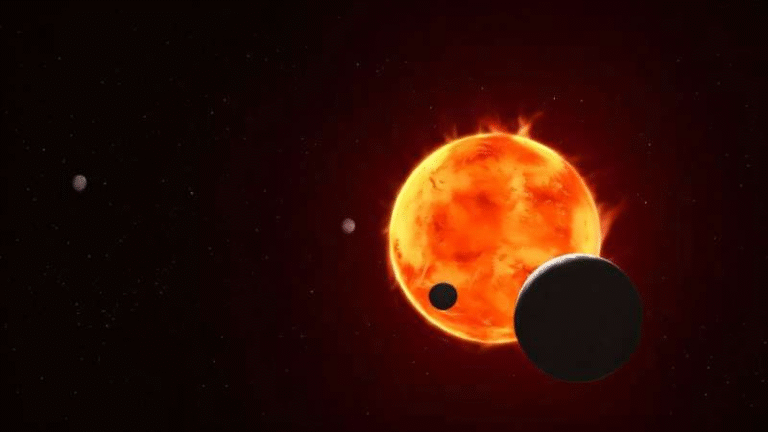
The study did not stop at the gamma-ray data. GRB 230307A was also associated with a kilonova, a rare optical and infrared phenomenon that occurs when compact objects, such as neutron stars, merge.
Kilonovae are particularly important because they are believed to be responsible for creating many of the heaviest elements in the universe. During these mergers, large amounts of neutron-rich matter are ejected into space. As this material decompresses, it undergoes nuclear reactions that form elements heavier than iron.
Follow-up observations of GRB 230307A’s kilonova were conducted by researchers in the Netherlands and the United Kingdom using NASA’s James Webb Space Telescope (JWST). These observations revealed evidence of tellurium, a rare and heavy element. The detection strengthens the idea that neutron star mergers act as a cosmic factory for elements such as gold, platinum, and tellurium.
A Long-Duration Burst With an Unusual Origin
GRB 230307A is classified as a long-duration gamma-ray burst, which typically lasts more than two seconds and is often associated with the collapse of massive stars. However, the presence of a kilonova suggests that this burst likely originated from a compact object merger, which is more commonly linked to short-duration GRBs.
This unusual combination challenges traditional classification schemes and raises important questions about how scientists identify the origins of gamma-ray bursts. Fully confirming the source of a GRB often requires multiwavelength follow-up observations, making events like GRB 230307A especially valuable.
The Role of Students in Cutting-Edge Research
Dalessi’s work highlights the significant role that students can play in frontline scientific discovery. One of the reasons she chose to attend UAH was the opportunity to work closely with NASA collaborators, particularly scientists at Marshall Space Flight Center in Huntsville.
She credits much of her success to mentorship from experienced researchers, including Dr. Michelle Hui, and the collaborative nature of the GBM team. Having direct access to experts and real-time data allowed her to take the lead on a project of global scientific importance.
What This Means for Future Gamma-Ray Burst Research
Looking ahead, researchers see many exciting directions for future study. One major goal is identifying additional long-duration GRBs caused by mergers, which remain extremely rare. Scientists are particularly interested in finding distinct signatures in the prompt gamma-ray emission that could hint at a merger origin without relying solely on follow-up observations.
Discoveries like GRB 230307A also help improve models of jet formation, relativistic physics, and element synthesis, contributing to a deeper understanding of how the universe evolves.
Why This Discovery Matters
GRB 230307A is important not just because it is fast or bright, but because it connects multiple areas of astrophysics into a single event. It combines record-breaking jet speeds, extreme luminosity, kilonova observations, and heavy element production, all captured through international collaboration and student-led research.
As instruments like the Fermi Gamma-ray Space Telescope and James Webb Space Telescope continue to operate, events like this remind us that the universe still has plenty of surprises—and that sometimes, the person leading the discovery is still a student.
Research Paper:
S. Dalessi et al., Fermi-GBM Observations of GRB 230307A: An Exceptionally Bright Long-duration Gamma-ray Burst with an Associated Kilonova, The Astrophysical Journal (2025).
https://doi.org/10.3847/1538-4357/ae0a1d