Bacteria-Dyed Fabrics Could Visually Warn Astronauts About Radiation Exposure in Space
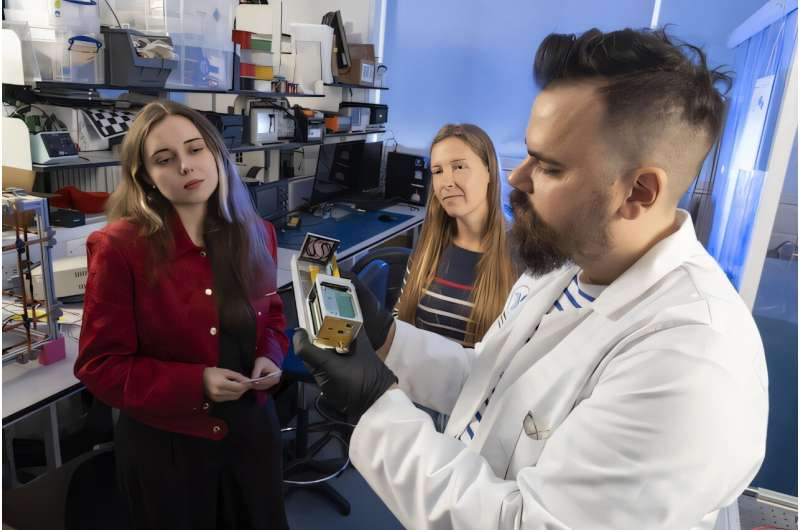
A fascinating new research project from Scotland is exploring an unusual but promising idea: using bacteria-based dyes painted onto fabric to visually detect radiation exposure in space. By combining space engineering, microbiology, fashion design, and sustainable materials, the project aims to create fabrics that change color when exposed to harmful radiation, offering astronauts and researchers a simple, low-tech warning system that works without electronics or power.
The collaboration brings together scientists from the University of Glasgow, researchers at ASCUS – Art and Science Lab in Edinburgh, fashion designers, and an emerging Scottish space startup. Their shared goal is to understand how pigments produced by harmless bacteria react to radiation in orbit, and how those reactions could help protect both future space missions and people here on Earth.
A Fabric That Shows Radiation With Color Changes
At the heart of the project is a specially designed fabric coated with layers of bacterial pigments. Each pigment layer is produced by a different type of bacteria, resulting in multiple colors such as red, yellow, pink, blue, and orange. These pigments naturally fade when exposed to radiation or ultraviolet light.
The fabric is built in stacked layers, so when radiation breaks down the pigment on the surface, it fades to reveal the color underneath. Over time, the progression of color changes provides clear visual evidence of how much radiation the fabric has absorbed. The idea is simple but powerful: anyone can see the warning just by looking at the fabric, with no need for sensors, batteries, or digital readouts.
This approach mirrors how radiation affects living organisms. In bacteria, radiation breaks down pigments and reduces color saturation. In humans, radiation damages DNA and increases the risk of genetic mutations and cancer. By harnessing this visible biological response, the team hopes to create a highly intuitive early-warning system for radiation exposure.
Sending Bacteria-Dyed Fabric Into Orbit
To test how the pigments behave in real space conditions, the team plans to send a sample of the fabric into low Earth orbit in February next year. The experiment will fly aboard a PocketQube satellite, a very small type of satellite designed for affordable scientific missions.
The satellite, named SpinnyONE, is being developed by Edinburgh-based space startup Spinning Around. Once in orbit, the satellite will be exposed to months of cosmic radiation, and onboard cameras will regularly photograph the fabric. These images will allow researchers to track how quickly and in what patterns the colors fade over time.
This data will help scientists understand whether bacterial pigments respond predictably to prolonged radiation exposure in space, and whether the fabrics could be reliably used on future missions.
From Orbit to the Moon
If the orbital experiment is successful, the team has even bigger ambitions. They are planning a follow-up mission that could send a larger fabric sample to the surface of the Moon in early 2028. If achieved, this would mark the first Scottish-built hardware ever to reach the lunar surface.
The lunar version of the experiment would be far more advanced. The fabric patch would include a dedicated camera and a microscope, allowing the team to study pigment degradation in detail under the Moon’s harsh radiation environment. Unlike Earth orbit, the Moon lacks a protective magnetic field, exposing materials to much higher levels of radiation.
Understanding how radiation behaves on the lunar surface is critical for future manned Moon missions, and this experiment could help shape safety measures for astronauts living and working there for extended periods.
Who Is Behind the Project?
The project is led by Dr. Gilles Bailet, a lecturer in space technology at the University of Glasgow’s James Watt School of Engineering. He is known for developing innovative space-focused technologies, including a patented system for 3D printing in zero gravity and the NextSpace TestRig, the world’s first facility dedicated to testing materials designed to be 3D-printed in space.
The biological side of the work is led by Dr. Keira Tucker, the lead biologist at ASCUS – Art and Science Lab. Her team grows the bacteria and extracts the pigments used in the dyes. One of the bacteria involved, Serratia marcescens, is surprisingly common and can sometimes be found forming red rings around household taps.
Once the bacteria have produced their pigments, they are applied to fabric using specialized needles and advanced 3D printing techniques, developed by researchers at the University of Glasgow. After application, the bacteria are killed, leaving behind stable, colorfast pigments that respond consistently to radiation without any living organisms remaining on the fabric.
The visual design of the fabric is led by fashion designer Katie Tubbing, who focuses on making the patterns both visually striking and easy to read. The goal is to ensure that future users can instantly understand when radiation exposure has reached potentially dangerous levels.
Practical Uses in Space Missions
In future space missions, these fabrics could be used in several ways. Astronaut clothing could incorporate radiation-sensitive panels that provide instant feedback on exposure levels. Sensitive equipment could also be wrapped or covered with the fabric, giving engineers a quick visual check on radiation damage.
Because the system does not rely on electronics, it could serve as a backup safety measure if digital instruments fail. This simplicity is especially valuable in space, where reliability and redundancy are essential.
Earth-Based Applications in Medicine and Daily Life
The potential applications go far beyond space exploration. On Earth, the fabric could be used in medical environments, such as radiation-sensitive scrubs or aprons for staff working in radiotherapy and medical imaging departments. These garments could help professionals monitor cumulative exposure during their daily work.
There is also potential for everyday clothing that changes color with UV exposure. Such garments could help people better understand how much sunlight they are exposed to, potentially reducing the risk of skin cancer by encouraging smarter sun protection habits.
A More Sustainable Approach to Dyeing Fabrics
An important side benefit of the project is its focus on sustainability. Traditional synthetic dyes can pollute water supplies and have significant environmental impacts. Bacterial pigments offer a more eco-friendly alternative, using natural biological processes instead of chemical manufacturing.
This aligns with growing interest in bio-based materials across fashion, medicine, and engineering, where sustainability and performance increasingly go hand in hand.
Why This Research Matters
Radiation exposure remains one of the biggest challenges for long-term human activity in space. Solutions that are simple, visual, and reliable could play a major role in keeping astronauts safe. At the same time, the project demonstrates how art, science, and engineering can intersect in meaningful ways.
By turning bacteria into functional dyes and fashion into scientific equipment, the team behind Pigmented Space Pioneers is opening the door to new ways of thinking about safety, sustainability, and design—both on Earth and far beyond it.
Research reference:
https://www.gla.ac.uk/research/az/pigmentedspacepioneers/