Astronomers Are Trying to Explain the Longest and Strangest Gamma-Ray Burst Ever Seen
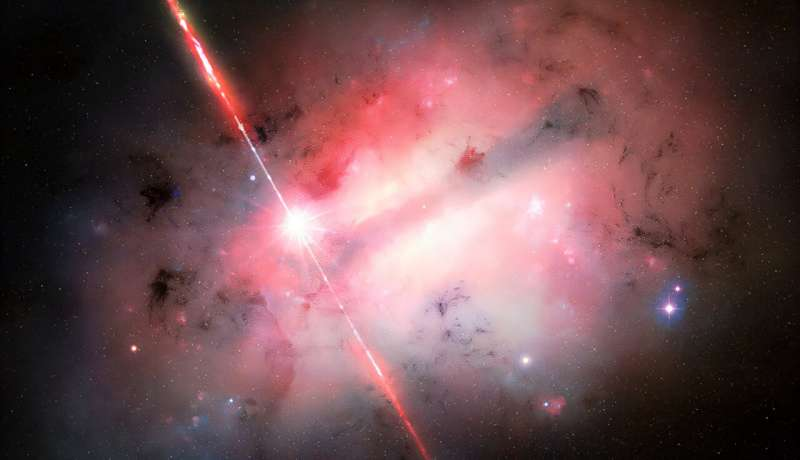
Astronomers around the world are currently focused on a cosmic event that has completely rewritten what scientists thought they knew about gamma-ray bursts. Known as GRB 250702B, this explosion in deep space was not just powerful—it was unprecedented in duration, behavior, and complexity. Detected in early July 2025, the event has become one of the most puzzling high-energy phenomena observed in modern astronomy.
Gamma-ray bursts, or GRBs, are already famous for being the most energetic explosions in the universe. They usually appear as short, intense flashes of gamma radiation that last anywhere from a fraction of a second to a few minutes. GRB 250702B broke that rule completely. Instead of ending quickly, it continued releasing gamma rays for more than seven hours, nearly doubling the previous record for the longest-known GRB.
This alone would have been remarkable. But what truly stunned researchers was that the event also showed X-ray activity nearly a full day before the main explosion, something that has never been clearly observed in a gamma-ray burst before.
How and When the Explosion Was Discovered
The first detection of GRB 250702B came on July 2, 2025, when NASA’s Fermi Gamma-ray Space Telescope registered an unusually strong and persistent signal. Almost immediately, alerts went out to observatories across the globe and in space. What followed was one of the most coordinated observation efforts ever carried out for a single cosmic explosion.
Because the burst was so long-lasting and energetic, no single telescope could capture the entire event. Scientists combined data from multiple instruments, including gamma-ray detectors, X-ray observatories, infrared telescopes, and radio arrays. Among the facilities involved were NASA’s James Webb Space Telescope, the Hubble Space Telescope, China’s Einstein Probe, and the National Science Foundation’s Very Large Array.
Interestingly, despite its immense power, the burst was not detected in visible light. Thick dust in its host galaxy blocked optical observations, forcing astronomers to rely heavily on infrared and radio data.
A Record-Breaking Duration That Defies Expectations
Typical long gamma-ray bursts are thought to occur when a massive star collapses into a black hole, producing a short-lived but extremely intense jet of particles traveling near the speed of light. These events usually fade within seconds or minutes.
GRB 250702B did the opposite. Its gamma-ray emission continued for at least seven hours, with repeated pulses instead of a single flash. This behavior places it in an entirely different category from standard GRBs and raises serious questions about whether existing models can fully explain it.
Scientists now consider it either an extreme example of a gamma-ray burst or something that sits at the boundary between GRBs and another rare phenomenon known as a tidal disruption event.
Where Did GRB 250702B Come From?
Pinpointing the location of the explosion was another challenge. Early observations showed a strange, dusty galaxy at the burst’s position, but it was unclear whether astronomers were seeing two galaxies in the process of merging or a single galaxy split visually by a thick dust lane.
High-resolution imaging and spectroscopy from the James Webb Space Telescope eventually solved this mystery. The data revealed that the explosion occurred in one very large, extremely dusty galaxy, located about 8 billion light-years away. This means the burst happened long before Earth even existed.
The precise location of GRB 250702B within the galaxy also ruled out one possibility. It did not originate near the galaxy’s central supermassive black hole, eliminating one of the simpler explanations for its prolonged energy output.
Possible Explanations for the Unusual Explosion
With standard models falling short, astronomers are now exploring several competing theories.
One leading idea is that GRB 250702B involved a black hole feeding on a companion star over an extended period. Instead of a quick collapse, the black hole may have gradually consumed stellar material, repeatedly launching powerful jets that produced the long-lasting gamma-ray emission.
Another possibility is that the event was an extraordinary tidal disruption event, where a middleweight black hole—thousands of times more massive than the Sun—shredded a star that wandered too close. While tidal disruption events are known, very few have been observed producing gamma rays of this intensity and duration.
A more exotic hypothesis suggests a merger between a small black hole and a stripped-down helium star. In this scenario, the black hole would effectively consume the star from the inside, sustaining energy output for hours instead of minutes.
At this stage, astronomers stress that no single explanation fully fits all the observations, and different studies have reached different conclusions based on the same data.
Why This Discovery Matters
Regardless of its exact origin, GRB 250702B is already considered one of the most important high-energy discoveries of the last several decades. Events like this are incredibly rare, and each one provides a valuable opportunity to test theories about how stars die, how black holes grow, and how extreme physics operates under conditions impossible to recreate on Earth.
The explosion also highlights the importance of multi-wavelength astronomy. Only by combining gamma rays, X-rays, infrared light, and radio waves were scientists able to build a coherent picture of what happened.
Researchers believe GRB 250702B could represent a previously unknown type of cosmic explosion or reveal new pathways through which black holes and stars interact. Either way, it is forcing scientists to rethink long-standing assumptions.
A Quick Look at Gamma-Ray Bursts
Gamma-ray bursts were first discovered in the late 1960s by military satellites designed to detect nuclear tests. Since then, astronomers have identified two main types: short GRBs, lasting less than two seconds and often linked to neutron star mergers, and long GRBs, associated with massive stellar collapses.
GRB 250702B doesn’t fit neatly into either category. Its extreme duration and unusual behavior suggest that the universe may still be hiding entire classes of high-energy events that we are only now beginning to detect.
What Comes Next?
Astronomers are continuing to analyze the enormous volume of data collected from GRB 250702B. Future observations of similar events will be crucial in determining whether this explosion was a one-in-a-million anomaly or the first clear example of a new phenomenon.
For now, GRB 250702B stands as a powerful reminder that the universe still has the ability to surprise us, even after decades of observation and study.
Research paper reference:
https://arxiv.org/search/?query=GRB+250702B&searchtype=all