A 230,000-Year Climate Record Reveals How Dust and Landscapes Shaped the American Southwest
Scientists have uncovered one of the most detailed long-term environmental records ever assembled for the American Southwest, offering fresh insight into how climate shifts, landscapes, and atmospheric dust have interacted over the past 230,000 years. The findings come from an extensive analysis of lake sediments in northern Arizona and challenge long-standing assumptions about when deserts produce the most dust.
At the heart of this research is Stoneman Lake, a rare and remarkably persistent body of water that has quietly recorded environmental history for hundreds of thousands of years. By studying the sediments that settled at the lake’s bottom, researchers were able to reconstruct changes in climate, vegetation, erosion, and dust transport across much of the Southwest.
Why Atmospheric Dust Matters More Than You Might Think
Atmospheric dust plays a critical role in Earth’s climate system. Tiny particles lifted from the ground influence how sunlight is absorbed and reflected, affect cloud formation, alter precipitation patterns, and even transport nutrients across continents and oceans. Dust is not just a local issue—it has global consequences.
Most of this dust originates from erosion of rocks and sediments, driven by wind, water, and landscape disturbance. While dust storms themselves are short-lived, the history of dust production can be preserved in natural archives, such as ice cores, ocean sediments, and lake beds. Lake sediments, in particular, act like time capsules, storing layer upon layer of environmental information.
Stoneman Lake: A Rare Geological Archive
Stoneman Lake, located in Arizona, is an exceptional site for studying deep-time environmental change. The lake has existed for more than one million years, an unusual feat in a region known for dramatic climate swings and prolonged droughts. Even during dry periods when many lakes disappeared, Stoneman Lake endured.
This long lifespan allowed it to continuously collect sediments from its surroundings and from the atmosphere. Some of these sediments were washed in locally during rainfall events, while others—much finer particles—were carried by wind from distant parts of the Southwest.
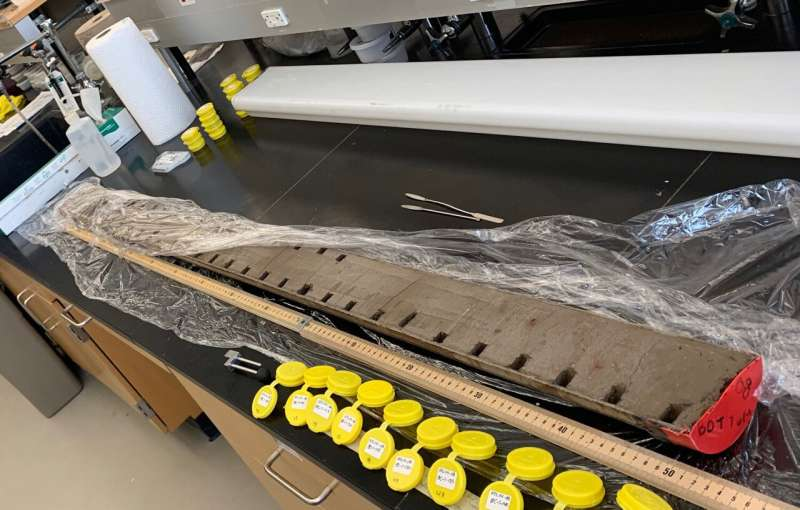
The research team extracted a sediment core from the lakebed, effectively pulling up a vertical timeline of environmental history. Each layer represents a different moment in time, allowing scientists to study changes across multiple ice ages and warm periods.
An Unexpected Discovery About Dust and Ice Ages
One of the study’s most striking findings is that the Southwest produced significantly more dust during warm interglacial periods than during colder glacial periods. According to the data, dust deposition was between 1.2 and 10 times higher during interglacials.
This result runs counter to patterns observed in many other regions of the world, where dust emissions typically peak during ice ages due to colder, windier, and drier conditions. In the American Southwest, the relationship between climate and dust turns out to be far more complex.
The researchers found that dust production is not controlled by aridity alone. Instead, it depends heavily on whether fine sediments are exposed and available to be picked up by wind.
How Climate Shapes Landscapes and Dust Supply
During ice ages, the Southwest was generally cooler and wetter than it is today. Increased rainfall supported more vegetation, stabilized soils, and maintained water bodies across the region. Plant roots and moist ground helped keep sediments in place, limiting the amount of dust that could become airborne.
As the climate warmed during interglacial periods, water became scarcer. Vegetation retreated, slopes eroded, and sediments were increasingly exposed. These disturbed landscapes provided an abundant supply of loose material that wind could easily transport as dust.
In simple terms, it didn’t matter how dry the climate was unless there was sediment available to move. Warm periods created the perfect combination of exposed ground and wind-driven transport.
Tracing the Evidence in Lake Sediments
The sediment core from Stoneman Lake revealed multiple lines of evidence supporting these conclusions. One clue came from the presence of quartz in the lake sediments, even though the surrounding watershed is dominated by basalt. This indicated that a significant portion of the sediment had been carried in from elsewhere by wind.
To build an accurate timeline, scientists relied on volcanic ash layers, which serve as precise time markers, as well as preserved pollen grains, which reveal how plant communities changed over time. Together, these indicators allowed researchers to link dust deposition patterns with broader climate and ecosystem shifts across the Southwest.
Why This Research Matters Today
Understanding how dust behaved in the past provides an important baseline for evaluating modern and future changes. Human activities such as agriculture, land development, grazing, and off-road vehicle use are disturbing landscapes at unprecedented scales, potentially increasing dust emissions.
Today, rising temperatures, prolonged droughts, and more frequent wildfires are reshaping the Southwest. The study suggests that future warming could lead to increased dust levels, even if precipitation patterns do not match those of past ice ages.
This insight is especially important for climate modeling, air quality forecasting, and public health planning. Dust affects respiratory health, reduces visibility, and can influence regional weather systems.
Looking Further Back in Time
The 230,000-year record analyzed in this study is only part of the story. The full sediment core from Stoneman Lake extends much deeper and may eventually reveal up to one million years of climate history. Researchers plan to continue analyzing these older layers to better understand how long-term environmental processes have shaped the Southwest.
One remaining question is the exact geographic source of the dust found in the sediments. Identifying where these particles originated could further clarify how different parts of the region responded to climate change over time.
A New Perspective on Desert Environments
This research challenges the idea that deserts are always dustiest during their driest moments. Instead, it highlights the importance of landscape stability, vegetation, and sediment supply. The findings show that deserts are dynamic systems, deeply influenced by how climate interacts with the Earth’s surface.
By looking far into the past, scientists gain valuable context for understanding the present—and preparing for the future. The story preserved beneath Stoneman Lake is a reminder that climate change leaves lasting fingerprints on the land, and those fingerprints can still be read hundreds of thousands of years later.
Research paper:
https://www.nature.com/articles/s41467-025-65744-6