Scientists Are Finding Seasonal Landslide Clues Hidden in Seismic Signals at Alaska’s Barry Arm
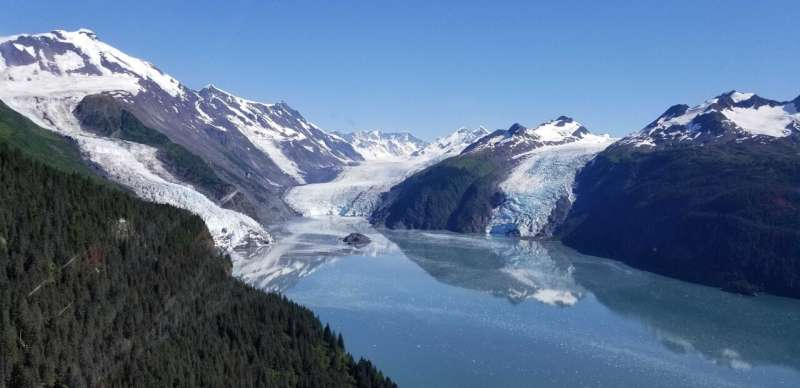
For the past few years, scientists have been keeping a close watch on a massive and potentially dangerous landslide in Barry Arm, a remote fjord in Alaska’s Prince William Sound. Now, new research suggests that subtle seismic signals beneath the area may offer valuable clues about the environment surrounding the landslide — even if they don’t directly predict when it might collapse.
The study, published in Seismological Research Letters, focuses on an unusual set of seismic events detected near the Barry Landslide, a huge slope of unstable rock that has been slowly creeping downhill for decades. While these signals are not caused by the landslide itself, researchers believe they reveal important seasonal processes happening inside the rock — processes that could eventually influence slope stability.
Why the Barry Arm Landslide Matters
The Barry Arm landslide has drawn intense scientific attention since 2020, when researchers identified it as a serious hazard. The slope is steep, fractured, and sits above a narrow fjord. Over the last century, it has also lost a crucial stabilizing support: Barry Glacier, which has been melting and retreating rapidly due to warming temperatures.
The landslide is enormous, with an estimated volume of around 500 million cubic meters of rock. It has been moving slowly for years, but scientists worry about the possibility of a sudden, rapid collapse. If that were to happen, the falling rock would plunge directly into the fjord, potentially triggering a tsunami with dangerous wave heights.
This is not just a theoretical risk. Barry Arm is frequently visited by kayakers, tour boats, and cruise ships, and nearby coastal communities such as Whittier could be affected by large waves. Because of this, understanding every possible warning sign — even subtle ones — is critical for public safety.
A Heavily Instrumented Natural Laboratory
In response to the risk, the Barry Arm area has been extensively instrumented since 2020. Scientists installed seismic sensors, GPS systems, ground-based radar, weather stations, and GPS-timestamped cameras. These instruments continuously record what is happening on and beneath the slope.
The goal is straightforward but challenging: detect any signals that might help identify changes in the landslide before a catastrophic failure occurs. However, the environment is noisy. The region experiences frequent earthquakes, constant glacier movement, weather-driven effects, and natural background seismic activity.
To make sense of this complexity, the research team undertook the painstaking task of manually reviewing an entire year of continuous seismic data. By carefully inspecting the raw waveforms, they built a baseline understanding of what “normal” seismic activity looks like in Barry Arm.
This step was essential. Only by understanding the usual patterns could researchers confidently identify anything unusual.
Discovery of Short, Impulsive Seismic Events
During this detailed analysis, the team identified a previously unrecognized category of seismic signals. These events stood out because they were short, impulsive, and high-frequency, unlike typical earthquake signals or the longer rumbling signals associated with landslide movement.
Even more intriguing was their timing. The events followed a strong seasonal pattern. They increased in frequency from late summer into mid-winter, then stopped almost entirely during late winter or early spring.
Importantly, these signals did not coincide with any measurable movement of the Barry landslide itself. GPS data, radar measurements, and time-lapse imagery showed no corresponding slope acceleration when the events occurred.
This ruled out the possibility that the signals were caused by the landslide shifting.
Freeze–Thaw Processes Beneath the Glacier
After comparing the seismic data with weather records, rainfall information, and ground deformation measurements, the researchers arrived at a compelling explanation. The signals are most likely caused by water freezing and thawing inside tiny cracks in the bedrock, particularly beneath the nearby Cascade Glacier.
When water enters microcracks in rock and freezes, it expands, creating small brittle fractures. When temperatures fluctuate, repeated freeze–thaw cycles can generate tiny seismic events. These events are too small to be felt at the surface but can be picked up by sensitive instruments.
Similar signals have been documented in other cold, mountainous regions, including near unstable rock slopes in Norway, where researchers also linked them to freeze–thaw activity. However, this study is the first to systematically analyze such short-impulsive events in the context of a major landslide hazard.
Why These Signals Still Matter
Although the events do not directly indicate landslide movement, they may still play an important role in monitoring the hazard. Freeze–thaw activity reflects changes in the hydrological environment behind and beneath the slope. Water movement, ice formation, and melting can weaken rock over time, increase internal pressures, and potentially contribute to instability.
By tracking these signals over long periods, scientists can better understand how seasonal processes affect the slope’s internal condition. In the future, changes in the timing, frequency, or location of these signals could signal shifts in subsurface conditions that warrant closer attention.
Landslide Detection and Early Warning Efforts
Alongside this research, the Alaska Earthquake Center is testing a regional landslide detection system at Barry Arm. This system is designed to rapidly identify slope failures and send alerts if significant movement occurs.
As landslide seismology continues to develop, scientists are increasingly recognizing that precursor seismic activity, when present, can be a valuable early warning tool. Not all landslides produce clear precursors, but when they do, those signals can help reduce risk and improve response times.
The work at Barry Arm is part of a broader effort to apply these techniques to other unstable slopes across southern Alaska, where retreating glaciers and warming temperatures are exposing similar hazards.
The Broader Context of Glacier Retreat and Landslide Risk
Barry Arm is not an isolated case. Across Alaska and other high-latitude regions, glacier retreat is removing natural buttresses that once supported steep valley walls. As ice thins or disappears, slopes that were stable for thousands of years may begin to deform or fail.
This process increases the likelihood of landslide-generated tsunamis in fjords, where confined waters can amplify wave heights. Monitoring seismic signals, ground deformation, and environmental conditions is becoming an essential part of managing these emerging risks.
What We Know About the Current Risk
Based on the most recent monitoring, scientists report no signs of imminent large-scale collapse at Barry Arm. The landslide continues to move slowly, and small localized failures remain possible, but a sudden massive failure without a triggering event, such as a strong earthquake, is considered unlikely at present.
Even so, researchers emphasize the importance of continued monitoring. The signals described in this study add another layer of understanding to a complex and evolving hazard.
Looking Ahead
The discovery of these seasonal seismic signals highlights how much information can be hidden within subtle ground vibrations. While they may not predict a landslide on their own, they provide valuable insight into the physical processes shaping unstable slopes in cold environments.
As monitoring technology improves and datasets grow, scientists hope to refine these methods and apply them more broadly. For places like Barry Arm, where natural beauty intersects with real risk, every new piece of knowledge helps improve preparedness and public safety.
Research paper:
https://doi.org/10.1785/0220250205