Amazonian Tikuna Blue Pigment Study Sets a New Standard for Indigenous Collaboration in Science and Conservation
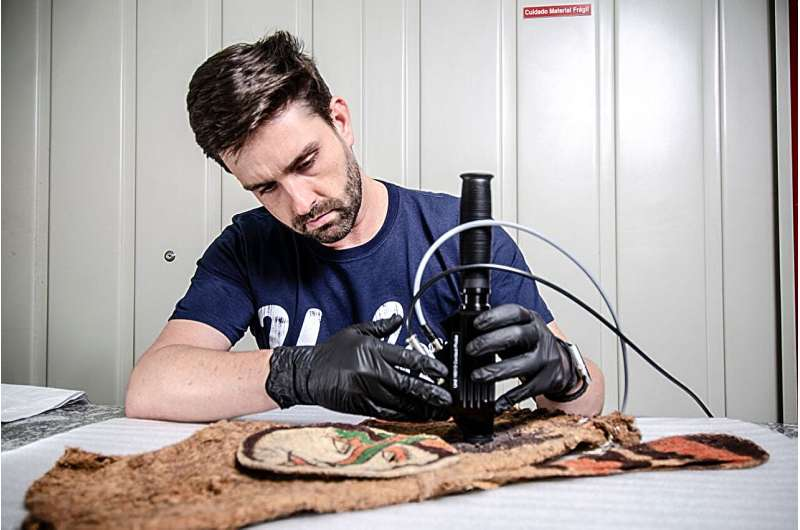
A newly published research study has brought global attention to a little-known blue pigment from the Amazon while also challenging how scientific and cultural research is traditionally conducted. The study focuses on Tikuna blue, a unique colorant developed by the Tikuna Indigenous people, and stands out not just for its scientific findings but for its deep, sustained collaboration with Indigenous communities at every stage of the research process.
The work was carried out by scholars from UCLA, the Los Angeles County Museum of Art (LACMA), and the University of São Paulo, and published in the journal Studies in Conservation. At its core, the project explores both the material science behind Tikuna blue and the broader ethical question of who gets to study, interpret, and benefit from Indigenous cultural knowledge.
What Makes Tikuna Blue So Unique
Tikuna blue is not a manufactured or industrial pigment. It is created using a traditional recipe passed down through generations of the Tikuna people, who live in regions spanning Brazil, Peru, and Colombia. The pigment is made by combining the purple juice of a fruit called naīcü with iron, producing a striking blue color that has long been used in Tikuna artistic and cultural practices.
Despite its long history, Tikuna blue had never been scientifically analyzed until now. This gap is not accidental. For decades, conservation science and art history have focused overwhelmingly on pigments and materials valued by Western museums, such as European oil paints or ancient Mediterranean colorants, while Indigenous materials were largely ignored.
The new study directly confronts this imbalance by treating Tikuna blue as worthy of the same rigorous scientific attention given to canonical Western materials.
Scientific Analysis of a Fragile but Complex Colorant
Although the study is grounded in art history and cultural conservation, it includes a detailed chemical and spectroscopic analysis of Tikuna blue. The lead author, Thiago Sevilhano Puglieri, is a professor of art history at UCLA and a member of the UCLA/Getty Interdepartmental Program in the Conservation of Cultural Heritage, but his original academic training was in chemistry. That dual background allowed the research to bridge humanities and hard science in a meaningful way.
The analysis revealed that Tikuna blue is a chemically complex and fragile mixture. It consists of plant-based pigments, natural pectin, and iron ions, forming structures that are chemically similar to those responsible for blue colors in flowers. The pigment was also tested for colorfastness, meaning its resistance to fading when exposed to light. Results showed that while visually striking, Tikuna blue is sensitive to light, which has important implications for conservation and museum display.
These findings add Tikuna blue to the global scientific understanding of natural pigments while respecting its origins as a living cultural practice, not just a chemical formula.
Indigenous Communities as Research Partners, Not Subjects
What truly sets this study apart is its use of community-based participatory research, an approach that is common in public health and social sciences but rare in conservation science and technical art history. Rather than studying the Tikuna people from a distance, the researchers worked directly with the community, sharing decision-making power throughout the project.
Tikuna community members helped define research questions, prepare laboratory samples, and decide how results would be used and shared. Three Tikuna women’s artisan associations played a central role in the project: Associação das Mulheres Indígenas Artesãs (AMATU), Associação das Mulheres Indígenas Ticuna (AMIT), and Associação das Mulheres Indígenas de Porto Cordeirinho (AMIPC). These groups collectively suggested the name Tikuna blue, ensuring the pigment was identified in a way that reflects community identity rather than external labeling.
The collaboration also extended beyond the lab. Researchers and community members co-organized a 200-person workshop on intercultural education, blending Indigenous knowledge systems with contemporary Western teaching methods. The partnership continues today through the development of intercultural chemistry materials designed specifically for Tikuna schools.
Rethinking Ethics in Conservation and Art History
The study explicitly calls on museums and researchers to reconsider what materials they choose to study and preserve. According to the authors, the long-standing focus on Western artistic traditions is not simply a matter of academic preference but is tied to colonial histories that determined whose art was considered valuable.
By centering Tikuna voices and knowledge, the research represents a step toward decolonizing conservation science and art history. Instead of treating Indigenous materials as artifacts detached from their makers, the project emphasizes collaborative transmission and preservation of traditional knowledge.
For Puglieri, this approach reflects a broader vision of what science should be. Scientific research, he argues, should enhance human dignity, sustainability, and well-being, goals that are difficult to achieve without working closely with the communities most connected to the knowledge being studied.
Cultural Visibility and Empowerment
Tikuna collaborators involved in the project highlighted the cultural impact of this approach. Participating in the research increased the visibility of Tikuna culture and identity, particularly the role of women artisans in maintaining traditional paint-making practices. The project also allowed community members to take part in decision-making processes, reinforcing respect for Indigenous expertise rather than treating it as secondary to academic knowledge.
This emphasis on collaboration helped ensure that Tikuna blue was not reduced to a museum specimen or laboratory curiosity, but remained connected to its social, cultural, and educational significance.
Institutions and Researchers Behind the Study
In addition to Puglieri, the study’s authors include Rômulo Augusto Ando and Adalberto Vasconcelos Sanches de Araújo from the Institute of Chemistry at the University of São Paulo, and Laura Maccarelli, a conservator at LACMA. The Magüta Museum—Magüta being another name for the Tikuna people—played a key role by facilitating connections with the community and granting access to cultural objects for analysis. Support was also provided by the Institute of Nature and Culture at the Federal University of Amazonas, based at the Benjamin Constant campus.
Why This Study Matters Beyond Tikuna Blue
Beyond its immediate findings, the study represents a broader shift in how scientific and cultural research can be conducted. It challenges researchers to move away from extractive models of knowledge production and toward ethical, inclusive, and collaborative frameworks. In doing so, it expands not only what we know about pigments like Tikuna blue, but also how knowledge itself is created and shared.
By bringing Indigenous material culture from the margins to the center of conservation science, the research offers a model that other disciplines may increasingly look to in the future.
Research paper:
https://doi.org/10.1080/00393630.2025.2564753