Mangroves Reveal Simple Cellular Secrets That Could Help Crops Survive Saltwater
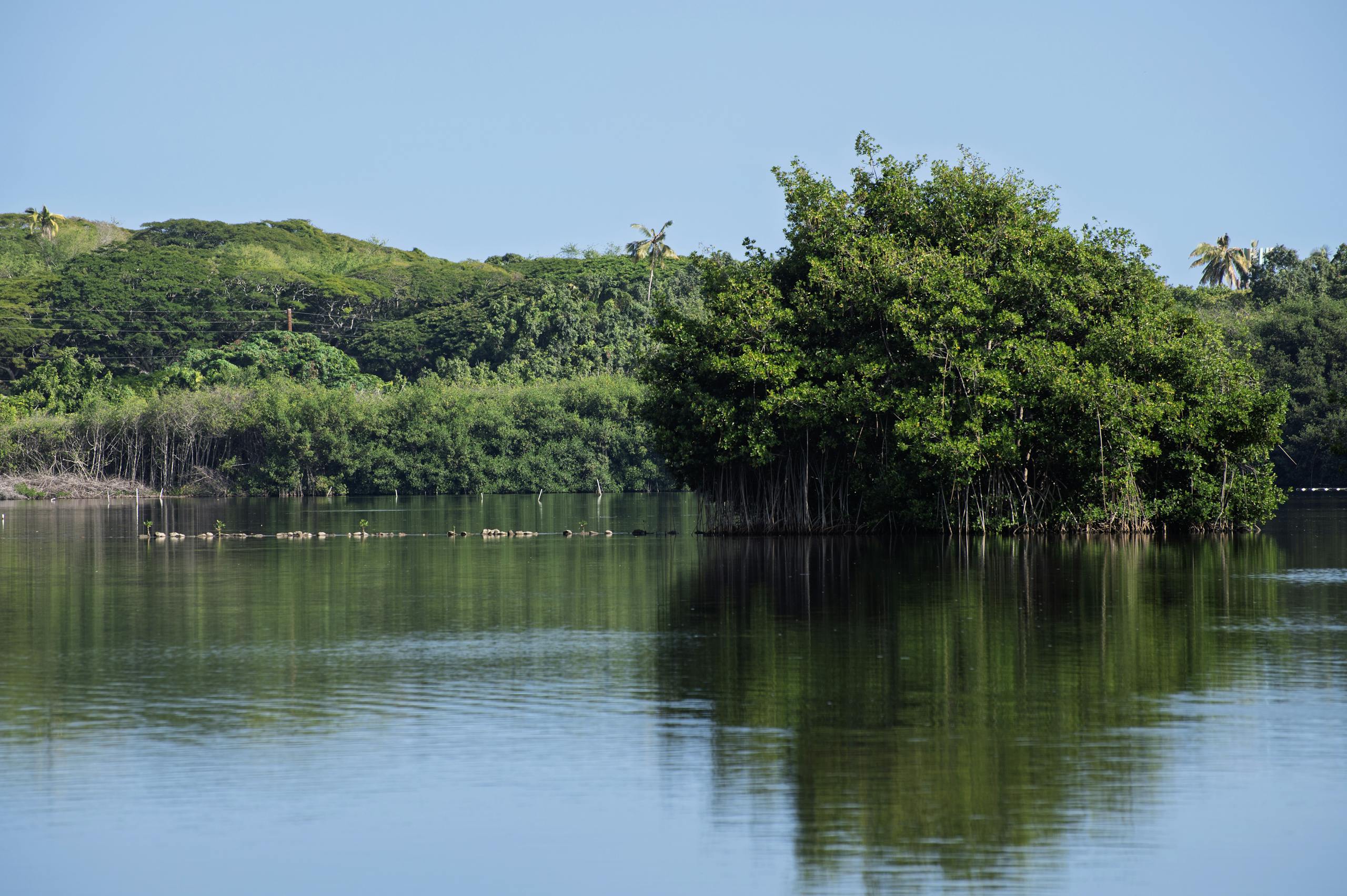
Rising sea levels are no longer just a distant climate concern. Along coastlines around the world, saltwater is steadily creeping into farmland, damaging soil quality and threatening crops that were never meant to grow in such harsh conditions. As salt intrusion worsens, scientists are racing to find ways to make food plants more resilient. A new study focusing on mangroves — trees that thrive where most plants fail — offers some surprisingly simple and powerful insights into how plants can survive saltwater stress.
The research, published in Current Biology in December 2025, identifies specific cellular traits that allow mangroves to tolerate frequent saltwater inundation. Rather than focusing only on complex biochemical tricks, the study highlights basic physical properties of plant cells that repeatedly evolve in mangroves and play a major role in their survival. These findings could point the way toward new strategies for engineering salt-tolerant crops in the future.
Why Saltwater Is Such a Big Problem for Crops
Saltwater poses multiple challenges to plants. High salt concentrations make it difficult for roots to absorb water, leading to dehydration even when water is present. Salt can also disrupt cellular processes, damage tissues, and reduce growth and yield. Most agricultural crops evolved in freshwater environments and lack the defenses needed to handle prolonged exposure to saline conditions.
As sea levels rise due to climate change, saltwater intrusion is becoming more common in coastal agricultural regions. Entire farming communities now face declining productivity, soil degradation, and long-term land loss. Improving crop salt tolerance is therefore a critical priority for global food security.
Mangroves as Natural Experts in Salt Tolerance
Mangroves are uniquely suited to answer this challenge. These trees grow along tropical and subtropical coastlines, often rooted directly in seawater or brackish mud. Despite the extreme environment, mangroves flourish where most plants would quickly wilt and die.
Scientists have long known that mangroves use various strategies to deal with salt, such as excluding salt at the root level, storing salt in older leaves, or actively secreting salt through specialized glands. However, these mechanisms alone did not fully explain how mangroves maintain structural integrity and avoid wilting under constant salt stress.
The new study shifts attention to something more fundamental: the physical structure of mangrove cells themselves.
A Broad Comparative Study Across Plant Families
The international research team included scientists from New York University, Guangxi University, Florida International University, and San Francisco State University. To uncover patterns linked specifically to salt tolerance, the researchers analyzed 34 mangrove species and compared them with more than 30 closely related non-mangrove species.
These species spanned 17 different plant families, allowing the team to examine how traits evolved across diverse lineages. The analysis also accounted for evolutionary history, comparing coastal and inland species to identify changes that occurred independently over time.
This broad approach revealed something striking: mangroves across unrelated groups consistently shared the same key cellular traits.
The Key Cellular Traits That Make Mangroves Resilient
The study found that mangroves typically have unusually small cells combined with thicker cell walls compared to their inland relatives. Together, these traits provide significant advantages in saline environments.
Smaller cells reduce the risk of mechanical failure when water availability fluctuates. Thicker cell walls increase structural strength, helping tissues maintain shape and function even when internal water pressure drops. This combination makes mangrove tissues more resistant to wilting and collapse under salt stress.
Importantly, the researchers observed that these traits evolved repeatedly and independently in mangrove lineages. Over roughly 200 million years, mangroves have emerged nearly 30 separate times in evolutionary history, and each time, smaller and stronger cells appeared as part of the adaptation.
This repeated pattern is a classic example of convergent evolution, where unrelated species develop similar solutions to the same environmental problem.
Why Cell Size and Cell Walls Matter So Much
Plant cells rely on internal water pressure, known as turgor pressure, to maintain rigidity. In salty environments, maintaining that pressure becomes difficult because salt interferes with water uptake. Cells with thinner walls are more likely to collapse under these conditions.
By contrast, thicker cell walls act like reinforced structures. Even when water pressure drops, the walls prevent excessive deformation, allowing tissues to continue functioning. Smaller cells further reduce stress on individual walls, distributing mechanical forces more effectively.
The study shows that these physical and mechanical traits are just as important as biochemical defenses, and in some cases may be the foundation upon which other salt-tolerance mechanisms operate.
What This Means for Engineering Salt-Tolerant Crops
One of the most promising aspects of this research is its potential application to agriculture. Traditional efforts to engineer salt-tolerant crops have often focused on modifying ion transporters or introducing complex genetic pathways. While valuable, these approaches can be technically challenging and sometimes produce limited results.
The mangrove study suggests a complementary strategy: manipulating cell size and cell wall properties. Because these traits are relatively simple and broadly effective, they could offer a more reliable path to improving salt tolerance.
If scientists can identify the genes and developmental processes that control cell size and wall thickness, breeders and biotechnologists may be able to create crops that better withstand saline soils without sacrificing productivity.
Mangroves and Their Broader Ecological Importance
Beyond their value as scientific models, mangroves play a crucial ecological role. They act as natural buffers against storm surges, reduce coastal erosion, and provide habitats for fish, birds, and countless other species. Mangrove forests also store large amounts of carbon, making them important allies in climate change mitigation.
Understanding how mangroves survive extreme environments not only helps agriculture but also deepens our appreciation of how plants adapt to Earth’s most challenging habitats.
Why This Research Stands Out
What makes this study particularly compelling is its focus on simple, repeatable solutions rather than rare or highly specialized adaptations. By examining a wide range of species and evolutionary histories, the researchers showed that nature often solves complex problems with straightforward physical changes.
This perspective encourages scientists to look beyond molecular complexity and consider how basic cellular architecture shapes plant resilience. It also reinforces the idea that studying biodiversity can uncover elegant solutions that modern science might otherwise overlook.
Looking Ahead
As climate change continues to reshape coastlines and agricultural landscapes, the need for salt-tolerant crops will only grow. While mangroves themselves are not food plants, their cellular design offers a blueprint that could help protect future harvests.
By learning how smaller, stronger cells help mangroves survive where others fail, researchers may be one step closer to ensuring food security in a saltier world.
Research paper:
Convergent evolution of cell size enables adaptation to the mangrove habitat, Current Biology (2025)
https://www.cell.com/current-biology/fulltext/S0960-9822(25)01543-X