A New Massive Duck-Billed Dinosaur Species Has Been Identified From New Mexico Fossils
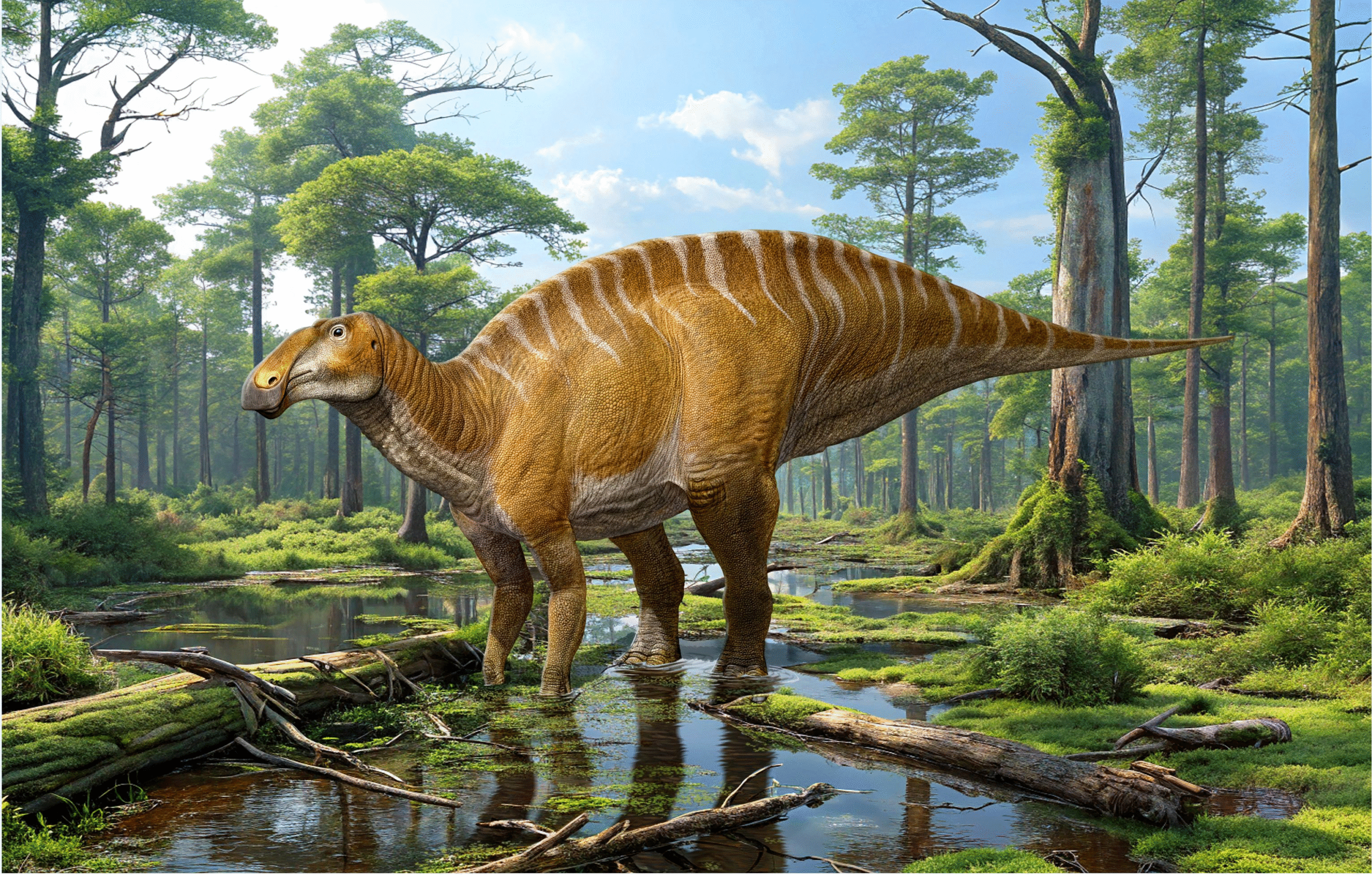
A major update has just been added to the dinosaur family tree, and it comes from fossils that have been sitting in collections for more than a century. Scientists have officially identified a new massive duck-billed dinosaur species, revealing that a well-known fossil from New Mexico was misclassified for nearly 90 years. The newly recognized species has been named Ahshiselsaurus wimani, and it offers fresh insight into dinosaur diversity, migration, and evolution during the Late Cretaceous period.
The discovery was made by an international research team working with the New Mexico Museum of Natural History & Science, and it includes contributions from D. Edward Malinzak, an assistant teaching professor of biology at Penn State Lehigh Valley. Their findings were published in the Bulletin of the New Mexico Museum of Natural History and Science, following a detailed reanalysis of fossils originally discovered in 1916.
Fossils Found in 1916 Reveal a New Species in 2025
The story of Ahshiselsaurus wimani begins more than a century ago, when fossil material was uncovered in northwestern New Mexico, within a region that is now known for its rich Late Cretaceous fossil record. At the time, the specimen was collected and eventually stored in museum collections.
In 1935, paleontologists classified the fossil as belonging to the hadrosaurid genus Kritosaurus, a duck-billed dinosaur already known from the region. For decades, the specimen remained grouped under that name without further detailed study.
It wasn’t until recently that researchers revisited the fossil using modern anatomical and comparative techniques. After carefully examining the bones, scientists realized the specimen showed clear anatomical differences from Kritosaurus and other related dinosaurs. These differences were significant enough to justify creating both a new genus and a new species.
Naming Ahshiselsaurus wimani
The name Ahshiselsaurus wimani reflects both geography and scientific history. The genus name references the Ah-Shi-Sle-Pah Wilderness area in New Mexico, close to where the fossil was originally found. The species name, wimani, honors Carl Wiman, a Swedish paleontologist known for his work on dinosaur fossils from the region.
This naming follows long-standing paleontological traditions, connecting the discovery to both its physical location and the scientists who helped shape early research in the area.
What Kind of Dinosaur Was Ahshiselsaurus?
Ahshiselsaurus wimani belonged to the Hadrosauridae, a family of large, herbivorous dinosaurs commonly known as duck-billed dinosaurs. Hadrosaurids were among the most successful and widespread plant-eating dinosaurs of the Late Cretaceous, dominating ecosystems across North America for roughly 20 million years.
Based on the fossil evidence and comparisons with related species, Ahshiselsaurus was a massive animal, estimated to reach around 35 feet (about 11 meters) in length and weighing several tons. Like other duck-billed dinosaurs, it had a broad, flat beak adapted for cropping vegetation and complex dental batteries for grinding plant material.
Unlike some famous hadrosaurids such as Parasaurolophus, Ahshiselsaurus does not appear to have had a prominent cranial crest, placing it among the flatter-headed members of the group.
The Fossil Evidence and How Scientists Identified It
The holotype specimen, which serves as the official reference for the species, includes an incomplete but diagnostic skull, several isolated cranial bones such as the jugal, quadrate, dentary, and surangular, and a series of articulated cervical vertebrae from the neck.
Skulls are especially important in dinosaur classification because they preserve many features that distinguish one species from another. By comparing these bones with those of other hadrosaurid species, researchers identified unique traits that clearly separated Ahshiselsaurus from Kritosaurus and its relatives.
In addition to anatomical comparisons, the team conducted a phylogenetic analysis, a method used to reconstruct evolutionary relationships based on shared physical characteristics. This analysis helped confirm that Ahshiselsaurus represents a distinct evolutionary lineage within the hadrosaurid family.
Older Than Kritosaurus and Buried Deeper in Time
One particularly important finding is that Ahshiselsaurus wimani appears stratigraphically lower than Kritosaurus. This means its fossils were found deeper in the rock layers, indicating that it lived earlier in time.
This discovery helps refine the timeline of hadrosaur evolution in the American Southwest and suggests that the region supported a greater diversity of duck-billed dinosaurs than previously recognized.
Dinosaur Migration Across the Americas
Beyond identifying a new species, the research provides valuable clues about dinosaur migration and biogeography. The study supports the idea that the Southwestern United States acted as a source region, or “stock,” for dinosaur populations that later spread northward into Canada and southward into Central and South America.
According to the researchers, several waves of migration likely occurred as climates and environments changed. In some cases, newly arrived species replaced older ones, while in other periods, different lineages coexisted side by side.
Later still, dinosaurs migrating from Asia into North America may have pushed earlier groups back toward the southern part of the continent, where their descendants continued to thrive. Ahshiselsaurus fits into this broader picture of dynamic movement and adaptation during the Late Cretaceous.
What This Discovery Says About Ancient Ecosystems
The identification of Ahshiselsaurus wimani adds to growing evidence that Late Cretaceous ecosystems in the Southwest were more complex and diverse than once thought. Environmental changes appear to have played a major role in shaping which species thrived and which declined.
If a dinosaur species was well adapted to a changing environment, it could outcompete and replace others that were slower to adapt. This process of environmental pressure driving evolution is a recurring theme in Earth’s history, and discoveries like this help scientists understand how it played out among dinosaurs.
Why Duck-Billed Dinosaurs Matter
Hadrosaurids are especially important to paleontology because of their abundance, wide distribution, and well-preserved fossils. They offer key insights into dinosaur behavior, feeding strategies, growth patterns, and social structures.
Their success across multiple continents also makes them ideal for studying how dinosaurs responded to climate shifts, sea-level changes, and continental connections. Each new species identified helps refine these larger evolutionary models.
Impact on Education and Future Research
For Malinzak, the discovery also had a direct impact on teaching. He incorporated real data and methods from the study into his BIOL 220W: Populations and Communities course at Penn State Lehigh Valley, allowing students to work through actual dispersal and evolutionary analyses.
Looking ahead, the research team plans to continue examining other fossils from the Southwest. The discovery of Ahshiselsaurus suggests that additional misidentified or overlooked specimens may still be waiting in museum collections.
As new methods and perspectives are applied, scientists expect more surprises to emerge, reshaping what we know about dinosaur evolution in North America.
Research paper:
Bulletin of the New Mexico Museum of Natural History and Science – https://www.nmnhs.org/publications/bulletin