Ultrasonic Pest Control Technology Could Help Protect Beehives Without Harming Bees
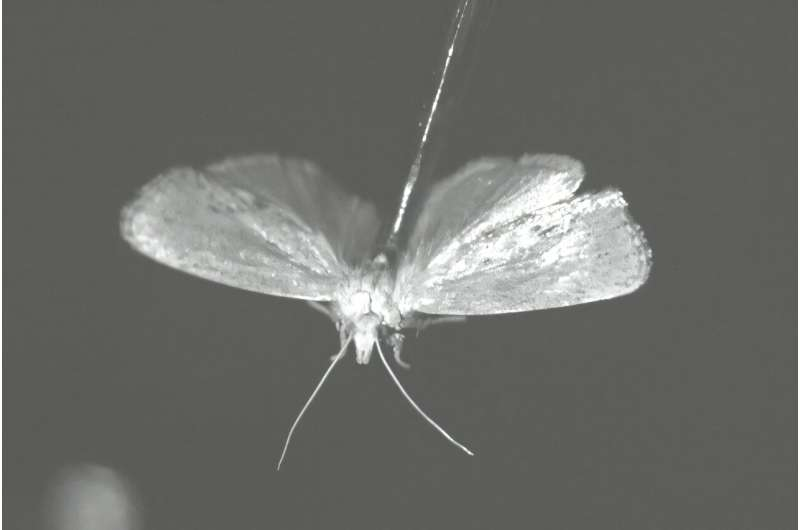
Bees and other pollinators are under growing pressure worldwide, and the reasons are well known by now. Pesticide exposure, climate change, and habitat loss are weakening bee colonies at an alarming rate. When colonies become weak, they are far more vulnerable to secondary threats, especially parasites. One of the most destructive of these parasites is the wax moth, a persistent enemy of beekeepers across the globe.
A new research effort suggests that help may come from an unexpected place: sound. Scientists have developed an ultrasonic pest control approach that targets wax moths while leaving bees completely unaffected. The research combines insect biology, acoustics, and sustainable pest management, offering a promising alternative to chemical or labor-intensive solutions.
Why Wax Moths Are Such a Serious Problem for Beekeepers
Wax moths, specifically the greater wax moth (Galleria mellonella) and the lesser wax moth, are opportunistic pests. They do not usually invade strong, healthy colonies. Instead, they exploit hives that are already stressed or weakened due to environmental pressures or disease.
Once inside a hive, wax moth larvae tunnel through the honeycomb, feeding on beeswax, pollen, honey residues, and even bee eggs. Their movement damages the structure of the comb, contaminates it with silk and waste, and can make entire frames unusable. In severe cases, bees may abandon the hive altogether.
For beekeepers, dealing with wax moth infestations is time-consuming and physically demanding. Infested frames often need to be removed one by one, cleaned, frozen, or discarded. Sticky traps may catch adult moths, but they do little to stop larvae already hidden deep within the comb. Chemical treatments exist, but many beekeepers are reluctant to use them due to concerns about bee health, honey contamination, and long-term environmental impact.
Using Wax Moths’ Own Biology Against Them
The new ultrasonic approach was developed by researchers from the University of Strathclyde in Scotland and Japan’s National Agriculture and Food Research Organization. The work was presented by Lara Díaz García, a postdoctoral researcher at the University of Strathclyde, during the Sixth Joint Meeting of the Acoustical Society of America and the Acoustical Society of Japan, held from December 1 to 5 in Honolulu, Hawaii.
The key insight behind this research is that wax moths possess an extremely advanced sense of hearing, far beyond what humans can perceive. Wax moths can detect sounds four octaves higher than the upper limit of human hearing, placing them firmly in the ultrasonic range.
This ability did not evolve by accident. In the wild, wax moths are a favorite snack for bats. Over time, moths developed the ability to hear bat echolocation calls, allowing them to take evasive action before being captured. They can also distinguish between different ultrasonic signals by analyzing timing patterns and sound intensity, which helps them interpret danger more accurately.
Designing an Ultrasonic Deterrent That Actually Works
Rather than relying on random ultrasonic noise, the researchers took a precise, evidence-based approach. They studied how wax moths’ nervous systems respond to different bat echolocation patterns. By measuring neural responses, they were able to identify which sound characteristics triggered the strongest reactions in the moths.
This allowed the team to design optimized ultrasonic signals that moths interpret as immediate threats. When exposed to these signals, wax moths are deterred from approaching or remaining in the hive.
One of the most important aspects of this method is that bees are unaffected. Honeybees have no sense of hearing in the conventional way and do not respond to airborne sound vibrations. As a result, the ultrasonic signals that disturb wax moths have no impact on bee behavior, communication, or health.
Beyond Wax Moths: A Broader Pest Control Concept
An important strength of this research is its adaptability. While the initial focus is on wax moths, the technique can be adjusted for other moth species. Most moths are capable of ultrasonic hearing, meaning the same basic approach could be applied elsewhere with proper tuning.
Each species has its own most sensitive hearing range, so some preliminary analysis is required. Once that range is identified, the ultrasonic deterrent can be calibrated accordingly. This opens the door to non-chemical pest control solutions in other agricultural or ecological settings where moths cause damage.
Understanding the Moth Ear and Directional Hearing
In addition to developing deterrent signals, the research team also created a simplified physical model of the lesser wax moth’s eardrum. This model captures the essential features responsible for the moth’s directional hearing, meaning its ability to tell where a sound is coming from.
Understanding this mechanism is valuable not only for pest control but also for bio-inspired technology. The researchers hope that insights gained from moth hearing could inspire the development of compact acoustic sensors or new sound-direction detection systems in engineering and robotics.
Why This Matters in the Context of the Climate Crisis
Wax moth infestations are becoming more common as bee colonies grow weaker due to environmental stress. The decline of pollinators has far-reaching consequences, affecting crop yields, food security, and ecosystem stability.
A pest control solution that is targeted, sustainable, and non-toxic is especially valuable at a time when reducing chemical use is a global priority. Ultrasonic pest control fits well within broader efforts to make agriculture more environmentally responsible while still protecting livelihoods.
Extra Context: What Are Wax Moths?
Wax moths are nocturnal insects found worldwide, closely associated with honeybee colonies. Adult moths lay eggs inside or near hives, and once the larvae hatch, they immediately begin feeding on wax and organic material.
Interestingly, Galleria mellonella is also widely used as a model organism in scientific research, particularly in studies of immunity and infection. This makes it one of the best-studied moth species, which helped researchers understand its hearing and neural responses in detail.
The Road Ahead for Ultrasonic Hive Protection
The long-term goal of this research is the development of commercial ultrasonic pest control devices that can be installed in or near beehives. Such devices could provide continuous protection without interfering with hive management or honey production.
There is also potential for combining ultrasonic deterrents with monitoring systems, allowing beekeepers to detect early signs of infestation and respond before serious damage occurs.
As research continues, this work highlights how nature-inspired engineering can offer practical solutions to modern agricultural challenges. By studying how insects perceive and interact with their environment, scientists are finding smarter ways to protect both crops and ecosystems.
Research reference:
https://asa.scitation.org/doi/abs/10.1121/10.0028679