New Statistical Tools Are Making It Easier to Identify Causal DNA Changes in Livestock
Researchers at North Carolina State University have developed a powerful new set of statistical tools that significantly improves how scientists identify DNA changes responsible for important traits in livestock. This work tackles one of the most persistent problems in animal genetics: accurately pinpointing which specific genetic variants actually cause differences in traits like growth rate, fat deposition, reproduction, feed efficiency, and milk production.
The study, published in Briefings in Bioinformatics, introduces a comprehensive fine-mapping framework designed specifically for livestock populations, where animals are often closely related. These methods promise to close the gap between broad genetic signals and precise causal genes, offering practical benefits for both researchers and commercial breeding programs.
Why Fine-Mapping Has Been So Difficult in Livestock
In genetics, fine-mapping refers to the process of narrowing down large genomic regions associated with a trait to identify the exact DNA changes responsible for that trait. A common analogy is that genome-wide association studies (GWAS) tell you which chapter of a book matters, while fine-mapping tells you which sentence actually explains the story.
Fine-mapping has worked relatively well in human genetics, largely because human studies often involve large populations of unrelated individuals. In those settings, statistical assumptions about genetic independence generally hold true.
Livestock populations, however, are very different. Animals such as pigs, cattle, and poultry are bred through structured pedigrees, meaning individuals are genetically related in complex ways. This relatedness distorts a key concept in genetics known as linkage disequilibrium (LD)—the correlation between nearby genetic variants. Most existing fine-mapping tools assume LD patterns similar to those seen in human populations, which leads to misleading results when applied to livestock.
As a result, researchers may incorrectly flag DNA variants that are merely correlated with a trait, rather than identifying the variants that truly cause it.
A Statistical Framework Designed for Related Populations
To solve this problem, the NC State research team developed a new statistical framework that explicitly accounts for genetic relatedness in livestock populations. Instead of ignoring family structure, their methods integrate it directly into the fine-mapping process.
The key innovation lies in the creation of relatedness-adjusted genomic correlations. These adjustments correct how LD is measured in populations where individuals share ancestry. Once corrected, popular fine-mapping platforms—many of which were originally built for human genetics—can perform reliably in livestock datasets.
This approach does not replace existing fine-mapping tools. Instead, it enhances them, making them suitable for animal populations where standard assumptions fail.
Extensive Testing Using Pig Genomic Data
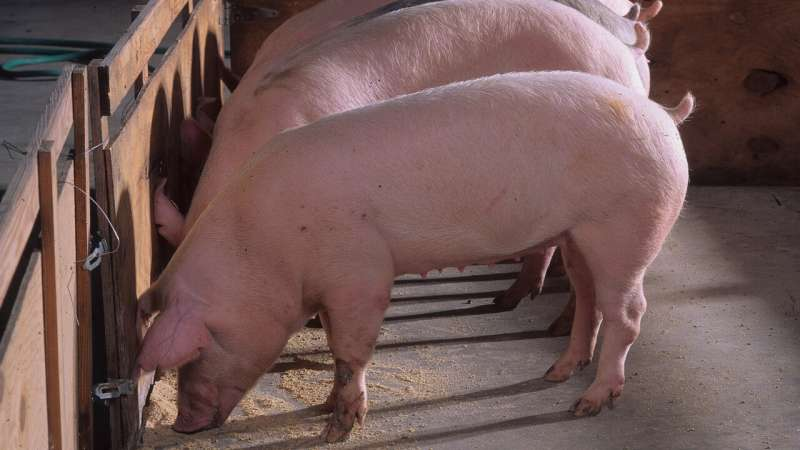
The researchers tested their methods using large genomic datasets from Duroc and Yorkshire pigs, two widely studied commercial breeds. These datasets allowed the team to demonstrate how traditional LD measures become distorted when relatedness is ignored.
To rigorously evaluate performance, the team ran more than 40 simulated scenarios that varied genetic architecture, sample structure, and breed composition. Across these scenarios, the relatedness-adjusted methods consistently outperformed conventional fine-mapping approaches, often by several-fold improvements in accuracy.
One particularly important finding was the strong performance of the new framework in multi-breed datasets. Combining multiple breeds increases genetic diversity, which helps separate truly causal variants from those that are only indirectly associated with traits. The new methods were especially effective in leveraging this diversity.
Introducing Gene-Level Posterior Inclusion Probabilities
Beyond improving variant-level fine-mapping, the study introduces a new concept called gene-level posterior inclusion probabilities, or PIPgene.
Traditional fine-mapping focuses on individual genetic variants, assigning each a probability of being causal. However, in many cases, single-variant signals are weak, especially in complex traits influenced by many genes.
PIPgene addresses this issue by aggregating evidence across all variants within a gene. Instead of asking whether a specific DNA change is causal, researchers can assess whether an entire gene is likely involved in the trait.
This gene-level perspective strengthens biological interpretation and helps researchers identify meaningful candidate genes, even when no single variant stands out strongly.
In the Duroc pig data, PIPgene highlighted genes such as MRAP2 and LEPR, both of which play central roles in energy balance, fat metabolism, and body weight regulation. These genes are well-known in metabolic research, reinforcing the biological validity of the new approach.
Why This Matters for Livestock Breeding
Accurately identifying causal DNA changes has direct implications for genomic selection, the backbone of modern livestock breeding. Breeding programs increasingly rely on genetic information to select animals with desirable traits, but the effectiveness of these programs depends on how well genetic markers reflect true biological causation.
By making fine-mapping reliable in populations with complex relatedness, these new tools allow researchers and breeders to move beyond broad genomic regions and focus on specific genes and variants with much greater confidence.
This can lead to:
- More precise selection for economically important traits
- Faster genetic improvement across generations
- Reduced risk of selecting markers that fail to replicate in different populations
The framework is designed to be broadly applicable across livestock species, not limited to pigs. Cattle, poultry, sheep, and other animals with structured breeding programs stand to benefit from the same methodological advances.
Open-Source Software and Collaboration
To encourage adoption, the research team has released open-source software implementing the new statistical framework. This makes the tools accessible to academic researchers and industry geneticists alike.
The study represents a collaborative effort across academia and industry. In addition to NC State University researchers, contributors came from the University of Florence, Smithfield Premium Genetics, AcuFast LLC, and Wayne State University. This mix of perspectives helped ensure the methods are both scientifically rigorous and practically relevant.
A Broader Look at Fine-Mapping in Animal Genetics
Fine-mapping is increasingly seen as a critical step in translating genomic data into real-world outcomes. As sequencing costs fall and datasets grow larger, the bottleneck is no longer data collection, but accurate interpretation.
Livestock genetics presents unique challenges compared to human genetics, and this study highlights the importance of species-specific statistical design. Methods that work well in one biological context may fail in another unless properly adapted.
By directly addressing relatedness—a defining feature of animal populations—this work sets a new standard for how fine-mapping should be conducted in livestock research.
Looking Ahead
These new statistical tools mark an important step toward more precise and biologically meaningful genetic discovery in livestock. By bridging the gap between association signals and causal genes, they offer a clearer path from genomic data to improved animal health, productivity, and sustainability.
As adoption grows, these methods could reshape how breeders and researchers understand the genetic foundations of complex traits, helping turn genomic promise into practical progress.
Research paper:
https://doi.org/10.1093/bib/bbaf614