New Study Confirms Nanotyrannus Was a Fully Grown Dinosaur and Not a Juvenile T. rex
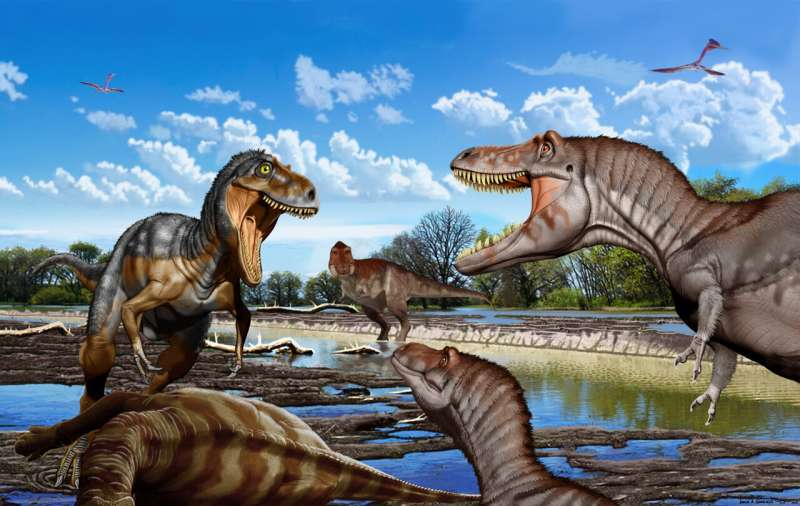
For decades, one of the most persistent debates in dinosaur paleontology revolved around a small but controversial tyrannosaur skull. Known as Nanotyrannus, this fossil sparked an ongoing argument: was it truly a distinct dinosaur species, or simply a juvenile Tyrannosaurus rex that hadn’t finished growing yet? A newly published scientific study has now provided the most convincing answer so far. According to this research, Nanotyrannus was a separate species and nearly fully grown, not a teenage T. rex.
The study, published in the journal Science in late 2025, brings together evidence from bone microstructure, museum collections, and comparative anatomy to settle a question that has divided experts for nearly half a century. It also reshapes how scientists think about Late Cretaceous ecosystems, showing they were far more diverse than previously assumed.
Why Nanotyrannus Was So Controversial
Nanotyrannus was first named in the 1980s based largely on a single skull, known as the holotype specimen. The skull was much smaller and more lightly built than that of adult T. rex, with proportionally longer legs and more teeth. These features led some paleontologists to argue that Nanotyrannus was a fast, smaller predator that lived alongside T. rex.
Others disagreed. They suggested these traits could simply reflect growth stages of Tyrannosaurus rex. Juvenile T. rex fossils are rare, and young animals often look very different from adults. Without clear evidence of maturity, many researchers leaned toward the idea that Nanotyrannus was not its own species at all.
The problem was simple but frustrating: the holotype of Nanotyrannus is mostly a skull, and skull bones are notoriously difficult to use for determining age. Until now, there was no reliable way to tell whether this animal was still growing or had already reached adulthood.
The Key Discovery Came From an Unexpected Bone
The breakthrough came from an unlikely source: the hyoid bone, a small throat bone that supports the tongue and plays a role in feeding and vocalization. In most dinosaur studies, researchers rely on long bones like femurs or ribs to determine age by examining growth rings preserved in the bone tissue. These bones were not available for the Nanotyrannus holotype.
A multi-institutional research team, led by Christopher Griffin of Princeton University, decided to examine the microscopic structure of the hyoid instead. While this bone had never been widely used for age determination in dinosaurs, the researchers suspected it might still preserve a record of growth.
To test this idea, they compared hyoid bones from living animals such as birds, crocodilians, and lizards, as well as from extinct dinosaurs. Crucially, they also analyzed hyoids from the Natural History Museum of Los Angeles County’s Tyrannosaurus rex growth series, which includes juvenile, subadult, and nearly adult T. rex specimens.
The results were striking. The hyoid of Nanotyrannus showed clear signs of growth cessation, meaning the animal had largely stopped growing at the time of death. In contrast, juvenile and teenage T. rex specimens showed only a few widely spaced growth rings, indicating rapid growth and immaturity.
Clear Evidence of Maturity
Under the microscope, the Nanotyrannus hyoid displayed numerous closely spaced growth rings, far more than those seen in similarly sized juvenile T. rex. This pattern is consistent with an animal that has reached or is very close to adulthood.
Despite being slightly smaller than some juvenile T. rex specimens, Nanotyrannus showed stronger signs of maturity. This finding was critical, because it demonstrated that size alone is not a reliable indicator of age in tyrannosaurs.
By combining histological evidence with comparisons from the T. rex growth series, the researchers concluded that Nanotyrannus was a fully grown, distinct predator, not a young Tyrannosaurus rex.
What This Means for Late Cretaceous Ecosystems
One of the most exciting implications of this study is what it reveals about dinosaur diversity in Late Cretaceous North America. For a long time, T. rex was viewed as the uncontested apex predator of its environment. This research suggests a more complex picture.
Nanotyrannus was roughly half the size of adult T. rex, but still a capable predator. It likely hunted similar prey to juvenile T. rex, meaning multiple tyrannosaur species may have competed for resources at the same time. This challenges the idea of a single dominant predator species and instead points to layered ecological roles, similar to what we see in modern ecosystems with multiple large carnivores.
The findings also align with other recent studies suggesting that several tyrannosaur species coexisted, each occupying slightly different ecological niches.
Why Museum Collections Played a Crucial Role
This research highlights the enormous scientific value of museum collections, particularly growth series that include multiple life stages of the same species. The T. rex growth series at the Natural History Museum of Los Angeles County is currently the only display of its kind in the world, and it provided essential benchmarks for this study.
To balance scientific discovery with conservation, researchers used 3D scanning, molding, and casting before conducting destructive analysis on the hyoid bone. This ensured that the anatomical information remains available for future studies.
The success of this approach may encourage paleontologists to revisit other controversial specimens using similar techniques.
Why Determining Maturity Matters in Paleontology
Mistaking juvenile animals for separate species, or vice versa, is a longstanding challenge in paleontology. Many dinosaurs underwent dramatic changes as they grew, affecting skull shape, tooth count, and body proportions.
This study underscores the importance of accurately determining the maturity of holotype specimens. Without that information, scientists risk confusing developmental changes with evolutionary differences.
The successful use of hyoid histology opens up a new tool for age assessment, especially for specimens that lack long bones.
Extra Context: How Big Was Nanotyrannus?
Based on current estimates, Nanotyrannus likely measured around 5 to 6 meters in length, compared to adult T. rex, which could exceed 12 meters. Despite its smaller size, Nanotyrannus was not a weak or insignificant animal. Its anatomy suggests it was fast, agile, and well-adapted for active predation.
This reinforces the idea that tyrannosaurs were not just oversized brutes, but a diverse group with varying strategies for survival.
A Shift in How We See Tyrannosaurs
The confirmation of Nanotyrannus as a distinct species marks an important moment in dinosaur research. It shows how new methods, careful comparison, and museum resources can finally resolve debates that have lingered for decades.
More broadly, it reminds us that the prehistoric world was far more complex and crowded than simplified textbook illustrations often suggest.
Research paper:
https://www.science.org/doi/10.1126/science.adx8706