Common Air Pollution Is Quietly Reshaping the Developing Brains of Adolescents, New Research Shows

A growing body of evidence is forcing scientists and public health experts to rethink how air pollution affects human health. A recent study from physician-scientists at Oregon Health & Science University (OHSU) adds a major new concern to the list: adolescent brain development. According to the findings, long-term exposure to common, everyday air pollutants is associated with measurable structural changes in the brains of children during a critical stage of growth.
The research, published in the journal Environmental Research, focuses on how air pollution influences the developing adolescent brain over time. While air pollution has long been linked to respiratory and cardiovascular disease, its effects on the brain—especially during adolescence—have been far less understood. This study helps fill that gap with one of the most detailed analyses conducted so far.
A Closer Look at the Study and Its Scope
The researchers used data from the Adolescent Brain Cognitive Development (ABCD) Study, the largest longitudinal study of brain development and child health ever conducted in the United States. The ABCD Study follows nearly 12,000 children from across the country, collecting detailed information on brain imaging, physical health, mental health, behavior, and environmental exposures over many years.
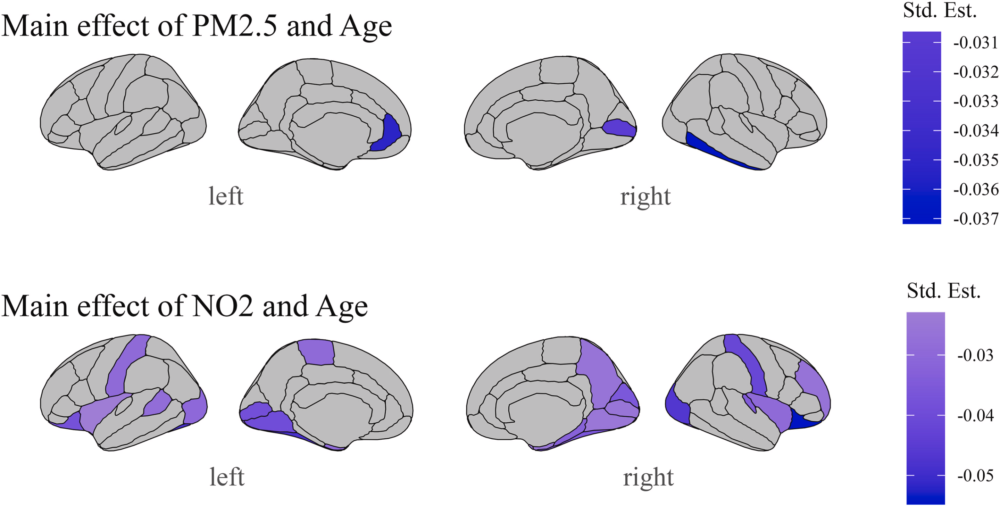
For this analysis, scientists examined brain imaging data from nearly 11,000 children, focusing on the period when participants were around 9 to 10 years old, a time that typically marks the onset of puberty. This stage of development is especially important because the brain undergoes rapid structural and functional changes that shape cognition, emotion, and behavior later in life.
Using advanced statistical models, the researchers assessed how exposure to specific air pollutants was linked to changes in cortical thickness, a key measure of brain development.
What Are Cortical Thickness Changes and Why Do They Matter?
The cortex is the outer layer of the brain responsible for many higher-order functions, including reasoning, decision-making, language, attention, and emotional regulation. During normal development, the cortex gradually becomes thinner as neural circuits are refined and optimized—a process known as cortical thinning.
However, when cortical thinning happens too quickly or in atypical patterns, it may signal an underlying disruption in brain development. The OHSU study found that exposure to air pollution was associated with accelerated and abnormal cortical thinning, particularly in the frontal and temporal regions of the brain.
These regions are critical for executive function, language processing, memory, mood regulation, and socioemotional behavior. Changes here may not cause immediate symptoms, but they could subtly alter a child’s developmental trajectory over time.
The Pollutants Behind the Changes
One of the most striking aspects of the study is that it did not focus on rare or extreme toxins. Instead, researchers examined common air pollutants that millions of people are exposed to every day. These included:
- Fine particulate matter (PM2.5), tiny particles that can penetrate deep into the lungs and even enter the bloodstream
- Nitrogen dioxide (NO₂), largely produced by vehicle emissions and industrial activity
- Ozone (O₃), a major component of smog
The strongest associations with brain changes were found for PM2.5 and nitrogen dioxide. Ozone showed fewer consistent links in this particular analysis.
Importantly, the researchers observed these brain changes even in children exposed to pollution levels below what the U.S. Environmental Protection Agency currently considers “safe.” This finding raises serious questions about whether existing air quality standards adequately protect children’s neurological health.
Persistent and Developmental Effects Over Time
Unlike many earlier studies that relied on snapshots in time, this research tracked changes longitudinally, meaning it followed the same children over multiple years. The results showed both persistent effects (long-lasting changes associated with early exposure) and developmental effects (changes that became more apparent as the brain matured).
This suggests that air pollution exposure during early adolescence may not just cause temporary alterations, but could reshape how the brain develops over the long term.
Why Adolescents Are Especially Vulnerable
Adolescence is one of the most sensitive periods of brain development. During this time, the brain undergoes:
- Extensive synaptic pruning, where unused neural connections are eliminated
- Increased myelination, improving the speed and efficiency of neural communication
- Refinement of networks involved in emotional control, planning, and social behavior
Environmental stressors like air pollution may interfere with these processes. Scientists believe pollutants can trigger neuroinflammation, oxidative stress, and disruptions to the blood–brain barrier, all of which may affect how the brain matures.
Because these changes occur gradually, children may not show immediate or obvious symptoms. However, small shifts in brain development can accumulate, potentially influencing academic performance, attention, emotional regulation, and mental health later in life.
Urban Areas Are at Higher Risk, but No One Is Fully Protected
The study found that the effects of pollution were generally more pronounced in urban environments, where traffic and industrial emissions are higher. However, researchers emphasized that the observed changes were not limited to heavily polluted regions.
Children living in areas with pollution levels considered relatively low still showed measurable differences in brain structure. This highlights the global nature of the issue, affecting millions of children worldwide, not just those in highly industrialized cities.
Broader Health and Policy Implications
The findings reinforce the idea that air pollution is not just an environmental issue—it is a major public health concern with far-reaching consequences. If air pollution can subtly influence brain development on a population level, the long-term societal impacts could be significant.
Researchers stress that addressing this problem requires system-level solutions, not just individual action. While clinicians cannot directly control air quality, they can:
- Educate families about environmental health risks
- Advocate for stronger public health policies
- Support initiatives aimed at cleaner transportation, greener urban planning, and stricter air quality standards
Improving access to green spaces, reducing traffic-related pollution, and investing in cleaner energy infrastructure may all play a role in protecting developing brains.
What This Study Adds to the Bigger Picture
This research builds on earlier studies linking air pollution to cognitive and behavioral outcomes in children. However, it stands out because of its large sample size, longitudinal design, and detailed brain imaging data. Together, these strengths provide some of the clearest evidence yet that common air pollutants can influence the physical structure of the adolescent brain.
While more research is needed to fully understand how these structural changes translate into real-world outcomes, the message is clear: environmental exposures during childhood matter deeply, and their effects may last a lifetime.
Research Reference
Longitudinal associations between air pollution and adolescent gray matter development: Insights from the ABCD study
https://doi.org/10.1016/j.envres.2025.123333