Soil Microbes Temporarily Boost Molecular Diversity as Plants Decompose, Offering New Clues About Carbon Storage
Soil may look simple on the surface, but beneath our feet lies one of the most complex and important systems on Earth. Scientists estimate that soils worldwide hold three times more carbon than the atmosphere and all plant life combined. Because of this enormous carbon reservoir, even small changes in how soil processes carbon can have major consequences for climate change. New research from Cornell University now adds an important piece to this puzzle by showing how soil molecular diversity changes over time as microbes break down dead plants.
The study reveals that when plant material enters the soil and begins to decompose, the diversity of organic molecules in the soil does not remain constant. Instead, it rises sharply during the first month, reaches a peak, and then gradually declines. This discovery helps clarify how soil microbes influence whether carbon is released back into the atmosphere as carbon dioxide or retained in soils for long-term storage.
Why Soil Carbon Matters So Much
Soil carbon plays a critical role in regulating Earth’s climate. Carbon stored in soils can remain locked away for decades or even centuries, reducing the amount of carbon dioxide in the atmosphere. On the other hand, when soil microbes rapidly decompose organic matter, much of that carbon is released as CO₂, contributing to global warming.
Understanding what controls this balance has been a long-standing challenge in soil science. Researchers have debated for decades why some carbon persists in soils while other carbon disappears quickly. This new study directly addresses that question by looking at molecular diversity, a concept that refers to how many different types of organic molecules exist in soil at any given time.
A Shift in How Scientists Think About Soil Carbon
For much of the 20th century, scientists believed that soil carbon persisted mainly because plant materials like lignin were chemically resistant to decomposition. However, this idea began to change dramatically in 2011, when Johannes Lehmann and other researchers published a landmark paper showing that soil carbon storage depends more on interactions between microbes, molecules, and minerals than on the inherent resistance of plant compounds.
Building on that work, Lehmann and colleagues proposed another bold idea in 2020: higher molecular diversity in soil could actually slow down decomposition. The logic is straightforward. When soils contain a narrow set of molecules, microbes can specialize, decompose material efficiently, and release more carbon dioxide. But when soils contain a wide array of molecules, microbes struggle to specialize, slowing decomposition and giving minerals more time to stabilize carbon.
Until now, however, there was little direct experimental evidence showing how molecular diversity actually changes during plant decomposition. This new research fills that gap.
What the New Study Found
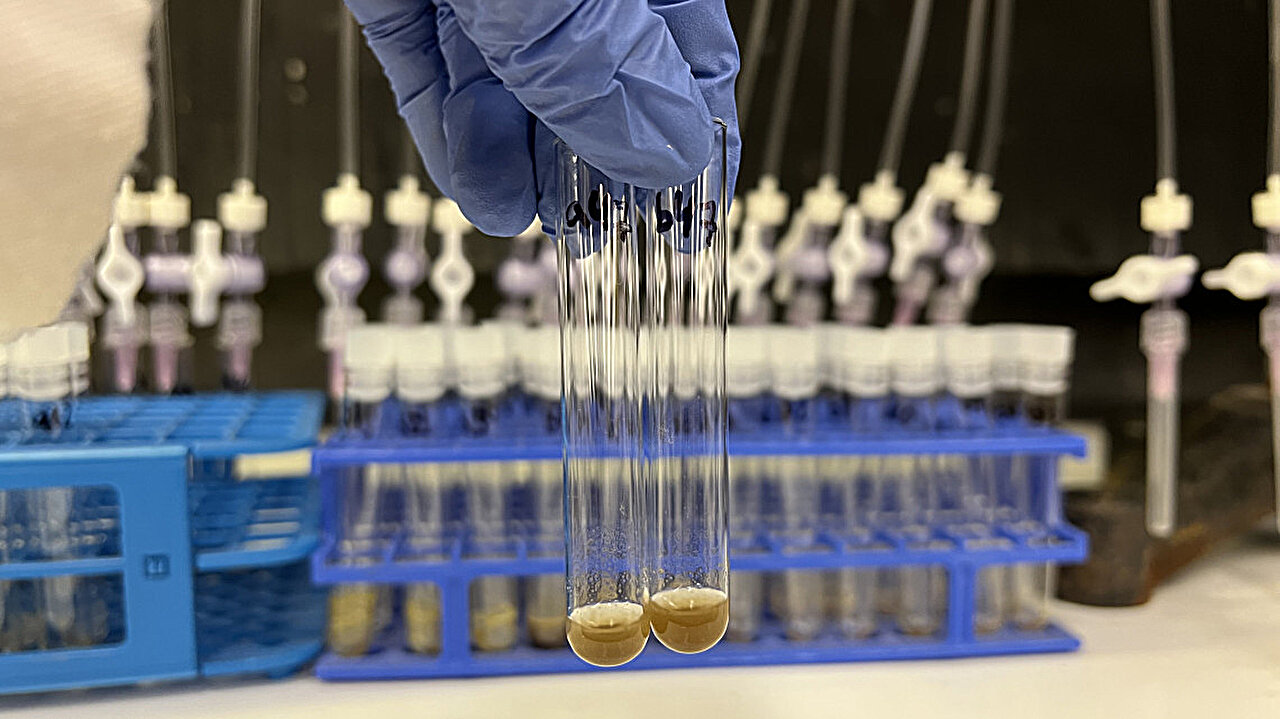
The research team conducted controlled soil incubation experiments, adding plant material and tracking how it decomposed over time. They focused on dissolved organic matter, a fraction of soil organic carbon that consists of water-soluble molecules produced during decomposition.
Using high-resolution mass spectrometry, the scientists identified thousands of distinct organic compounds and measured changes in their diversity. The results were clear and consistent:
- Molecular diversity increased rapidly during the early stages of decomposition.
- Diversity reached its highest point at around 32 days.
- After this peak, diversity leveled off and then declined as decomposition continued.
This pattern shows that decomposition is not a simple process of gradual breakdown. Instead, microbes initially generate a wide variety of new compounds as they process plant material. Over time, those compounds are further transformed, consumed, or mineralized, reducing overall diversity.
A New Way to Track Microbial Activity
One of the most innovative aspects of the study is the method used to trace microbial activity. Rather than labeling carbon or nitrogen, which is common in soil research, the team used oxygen-18 labeled water, also known as 18O heavy water.
This approach allows scientists to track microbial processes without artificially feeding microbes simple sugars like glucose. Feeding microbes sugar can distort their natural behavior, leading to misleading results. By contrast, heavy water integrates directly into microbial metabolism, offering a more realistic picture of how microbes interact with natural soil organic matter.
This method, adapted from microbiology, represents a major advance for soil science and opens new possibilities for studying carbon cycling under conditions that closely resemble real ecosystems.
Who Was Involved in the Research
The study was led by Rachelle Davenport, who completed the work as a doctoral student in Johannes Lehmann’s lab and now works as an independent research consultant. Lehmann, a professor of soil and crop sciences at Cornell University, served as the senior author.
The project involved 11 co-authors from seven institutions across six U.S. states and the Netherlands. Collaborators from the Environmental Molecular Sciences Laboratory in Washington played a key role in developing the analytical techniques, while undergraduate researcher Caleb Levitt contributed important measurements of soil carbon dioxide emissions.
What This Means for Climate Change
The findings provide empirical support for the idea that molecular diversity plays a meaningful role in soil carbon storage. While increased diversity appears to be temporary, even short-term spikes could influence whether carbon becomes stabilized by soil minerals or lost to the atmosphere.
Because soils contain such vast amounts of carbon, small improvements in retention can translate into large climate benefits. Understanding when and how molecular diversity increases gives scientists valuable clues about which conditions favor carbon storage over carbon loss.
What Happens Next in Soil Carbon Research
The researchers emphasize that this study is just one piece of a much larger puzzle. Future work will focus on understanding how molecular diversity, microbial diversity, and mineral composition interact to control long-term carbon storage.
There is also growing interest in whether land management practices can promote beneficial soil diversity. Agricultural and forestry practices that support diverse plant inputs, healthy microbial communities, and stable soil structure could potentially enhance carbon sequestration.
Extra Insight: What Is Dissolved Organic Matter?
Dissolved organic matter, often abbreviated as DOM, is one of the most dynamic components of soil carbon. It serves as a primary food source for microbes, a transport medium for nutrients, and a key player in carbon stabilization.
DOM is highly responsive to environmental changes such as moisture, temperature, and plant inputs. Because it moves easily through soil water, it also plays a major role in transferring carbon from surface soils to deeper layers, where it may be protected for longer periods.
Understanding DOM diversity is therefore essential for building accurate models of soil carbon cycling and predicting how soils will respond to climate change.
Extra Insight: Why Microbes Are Central to Soil Health
Soil microbes are the engines that drive decomposition and nutrient cycling. Bacteria and fungi break down complex plant materials, releasing nutrients that plants can reuse. At the same time, microbial byproducts can bind to soil minerals, forming stable carbon compounds.
This dual role makes microbes both contributors to carbon loss and guardians of carbon storage. Research like this helps clarify when microbes tip the balance in one direction or the other.
Looking Ahead
This study represents a significant step forward in understanding the hidden chemistry of soils. By showing that plant decomposition briefly increases molecular diversity, it confirms long-standing hypotheses and provides a foundation for future research aimed at using soils as a tool in climate mitigation.
As scientists continue to unravel the complex relationships between plants, microbes, molecules, and minerals, one thing is clear: soil is far more than dirt. It is a dynamic, living system with enormous influence over Earth’s climate.
Research paper:
https://www.nature.com/articles/s41467-025-65990-8