Small Galaxies Often Lack Supermassive Black Holes New Chandra Study Reveals
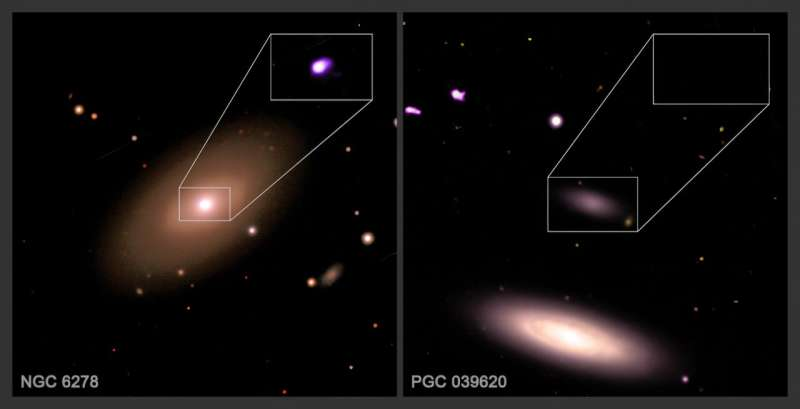
For decades, astronomers have worked with a widely accepted idea: nearly every galaxy in the universe hosts a supermassive black hole at its center. These enormous objects, weighing millions or even billions of times more than the Sun, are thought to play a key role in shaping how galaxies grow and evolve. However, new research based on observations from NASA’s Chandra X-ray Observatory suggests that this assumption does not hold true for many small and dwarf galaxies.
According to a detailed study published in The Astrophysical Journal, most low-mass galaxies may not contain supermassive black holes at all. This finding challenges long-standing models of galaxy evolution and offers new clues about how black holes form in the first place.
A massive dataset spanning two decades of observations
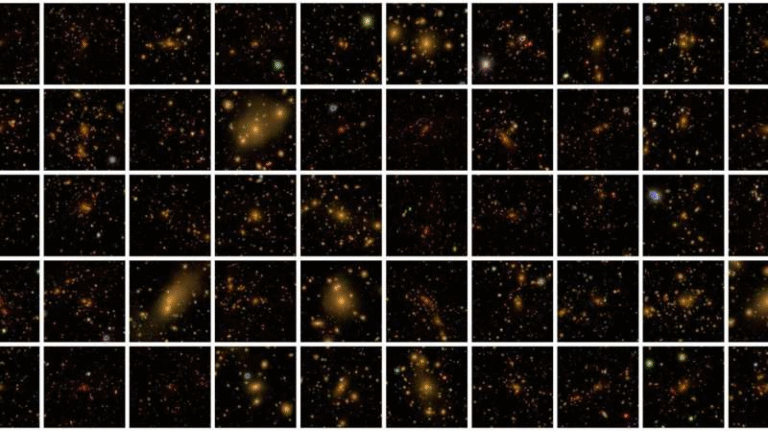
The research team analyzed X-ray data from more than 1,600 galaxies, collected over 20+ years of Chandra observations. This large and diverse sample allowed astronomers to compare galaxies across a wide range of sizes and masses, from galaxies more than ten times the mass of the Milky Way to much smaller dwarf galaxies with only a few percent of the Milky Way’s stellar mass.
The study focused on detecting X-ray emissions from galactic centers, which are one of the most reliable ways to identify active supermassive black holes. When gas and dust fall toward a black hole, friction heats the material to extreme temperatures, producing strong X-rays that telescopes like Chandra can detect even across vast cosmic distances.
A clear difference between large and small galaxies
The results revealed a striking pattern. More than 90 percent of massive galaxies, including galaxies comparable in size to the Milky Way, showed clear X-ray evidence of a supermassive black hole at their center. This confirms what astronomers have long observed in large galaxies.
However, the picture changed dramatically for smaller systems. Among dwarf galaxies, the team found that only about 30 percent are likely to host supermassive black holes. For galaxies with stellar masses below three billion solar masses, roughly comparable to the Large Magellanic Cloud, bright central X-ray sources were usually absent.
This sharp decline suggests that supermassive black holes are far from universal, especially in the low-mass galaxy population.
Is the black hole there but too faint to see?
One possible explanation for the lack of X-ray detections in small galaxies is that their black holes are simply too faint. Smaller black holes are expected to pull in less gas, which would naturally make them weaker X-ray emitters and harder to detect.
The researchers carefully tested this idea by accounting for how black hole brightness should decrease as galaxy mass drops. While this effect does explain part of the decline, it does not fully account for the missing X-ray sources.
Even after correcting for faintness, there was still a significant shortfall in the number of detectable black holes in low-mass galaxies. This led the team to conclude that the most likely explanation is simple but profound: many small galaxies truly do not have central black holes at all.
What this means for black hole formation theories
These findings have major implications for how astronomers think supermassive black holes form. There are two leading theories.
The first is the direct-collapse model, in which enormous clouds of gas in the early universe collapse directly into black holes containing thousands of solar masses from birth. These massive seeds would preferentially form in dense, massive environments, such as the progenitors of today’s large galaxies.
The second theory suggests that black holes begin as small remnants of massive stars and gradually grow over time by merging with other black holes and accreting gas. If this process dominated, astronomers would expect small and large galaxies to have similar black hole occupation rates, which is not what the Chandra data shows.
The new results strongly favor the idea that supermassive black holes form more efficiently in massive galaxies, supporting the direct-collapse scenario and explaining why many dwarf galaxies appear to be missing them entirely.
Implications for the broader universe
The absence of black holes in many small galaxies has consequences that extend well beyond galaxy centers.
One important area is gravitational wave astronomy. Collisions between galaxies can lead to mergers between their central black holes, producing gravitational waves detectable by future observatories such as the Laser Interferometer Space Antenna (LISA). If dwarf galaxies often lack black holes, the number of such merger events will be lower than previously predicted.
Another consequence involves tidal disruption events, which occur when a star wanders too close to a black hole and is torn apart by intense gravity. With fewer black holes in dwarf galaxies, these dramatic events should also be rarer in low-mass systems.
Why Chandra’s X-ray vision matters
The Chandra X-ray Observatory has been operating since 1999 and remains one of the most powerful tools for studying black holes. Unlike visible-light telescopes, X-ray observatories can peer directly into the energetic environments surrounding black holes, even when dust and gas obscure other wavelengths.
This study highlights the importance of long-term astronomical missions. By combining decades of data, astronomers can identify large-scale trends that are impossible to see in smaller samples.
How this reshapes our understanding of galaxies
Galaxies and black holes are deeply connected. In large galaxies, the mass of the central black hole is tightly linked to the properties of the galaxy’s bulge, suggesting a shared evolutionary history. The discovery that many small galaxies lack black holes raises new questions about how galaxies grow without them.
It also opens the door to studying dwarf galaxies as natural laboratories for understanding star formation and galactic evolution without the influence of a central black hole. These systems may follow very different evolutionary paths compared to their larger counterparts.
Looking ahead
Future observatories with greater sensitivity may uncover even weaker black hole signals or confirm that many dwarf galaxies are truly black hole-free. Either outcome will refine our understanding of how structure formed in the early universe.
For now, this Chandra-based study delivers a clear message: supermassive black holes are not as universal as once believed, and galaxy mass plays a crucial role in determining whether one exists at all.
Research paper: https://doi.org/10.3847/1538-4357/ae06a1