New Research Shows Supernova Material Reached Earth Through Interstellar Ice, Not Stardust
For decades, Carl Sagan’s famous line about us being made of “star stuff” has shaped how we think about our cosmic origins. The general idea was simple: when massive stars exploded as supernovae, they forged heavy elements that later traveled through space as tiny dust grains. These grains, often called stardust, were thought to drift into young planetary systems, eventually becoming part of planets, meteorites, and even life itself.
Now, a new study suggests that this picture is incomplete. According to fresh research led by Martin Bizzarro and his colleagues at the University of Copenhagen, much of the material created in supernovae did not arrive in our solar system as dust at all. Instead, it was carried inside interstellar ice. This finding not only changes how scientists think supernova material moved through space, but also reshapes ideas about how Earth and other planets formed.
Why Zirconium Holds the Key
The researchers focused on an element that rarely gets attention outside specialized scientific circles: zirconium. While zirconium has several isotopes, one of them—zirconium-96 (Zr-96)—is particularly special. This isotope is produced almost exclusively during supernova explosions. That makes it an excellent tracer for material that originated in dying stars.
To track where this supernova-born zirconium ended up, the team analyzed a wide range of meteorites. Meteorites are valuable scientific archives because they preserve material from the early solar system, often unchanged for billions of years. If supernova material arrived in our solar neighborhood in a specific form, meteorites should still carry that signature.
Separating Ice-Related Material From Rock
The experimental approach was clever and very deliberate. The scientists treated meteorite samples with weak acetic acid, similar to vinegar. This process dissolves minerals that formed or were altered in the presence of water—such as clays—while leaving behind the harder, dry rocky grains.
By separating these two components, the team could measure how much Zr-96 was present in each fraction. If supernova material had mostly arrived as solid dust, the zirconium should be evenly distributed or concentrated in the rocky residue. If it arrived with ice, it would be concentrated in the dissolved, water-related portion.
The results were striking. In some cases, the dissolved fractions contained up to 5,000 parts per million more Zr-96 than the rocky material. That is an enormous difference and very difficult to explain unless the zirconium was originally associated with ice.
Supernovae, Ice, and the Interstellar Medium
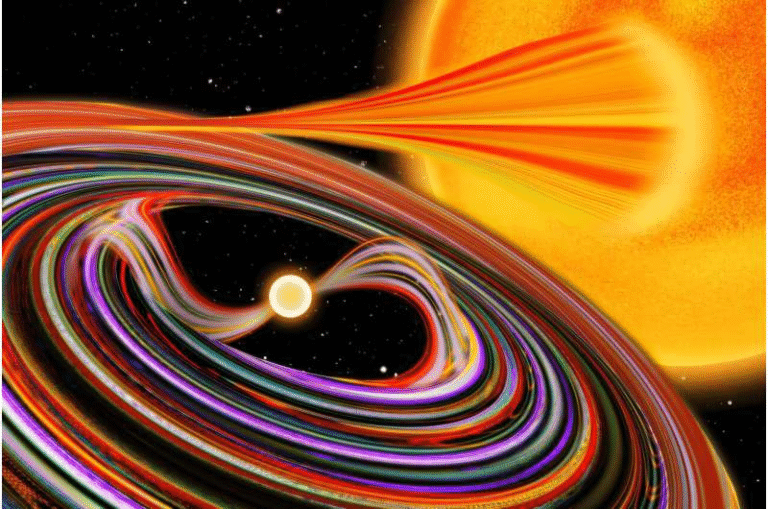
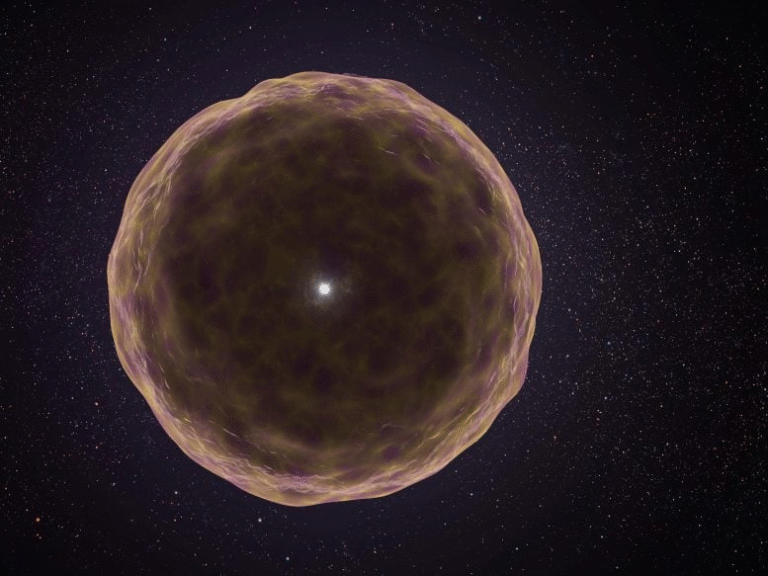
These findings suggest that when a supernova explodes, not all of its material condenses into solid dust grains. Some of it becomes atomized and later embeds itself directly into icy particles floating through the interstellar medium. These icy grains then travel between stars, eventually becoming part of star-forming clouds and young planetary systems.
This idea fits well with what astronomers already know about space. Interstellar clouds are rich in ice, especially water ice mixed with simple molecules like carbon monoxide and ammonia. These icy grains are abundant and play a major role in star and planet formation. The new study shows that they may also be the primary delivery system for supernova material.
What This Means for Planet Formation
The implications go far beyond meteorites. If supernova material traveled inside ice, then its distribution throughout the solar system would depend strongly on temperature. Ice survives only beyond a certain distance from a young star, known as the snow line. Inside this boundary, ice sublimates—turning directly from solid into gas.
This helps explain a long-standing puzzle. Inner planets like Mercury, Venus, and Earth are relatively poor in supernova-specific isotopes such as Zr-96. Outer planets and icy bodies farther from the Sun are much richer in them. Scientists refer to this pattern as the solar system’s mixing line, a gradual change in isotopic composition with distance from the Sun.
If icy grains carrying supernova material drifted inward and crossed the snow line, their ice would have evaporated. The gases, along with the Zr-96, would have been lost to space rather than incorporated into growing planets. This naturally produces the observed gradient.
Evidence for Pebble Accretion on Earth
The study also feeds into a major debate about how Earth formed. One traditional model suggests that planets grew through violent collisions between large planetesimals. Another model, known as pebble accretion, proposes that planets formed by slowly accumulating countless small, often icy pebbles.
Earth’s low abundance of Zr-96 strongly favors the pebble accretion model. If Earth had formed mainly from large asteroids, it should have retained more supernova isotopes. Instead, the data suggest that Earth grew from small pebbles whose ice content—and the supernova material within it—was lost as they moved closer to the Sun.
Clues From the Oldest Solar System Materials
The researchers also examined calcium-aluminum-rich inclusions (CAIs), which are among the oldest known solids in the solar system. These tiny mineral grains formed very early, before planets existed.
Interestingly, CAIs show huge variations in their Zr-96 content. Some are rich in it, while others are nearly depleted. This suggests that they formed in very different regions of the protoplanetary disk.
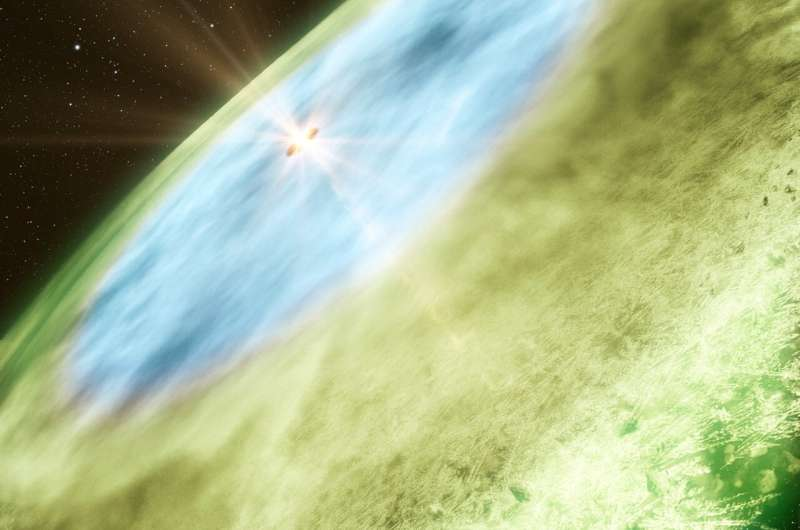
The team proposes that early ice loss caused the disk to become chemically stratified. Lighter gases moved toward the top and bottom of the disk, while heavier dust grains settled near the middle. CAIs forming in different layers would naturally inherit different isotopic signatures.
Why This Study Matters
This research connects astrophysics, cosmochemistry, and planetary science in a powerful way. It provides direct evidence that interstellar ice played a central role in delivering supernova material to the early solar system. It also strengthens the case for pebble accretion as a key mechanism in planet formation, especially for Earth.
Most importantly, it shows that the story of our cosmic origins is more nuanced than previously thought. We really are made of star stuff—but much of that material likely arrived frozen in ice, drifting quietly through space long before becoming part of our planet.
Research paper:
https://arxiv.org/abs/2512.00522