Orcas and Dolphins Have Been Spotted Hunting Salmon Together in a Rare Cross-Species Partnership
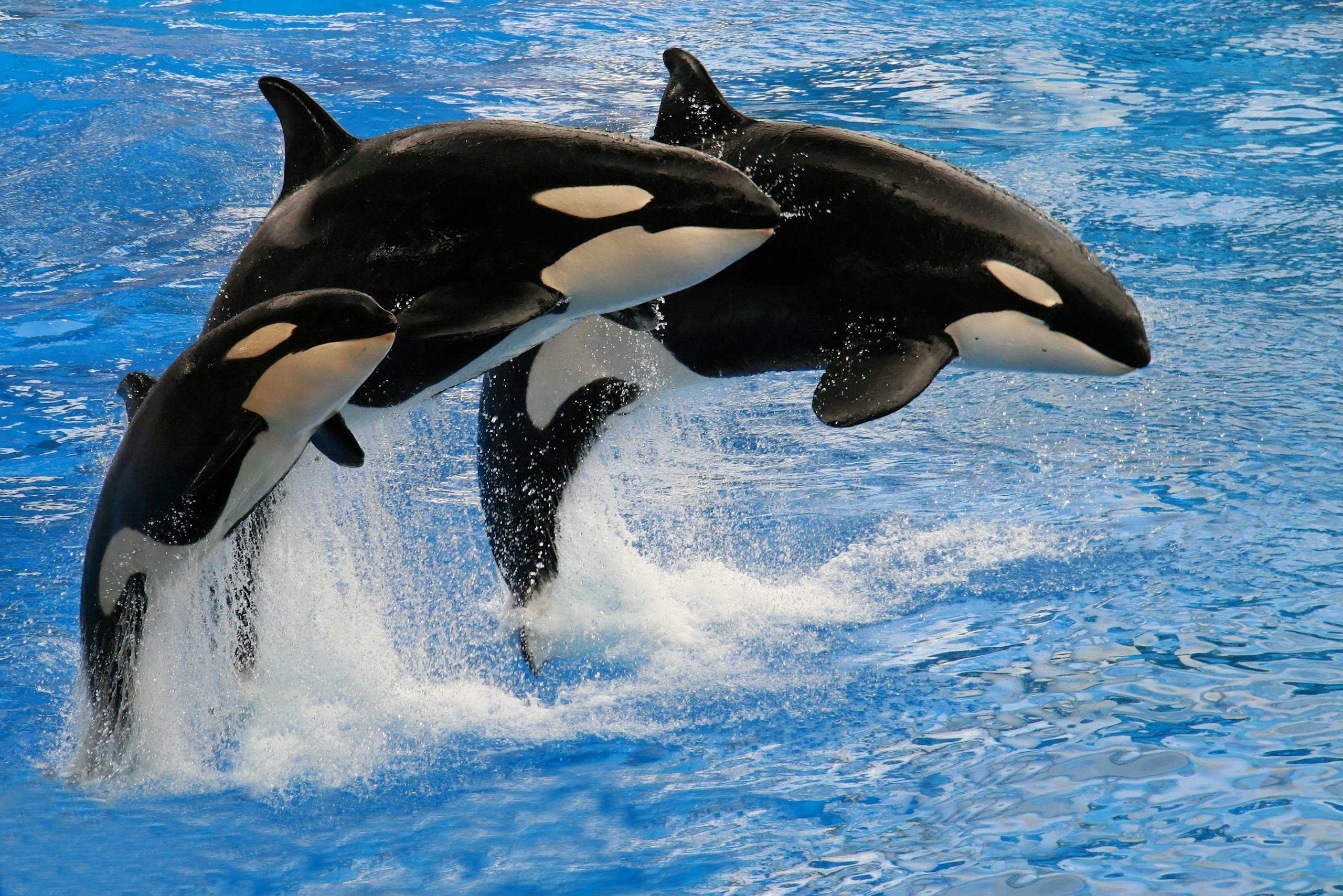
Killer whales, more commonly known as orcas, are famous for their intelligence, complex social structures, and highly specialized hunting strategies. Dolphins, on the other hand, are equally well known for their agility, social behavior, and sophisticated use of echolocation. Now, new research suggests that these two highly intelligent marine mammals may be doing something scientists have never formally documented before: hunting together.
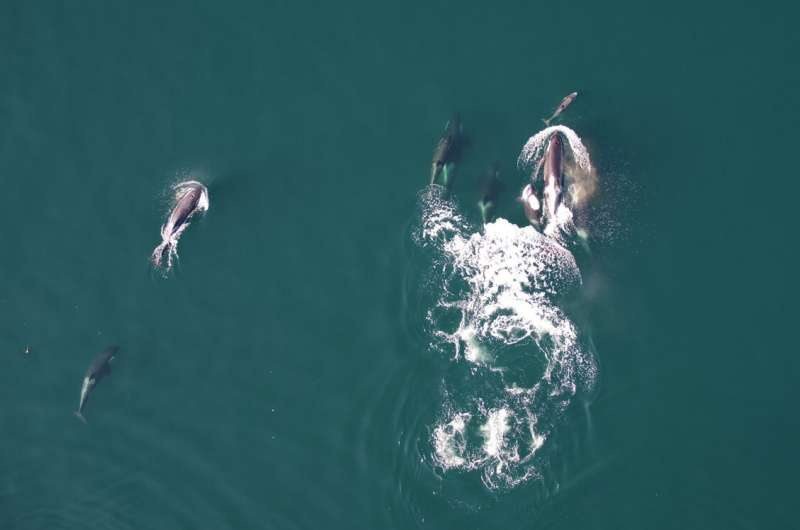
A study published in Scientific Reports reports the first recorded evidence of cooperative foraging between killer whales and dolphins. Specifically, researchers observed northern resident killer whales (Orcinus orca) interacting closely with Pacific white-sided dolphins (Lagenorhynchus obliquidens) while hunting salmon in the coastal waters off British Columbia, Canada. Even more intriguing, the observations suggest that orcas may sometimes share the remains of their catch with the dolphins.
Credit: University of British Columbia (A.Trites)
A Rare Interaction Observed off the Coast of British Columbia
The interactions were documented around Vancouver Island during fieldwork conducted in August 2020. Northern resident killer whales are a fish-eating population that primarily targets Chinook salmon (Oncorhynchus tshawytscha), the largest species of Pacific salmon and a crucial food source for these whales.
Pacific white-sided dolphins are frequently seen in the same waters and are known to hunt along the British Columbia coastline. Although the two species often appear in close proximity, their relationship has long been unclear. Orcas are apex predators and, in some regions, are known to prey on smaller marine mammals, including dolphins. However, in this case, researchers observed no signs of aggression, avoidance, or competition between the two species.
Instead, the animals appeared to move and forage in a coordinated way.
How the Study Was Conducted
The research team, led by Sarah Fortune, focused on the movements and behavior of nine individual northern resident killer whales. To understand what was happening beneath the surface, the scientists used a combination of movement-tracking data, underwater video footage, acoustic recordings, and aerial drone observations.
This multi-layered approach allowed researchers to reconstruct hunting sequences in detail. By matching whale movements with dolphin behavior and acoustic signals, they were able to examine how the two species interacted before, during, and after foraging dives.
Following the Dolphins to Find Salmon
One of the most striking findings was that orcas repeatedly appeared to change course after encountering dolphins. The researchers documented 25 separate instances in which killer whales adjusted their direction to follow dolphins on foraging dives.
This behavior is unusual. Northern resident orcas typically hunt independently or in coordinated groups made up solely of their own pod members. The fact that they altered their movements in response to dolphins strongly suggests that the dolphins were playing an active role in the hunting process.
Researchers propose that orcas may be listening for dolphin echolocation clicks, which could help them locate salmon hiding at depth. During these interactions, orcas appeared to reduce their own noise output, possibly to avoid interfering with dolphin sonar and to better detect prey.
Sharing the Catch, or at Least the Leftovers
The study also documented eight confirmed instances of orcas catching and consuming Chinook salmon during the observation period. Dolphins were present during four of these events.
In one particularly notable case, dolphins were seen feeding on scraps of an adult Chinook salmon that had been broken into smaller pieces by the orcas. Chinook salmon are too large for Pacific white-sided dolphins to capture or swallow whole, so access to leftovers represents a significant feeding opportunity.
The researchers suggest that this behavior may qualify as prey sharing, even if it is indirect. While orcas regularly share food within their own pods, sharing with a different species has rarely been documented.
Mutual Benefits for Both Species
Although the study stops short of declaring this behavior a deliberate alliance, the evidence points to mutual benefits.
For orcas, dolphins may act as effective scouts, using their echolocation abilities to detect salmon more efficiently. This could reduce the energy orcas expend while searching for prey.
For dolphins, the presence of orcas may provide access to large, energy-rich prey that would otherwise be unavailable to them. Additionally, the researchers suggest that associating with local fish-eating orcas might offer dolphins some protection from other orca populations, such as transient or Bigg’s killer whales, which are known to hunt marine mammals.
Why This Discovery Matters
This finding challenges long-standing assumptions about how different marine predators interact. Orcas are highly specialized hunters with well-defined diets and social rules. Dolphins are agile, adaptable feeders but are generally not thought to collaborate with much larger predators.
The lack of conflict observed during these interactions suggests that the animals are not simply tolerating each other, but may be actively benefiting from each other’s presence. If confirmed by future studies, this could reshape how scientists understand predator relationships in marine ecosystems.
Northern Resident Orcas and Their Dependence on Chinook Salmon
Northern resident killer whales are a culturally distinct population with unique vocal dialects, hunting traditions, and social structures. Their heavy reliance on Chinook salmon makes them particularly vulnerable to declines in salmon populations.
Chinook salmon have experienced significant reductions due to overfishing, habitat loss, climate change, and dam construction. Any behavior that helps orcas locate prey more efficiently could be critical for their survival, especially as food becomes scarcer.
What We Know About Pacific White-Sided Dolphins
Pacific white-sided dolphins are fast, social animals commonly found in the North Pacific Ocean. They feed on a variety of fish and squid and are known for forming large, dynamic groups. While they are highly capable hunters, they generally target smaller prey than orcas do.
Their ability to exploit the remains of large salmon kills highlights their behavioral flexibility and suggests they may take advantage of opportunities created by other predators.
More Questions Than Answers—for Now
While the evidence is compelling, the authors emphasize that more research is needed. It remains unclear how widespread this behavior is, whether it occurs regularly, or if it is limited to specific individuals or environmental conditions.
Future studies may reveal whether this cooperation is intentional, learned, or simply an opportunistic overlap of hunting strategies. Either way, the discovery opens a fascinating new window into the complexity of marine life.
Research Paper Reference:
https://www.nature.com/articles/s41598-025-22718-4