Juvenile Manta Rays Act as Living, Moving Ecosystems According to New Marine Study
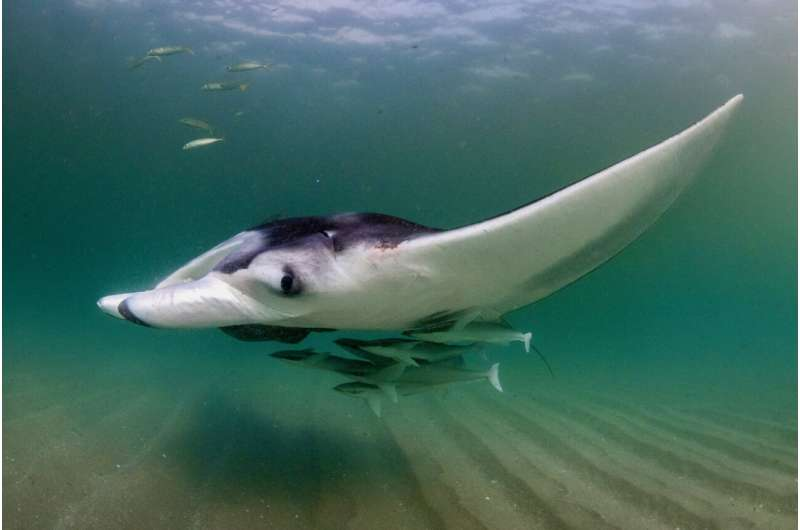
A fascinating new marine biology study has revealed that juvenile Caribbean manta rays are far more than graceful swimmers gliding through coastal waters. Researchers have found that these young rays function as mobile ecosystems, regularly hosting groups of fish that travel, feed, and interact around their bodies as they move through the ocean.
The research focuses on the species Mobula yarae, commonly known as the Caribbean manta ray, and highlights how these animals support biodiversity in ways scientists are only beginning to fully understand.
The Study and Who Conducted It
The study was carried out by scientists from the University of Miami Rosenstiel School of Marine, Atmospheric, and Earth Science, in collaboration with the Marine Megafauna Foundation. It was published in the peer-reviewed journal Marine Biology in 2025.
The research team analyzed an extensive collection of 465 underwater videos, recorded between 2016 and 2021, to examine how different fish species associate with juvenile manta rays in South Florida waters. This long-term dataset allowed scientists to look not just at occasional interactions, but at consistent patterns over several years.
The work was led by Emily Yeager, a doctoral researcher in environmental science and policy, with contributions from marine biologists and conservation experts specializing in sharks, rays, and large ocean animals.
South Florida as a Nursery for Young Mantas
One of the most important geographic findings of the study is the role of South Florida, especially Palm Beach County, as a nursery habitat for juvenile manta rays. These shallow, productive coastal waters provide young mantas with access to food and relative protection during early life stages.
However, these same waters are also heavily used by humans, which creates a challenging environment for growing manta rays. The overlap between juvenile mantas and coastal activity makes this region a critical focus for both research and conservation.
Fish That Travel With Manta Rays
The study identified four families of teleost fish—the largest group of ray-finned fishes—that regularly associate with juvenile manta rays. Among these, remoras, also called suckerfish, were by far the most frequent companions.
Remoras attach themselves to manta rays using a specialized suction-like dorsal fin, allowing them to hitch a ride with minimal effort. But the relationship goes beyond simple transportation. Other fish observed swimming alongside or around mantas included jacks, cobia, and additional members of the Carangidae family—species that also play an important role in Florida’s commercial and recreational fisheries.
Researchers documented that these fish tend to cluster in specific areas on the manta’s body, such as around the gills, eyes, wings, and tail. These locations may offer feeding opportunities, protection from predators, or access to food particles stirred up by the manta’s movement.
Stable and Long-Lasting Associations
One of the most significant findings of the study is that these fish-manta relationships appear to be relatively stable over time. Rather than brief or random encounters, many of the observed associations lasted long enough to suggest ongoing ecological relationships.
This stability supports the idea that juvenile manta rays act as living habitats, creating small but complex ecosystems that move through the ocean. Within these mobile communities, fish may feed, mature, or even reproduce, benefiting from the manta’s size, movement, and presence.
Why These Mobile Ecosystems Matter
From an ecological perspective, the discovery adds an important layer to how scientists understand species interdependence in marine environments. Instead of thinking of manta rays as isolated animals, this research shows that they play a central role in supporting other species, particularly during vulnerable juvenile stages.
By hosting multiple fish species, manta rays help distribute nutrients, influence predator-prey dynamics, and contribute to biodiversity in coastal ecosystems. Losing juvenile mantas could therefore have consequences that extend far beyond the species itself.
Human Threats Facing Juvenile Manta Rays
Despite their ecological importance, juvenile manta rays face several serious threats—many of them caused by human activity. The study highlights boat strikes and entanglement in fishing gear as major risks, especially in busy coastal waters where mantas often swim close to the surface.
Because these rays move slowly and feed near the top of the water column, they are particularly vulnerable to collisions with boats and accidental capture in fishing lines. When a juvenile manta is injured or killed, the loss also affects the fish communities that depend on it.
Conservation Implications and Responsible Boating
The researchers emphasize that responsible boating and fishing practices can make a meaningful difference. Simple actions—such as slowing down in known manta habitats and being mindful of fishing gear—can help protect young mantas and the ecosystems they support.
From a policy perspective, the findings provide valuable scientific evidence that manta rays should be considered habitat-forming species, similar to coral reefs or seagrass beds, when planning marine conservation strategies.
Additional Insight: Why Manta Rays Are Ecologically Special
Manta rays are among the largest rays in the ocean, with wingspans that can exceed 20 feet in adults. Unlike many other rays, mantas are filter feeders, consuming plankton and small organisms by swimming with their mouths open. This feeding behavior naturally attracts smaller fish, creating opportunities for symbiotic relationships.
Mantas are also highly intelligent, with large brains relative to body size, and exhibit complex behaviors such as coordinated feeding and repeated use of specific habitats. These traits make them especially important subjects for marine ecological research.
The Bigger Picture for Marine Biodiversity
This study reinforces the idea that protecting large marine animals often has ripple effects throughout the ecosystem. By safeguarding juvenile manta rays, conservation efforts also protect the diverse fish species that rely on them.
As coastal ecosystems face increasing pressure from climate change, pollution, and human activity, understanding these hidden ecological connections becomes more important than ever.