Lab Mice Lose Their Anxiety After a Week Outdoors Thanks to a Cornell Rewilding Study
Scientists have long relied on laboratory mice to study anxiety, fear, and behavior. But a new study from Cornell University suggests something striking: lab mice raised in cages can lose deeply ingrained anxiety behaviors after spending just one week in a natural outdoor environment. The findings raise important questions about how animal behavior is shaped by environment and how much standard lab conditions may be influencing the results of decades of research.
What the Study Looked At
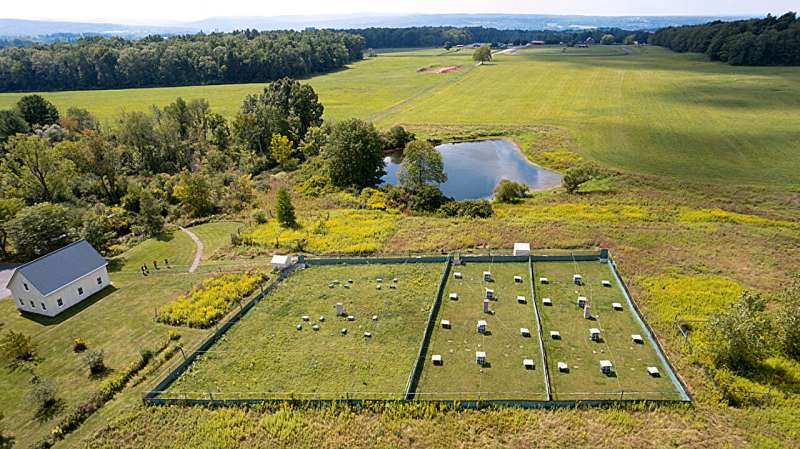
The research was led by postdoctoral researcher Matthew Zipple, along with senior author Michael Sheehan, an associate professor of neurobiology and behavior at Cornell University. The study was published in the journal Current Biology in 2025 and involved rehoming laboratory mice into large, enclosed outdoor fields located just off Cornell’s campus.
These mice had lived their entire lives inside laboratory cages roughly the size of a shoebox. They had never experienced grass, soil, weather changes, or the freedom to explore complex terrain. When released into the fields, researchers immediately noticed changes in how the mice moved and behaved. The animals stood upright, sniffed the air, explored the grass, and began bounding across the ground in ways they had never done before.
Rewilding the Mice
The process the researchers used is often referred to as rewilding, meaning animals raised in artificial or controlled environments are placed into more naturalistic settings. In this case, the mice were released into large, secure outdoor enclosures designed to protect them while still allowing exposure to real-world conditions.
In these fields, the mice could:
- Run freely over large distances
- Touch grass and soil
- Dig and burrow
- Climb and explore
- Find food on their own
- Interact socially
- Experience weather, daylight cycles, and seasonal changes
This setup was intentionally designed to provide a dramatically broader range of experiences than what is possible in a laboratory cage.
How Anxiety Was Measured
To assess anxiety, the researchers used one of the most widely accepted behavioral tests in neuroscience: the elevated plus maze. This maze consists of two enclosed arms with walls and two open, elevated arms without walls. Mice naturally prefer enclosed spaces because open areas make them feel exposed and vulnerable.
In thousands of previous studies, lab mice show a consistent pattern: after repeated exposure to the maze, they spend less and less time in the open arms. This behavior is interpreted as an increase in anxiety or fear response.
What Happened to Mice That Stayed in the Lab
Some mice in the study were kept entirely in the laboratory and repeatedly exposed to the elevated plus maze. As expected, these mice behaved exactly like lab mice in countless earlier studies. Over time, they avoided the open arms more and more, showing a strengthening fear response.
This confirmed that the test itself and the lab environment continued to produce the standard anxiety-related behaviors researchers are familiar with.
What Happened to the Rewilded Mice
The results changed dramatically for the mice that were moved outdoors.
When rewilded mice were re-tested in the elevated plus maze, researchers found that:
- Their fear response was greatly reduced
- Some mice showed no measurable fear response at all
- Mice that had already developed strong anxiety in the lab reversed those behaviors after living outdoors
Most notably, these changes occurred after just one week in the outdoor field.
Even mice that had been repeatedly exposed to the maze and had clearly learned to fear it returned to their original baseline anxiety levels after a short time in the natural environment.
Why Environment Matters So Much
The researchers believe the key factor driving this change is agency. In the outdoor enclosures, mice were no longer passive occupants of a small space. Instead, they could actively shape their experiences through movement and decision-making.
In the field, mice constantly encountered challenges and learned to overcome them:
- Navigating uneven terrain
- Finding shelter
- Choosing when and where to explore
- Responding to weather and temperature changes
- Interacting with other mice
These daily experiences likely helped the animals develop a more flexible and calibrated response to novelty. When they later encountered the elevated plus maze again, it was no longer one of the most extreme or unfamiliar situations they had experienced.
Blocking and Resetting Fear
One of the most important findings was that rewilding did two things:
- It blocked the formation of new fear responses in mice that had not yet developed anxiety
- It reset existing fear responses in mice that already showed strong anxiety behaviors
This suggests that anxiety in lab mice is not fixed or permanent. Instead, it appears to be highly sensitive to environmental context.
Implications for Behavioral Research
The study has significant implications for how scientists interpret decades of mouse-based research on anxiety and fear.
Critics have long argued that lab mice may not be reliable models for human behavior because their environments are too artificial. This research supports that concern but also offers a potential solution: study animals in environments that better reflect real-world conditions.
Rather than abandoning mouse models altogether, the researchers suggest that incorporating more naturalistic settings could lead to findings that generalize more effectively across species.
Parallels to Human Anxiety
Although the study did not directly investigate human behavior, the researchers considers the findings highly relevant. Psychological research in humans has long shown that broader life experiences and greater personal autonomy are linked to lower anxiety levels.
The idea is simple: when individuals regularly encounter a wide range of challenges and successfully navigate them, they develop a better sense of what is truly threatening and what is not. In contrast, highly sheltered environments may make unfamiliar situations feel disproportionately frightening.
Future Research Questions
The outdoor field setup opens the door to many new questions, including:
- How long is the minimum outdoor exposure needed to reverse anxiety?
- Do younger or older mice respond differently to rewilding?
- Are the changes in behavior long-lasting or temporary?
- What neurological changes accompany this behavioral shift?
Researchers now have a powerful new way to explore how experience shapes fear and anxiety at both behavioral and biological levels.
Why This Study Matters
This research highlights how environment can fundamentally reshape behavior, even in animals that have spent their entire lives in controlled conditions. It challenges assumptions about what anxiety tests actually measure and encourages scientists to rethink how experimental animals are housed and studied.
At a broader level, it also serves as a reminder that exposure, experience, and agency play a central role in emotional regulation—not just in mice, but potentially across many species.
Research Paper Reference
Transfer to a Naturalistic Setting Restructures Fear Responses in Laboratory Mice
https://doi.org/10.1016/j.cub.2025.10.050