Seabird Nesting Season Is Quietly Reshaping Shark Territories in Hawaiʻi
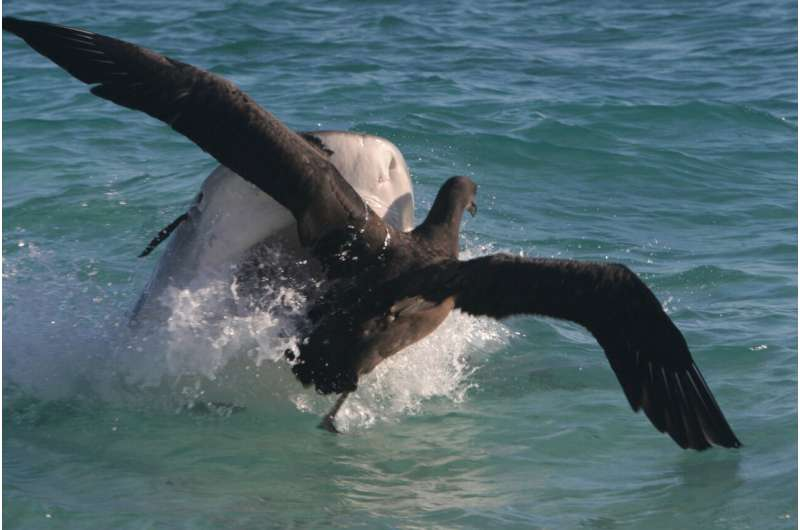
A fascinating new marine ecology study from Hawaiʻi is revealing how events on land and in the air can dramatically influence what happens beneath the ocean’s surface. Scientists from the University of Hawaiʻi at Mānoa’s Hawaiʻi Institute of Marine Biology (HIMB) Shark Lab have uncovered a clear link between seasonal seabird nesting and the way different shark species move, compete, and avoid one another in the Northwestern Hawaiian Islands. The findings show that when seabirds arrive to nest, sharks don’t just follow the food — entire predator communities reorganize.
The research focuses on French Frigate Shoals (FFS), a remote coral atoll within the Papahānaumokuākea Marine National Monument, one of the largest protected marine areas on Earth. Every summer, FFS becomes a major nesting ground for seabirds such as albatrosses, whose fledglings eventually take their first flight — or sometimes fall into the water before they are ready. These vulnerable young birds turn out to be an important seasonal food source for tiger sharks, setting off a chain reaction throughout the local shark community.
How Seabirds Attract Tiger Sharks
The study found that the arrival of fledgling seabirds during summer causes tiger sharks to gather in specific shallow areas near the small islands of French Frigate Shoals. Tiger sharks are large, opportunistic apex predators, and fledgling seabirds provide a high-energy, easy-to-catch meal compared to faster, more elusive fish.
As a result, tiger sharks concentrate their hunting efforts around the nesting islands during the seabird season. This seasonal clustering is not subtle — it significantly alters where tiger sharks spend their time compared to the rest of the year. Once the seabirds disperse and leave the area, the tiger sharks also move on.
Shark Turf Wars Beneath the Surface
The presence of tiger sharks has serious consequences for other shark species. The research shows that gray reef sharks, which are smaller and more vulnerable, avoid areas dominated by tiger sharks entirely during the seabird season. This avoidance behavior is driven by the risk of predation, not by changes in habitat quality or prey availability.
Meanwhile, Galapagos sharks respond differently. Rather than abandoning the area altogether, they adjust their behavior by shifting to different zones or different times of day to reduce competition with tiger sharks. This subtle repositioning allows them to coexist, but only temporarily and with altered movement patterns.
Once the seabird season ends and tiger sharks disperse, both gray reef sharks and Galapagos sharks return to their usual habitats. This clear, repeating cycle highlights how a short-term food pulse can restructure predator behavior across an entire ecosystem.
How Scientists Tracked These Changes
To uncover these patterns, the research team used acoustic telemetry, a powerful tracking method for marine animals. Over the course of two years, scientists tagged 128 sharks from multiple species with acoustic transmitters. A network of underwater receivers placed around French Frigate Shoals recorded when and where each tagged shark moved.
By comparing shark movements during the seabird nesting season and the off-season, researchers could see exactly how habitat use changed. They also conducted fish surveys throughout the study period to confirm that shifts in shark behavior were not caused by changes in fish abundance. The results were clear: fish prey remained relatively stable, meaning the observed changes were driven by predator avoidance and competition, not food scarcity.
Why This Study Matters
One of the most important takeaways from this research is the demonstration of a strong indirect link between terrestrial and marine ecosystems. Seabirds spend most of their lives at sea but nest on land. Their nesting behavior, in turn, shapes the movements of top marine predators, which then affects the entire shark community.
This kind of connection is often overlooked in conservation planning. The study shows that protecting seabird nesting habitats is not just about saving birds — it also plays a role in maintaining balanced marine predator communities.
The research also highlights the sensitivity of fragile ecosystems like French Frigate Shoals. When key nesting islands are damaged or lost, the effects can ripple through the food web. The study references Hurricane Walaka in 2018, which destroyed several small islands in the area. Such events can dramatically reduce seabird nesting habitat, potentially disrupting the seasonal patterns that sharks have relied on for generations.
The Role of Apex Predators in Marine Ecosystems
Tiger sharks serve as classic examples of apex predators, species that sit at the top of the food chain and shape ecosystems through their presence alone. In this case, tiger sharks influence not only their prey but also other predators, forcing them to change behavior to avoid conflict or competition.
This phenomenon, known as intraguild interaction, occurs when predators compete with or prey upon other predators. The study provides rare, detailed evidence of how intraguild interactions play out in the wild, especially in a relatively untouched marine environment.
Why French Frigate Shoals Is So Important
French Frigate Shoals is home to more than just sharks and seabirds. It supports Hawaiian monk seals, coral reef ecosystems, and numerous fish species. Its isolation has allowed scientists to observe natural ecological processes with minimal human interference, making it an ideal location for studies like this.
Because Papahānaumokuākea is a protected area, the insights gained here can help guide marine conservation strategies not only in Hawaiʻi but around the world. Understanding how seasonal events influence predator behavior can inform decisions about habitat protection, climate resilience, and wildlife management.
Broader Implications for Conservation
As climate change, sea-level rise, and stronger storms continue to threaten low-lying islands, seabird nesting habitats may shift or disappear. This study suggests that such changes could have unexpected consequences for marine predator dynamics, potentially altering shark distributions far beyond nesting sites.
By showing how tightly connected seabirds and sharks are, the research emphasizes the need for ecosystem-based conservation approaches. Protecting one species or habitat in isolation may not be enough; the entire network of interactions must be considered.
What This Study Adds to Marine Science
This research stands out because it moves beyond simple predator–prey relationships and examines how predators influence other predators in response to a seasonal food source. It adds valuable evidence that ecosystems are shaped as much by behavior and competition as by direct feeding.
For scientists, conservationists, and anyone interested in marine life, the study offers a powerful reminder that even brief seasonal events can have long-lasting ecological effects.
Research paper:
https://doi.org/10.1002/ecs2.70486