NYU Abu Dhabi’s New AI Tool LA⁴SR Is Transforming How Scientists Discover Hidden Microalgae Proteins
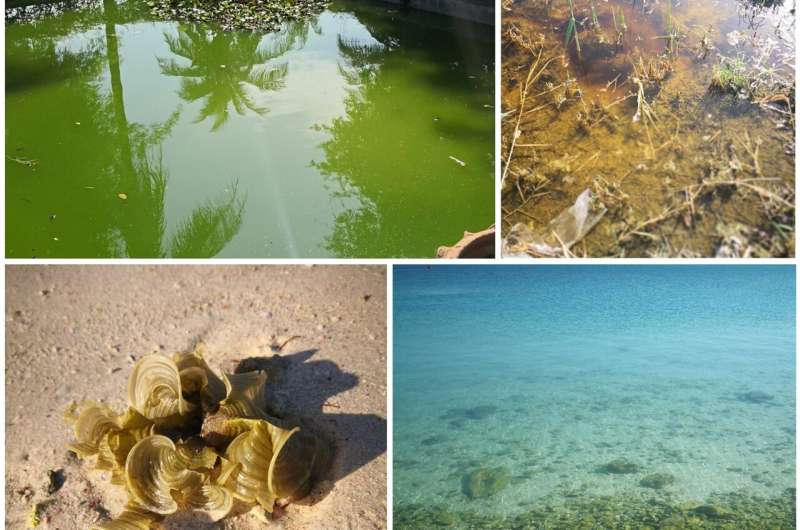
Scientists at New York University Abu Dhabi (NYUAD) have developed a powerful new artificial intelligence system that could significantly change how researchers study some of the most important organisms on Earth. The tool, called LA⁴SR, is designed to rapidly identify previously overlooked proteins in microalgae, microscopic organisms that play a central role in producing oxygen, supporting aquatic ecosystems, and sustaining life across the planet.
Microalgae may be tiny, but their impact is enormous. They contribute a substantial share of Earth’s oxygen, form the base of many food webs, and help regulate global carbon cycles. Despite their importance, much of their biology has remained difficult to study, especially at the protein level. That is where LA⁴SR comes in.
Developed by a research team at NYU Abu Dhabi, this new AI system dramatically improves scientists’ ability to detect and analyze microalgal proteins, doing so with near-perfect accuracy and at speeds that are up to 10,000 times faster than traditional computational methods.
Why Microalgae Proteins Are So Hard to Study
Proteins are essential molecules that drive nearly every biological process, from metabolism to environmental adaptation. In microalgae, proteins are especially valuable to researchers because they can reveal how these organisms survive in changing conditions and how they produce compounds with potential applications in biotechnology, clean energy, and environmental monitoring.
The challenge is that microalgae rarely exist alone. In natural environments such as freshwater ponds and coastal waters, their proteins are mixed with proteins from bacteria and other microorganisms. When scientists collect genetic or protein data from these environments, the result is a complex and noisy dataset.
Traditional bioinformatics tools often struggle to separate genuine microalgal proteins from this background noise. In many cases, large portions of algal proteins are missed entirely, or the analysis takes weeks to complete. This has left much of the microalgal “dark proteome” unexplored.
How LA⁴SR Works
LA⁴SR takes a fundamentally different approach. Instead of relying solely on conventional biological rules, the system uses deep learning techniques inspired by language models. Just as language models learn patterns in words and sentences, LA⁴SR learns patterns in protein sequences.
By treating protein sequences like a form of biological language, the AI can recognize subtle signals that distinguish true microalgal proteins from unrelated microbial proteins. The system was trained on large datasets and refined using synthetic chimeras, allowing it to learn with remarkable precision.
The result is an AI tool that can quickly and reliably filter out noise, revealing proteins that were previously invisible to researchers. According to the research team, LA⁴SR achieves near-perfect classification accuracy while operating at unprecedented speed.
A Major Leap in Speed and Accuracy
One of the most striking aspects of LA⁴SR is its efficiency. Analyses that previously took weeks using standard computational pipelines can now be completed in a fraction of the time. The system’s ability to operate 10,000 times faster does more than just save time; it fundamentally changes what is possible in large-scale biological research.
With LA⁴SR, scientists can analyze massive datasets, explore a broader range of species, and ask questions that were previously impractical due to computational limitations. This opens the door to more comprehensive studies of microalgae across diverse environments.
Implications for Clean Energy and Biotechnology
Microalgae are already of great interest to researchers working on clean energy solutions. Many species produce oils, enzymes, and other compounds that could be used for biofuels or sustainable industrial processes. However, identifying the specific proteins responsible for these functions has been a slow and incomplete process.
By uncovering hidden proteins, LA⁴SR could accelerate the discovery of new enzymes and natural compounds with real-world applications. This could help advance renewable energy technologies and reduce reliance on fossil fuels.
The tool may also support innovations in biotechnology, including the development of environmentally friendly materials and processes derived from algal biology.
Understanding Environmental Change at the Microscopic Level
Beyond energy and industry, LA⁴SR has important implications for environmental science. Microalgae are highly sensitive to changes in temperature, light, nutrient availability, and water chemistry. Their proteins provide clues about how ecosystems respond to stressors such as pollution and climate change.
By making it easier to study these proteins, LA⁴SR can help scientists better understand how microscopic life adapts to shifting environmental conditions. This knowledge could improve water quality monitoring, support ecosystem management, and enhance predictions about how aquatic systems will respond to global climate shifts.
The Research Behind the Tool
The work was carried out by a team of scientists at NYU Abu Dhabi, led by senior researchers in biology and computational science. Their study introduces LA⁴SR as an interpretable deep learning system designed specifically for pan-microalgal protein discovery.
Importantly, the researchers emphasize that LA⁴SR is not just fast but also transparent. Its interpretability allows scientists to understand why the AI makes certain classifications, which is critical for building trust in AI-driven scientific tools.
The findings were peer-reviewed and published in the scientific journal Patterns, underscoring the robustness and credibility of the research.
A Closer Look at Microalgae and Their Global Role
Microalgae are among the oldest life forms on Earth, with a history stretching back billions of years. They are responsible for shaping the planet’s atmosphere and continue to play a central role in global ecosystems today.
In addition to producing oxygen, microalgae are major players in carbon sequestration, drawing carbon dioxide out of the atmosphere and storing it in the oceans. They also support fisheries and marine biodiversity by forming the base of aquatic food chains.
Despite their importance, scientists are still uncovering basic aspects of how these organisms function at the molecular level. Tools like LA⁴SR represent a significant step forward in closing this knowledge gap.
Why This AI Breakthrough Matters
The development of LA⁴SR highlights how artificial intelligence is becoming an essential partner in modern biological research. As datasets grow larger and more complex, AI tools are increasingly necessary to extract meaningful insights.
In this case, AI is helping scientists see what was previously hidden, turning vast amounts of noisy data into clear biological understanding. By accelerating discovery and improving accuracy, LA⁴SR has the potential to influence multiple fields, from marine biology and environmental science to energy research and biotechnology.
Looking Ahead
While LA⁴SR was designed with microalgae in mind, its underlying approach could inspire similar tools for studying other complex biological systems. As AI continues to evolve, methods that blend deep learning with domain-specific knowledge are likely to become more common.
For now, LA⁴SR stands as a strong example of how AI-driven science can uncover hidden aspects of life on Earth and help address some of the most pressing environmental and technological challenges.
Research paper: https://doi.org/10.1016/j.patter.2025.101373