Why Wombats Have Square Poop and How It Might Be a Clever Way to Communicate
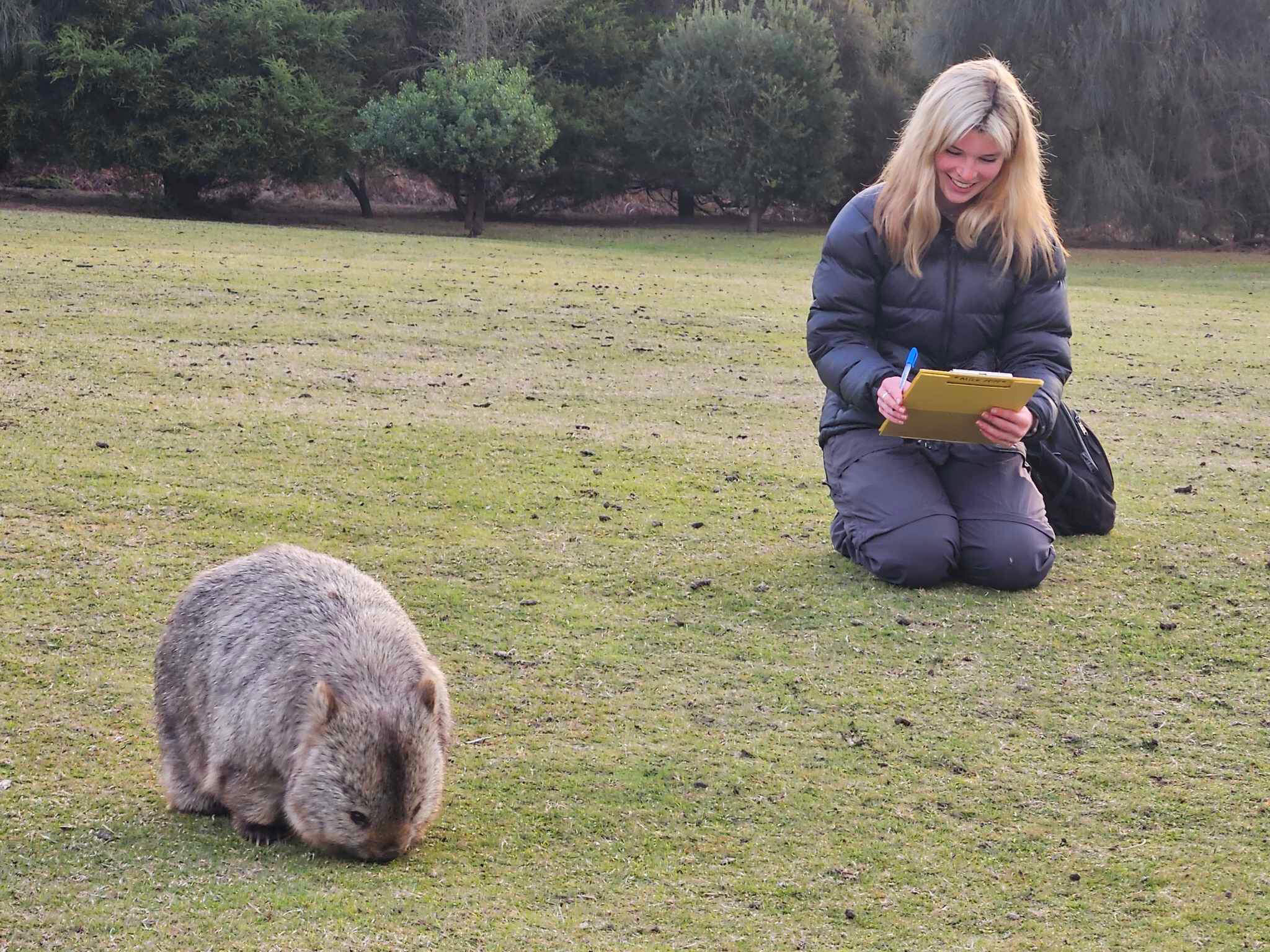
The bare-nosed wombat, one of Australia’s most iconic marsupials, has long fascinated scientists and the public for one very unusual reason: it produces square-shaped poop. While this quirky fact has been widely shared over the years, new research suggests there’s much more going on than just a biological oddity. According to a recent scientific study, wombats may be using their cube-shaped droppings as a tool for communication, sharing information about who they are and who’s nearby—all through smell.
This research, led by Scott Carver of the University of Georgia’s Odum School of Ecology and conducted with Kate McMahon, a graduate student from the University of Tasmania, dives deeper into the functional purpose behind one of nature’s strangest designs. Instead of asking only how wombats produce square poop, the study asks a bigger and more intriguing question: why.
Square Poop Is Not an Accident
Wombats don’t produce cube-shaped feces because of a square anus or some external shaping process. Earlier research, which earned Carver and his colleagues the 2019 Ig Nobel Prize in Physics, demonstrated that the shape forms inside the wombat’s body. The animal’s lower intestine has unique mechanical properties, with alternating stiff and flexible regions. Combined with an extremely slow digestive process—often taking more than two weeks—this causes the feces to dry out unevenly and emerge as distinct cubes that resemble charcoal briquettes.
That earlier work answered the “how,” but it left an important question open. Evolution tends to favor useful traits, so researchers began to wonder whether the cube shape offers a practical advantage beyond novelty.
Wombats Are Solitary but Not Silent
Bare-nosed wombats are largely antisocial animals. They avoid one another except during mating or while raising young. They are nocturnal, have relatively poor eyesight, and regularly change burrows every few days, often rotating between multiple underground homes. Direct interaction with other wombats is limited, yet these animals still need a way to understand who else is around them.
This is where their unusual bathroom habits come into play.
Wombats create communal defecation sites known as latrines, which are often placed near prominent landscape features such as rocks, logs, or other raised surfaces. Rather than scattering droppings randomly, wombats deliberately pile their feces in these shared locations.
The cube shape turns out to be extremely useful here. Square poop doesn’t roll away, even when placed on elevated surfaces. This allows the droppings to stay exactly where the wombat leaves them, preserving scent information for longer periods.
Smell Matters More Than Sight
The researchers suspected that these latrines play a role in olfactory communication, but until now there had been little scientific evidence to support that idea. To investigate further, McMahon examined the skulls and nasal anatomy of wombats to understand how well they can smell.
The results were striking. Wombats possess a well-developed vomeronasal organ, a specialized sensory structure responsible for detecting chemical cues. This organ is famously active in animals like snakes and cats, allowing them to process complex scent information. In primates, this structure is reduced, but in wombats, it appears to be highly functional.
This anatomical evidence suggested that wombats are well-equipped to gather detailed information from smells—but what exactly are they detecting?
Chemical Signatures Hidden in Poo
To answer that question, the research team analyzed wombat feces using gas chromatography and mass spectrometry, advanced techniques that break substances down into their chemical components. What they found added a whole new layer to the story.
The scientists identified 44 distinct chemical compounds in wombat poop. More importantly, the combinations of these compounds varied between individuals. In other words, each wombat leaves behind a unique chemical signature, much like a personal scent profile.
This means that wombats are likely able to distinguish one individual from another simply by sniffing droppings left at a latrine.
Testing Wombat Reactions in the Wild
To see whether wombats actually respond to these scent differences, the researchers designed a simple but clever field experiment. They collected feces from wombats in one area and placed them into latrines located in a completely different neighborhood. Wildlife cameras were then set up to observe how resident wombats reacted.
The results were clear. Wombats spent significantly more time investigating latrines that contained poop from unfamiliar individuals. This behavior strongly suggests that wombats can detect when a new animal has entered their local population—without ever seeing them.
Through scent alone, wombats appear to be monitoring who is present, who is new, and potentially who has moved on.
What Information Might Wombats Be Sharing?
While the study focused primarily on individual recognition, researchers believe the chemical signals in wombat feces may carry even more information. It’s possible that wombats can detect sex, age, reproductive status, and overall health from these scent profiles.
This kind of indirect communication makes sense for a solitary species. Instead of risking confrontation or expending energy on direct interaction, wombats can quietly gather intelligence from shared latrines scattered across their territory.
Why Square Poop Makes This System Work
The cube shape of wombat feces now appears to serve a clear function. By staying in place, the droppings act as long-lasting scent markers. Their shape allows wombats to place them strategically on elevated objects, maximizing exposure to passing animals.
In this context, square poop isn’t just weird—it’s efficient. It supports a communication system that fits perfectly with the wombat’s solitary lifestyle and sensory strengths.
What This Research Means Beyond Wombats
This study adds to a growing understanding of how animals use scent in complex ways that humans often overlook. Many mammals rely heavily on olfactory information, yet this “hidden” communication channel remains understudied.
Wombats provide a particularly compelling example because their behavior is so visible and distinctive. Their quirky reputation draws attention, but behind it lies a sophisticated system shaped by evolution.
For researchers, this work opens the door to further studies on chemical communication in mammals, especially species that don’t rely on visual or vocal signals.
A New Way to Look at a Familiar Oddity
For years, square wombat poop has been a fun trivia fact. Now, it’s becoming clear that it plays a meaningful role in how these animals navigate their world. Through a combination of unique anatomy, slow digestion, and powerful smell detection, wombats have turned waste into a functional messaging system.
It’s a reminder that even the strangest traits in nature often have a purpose—sometimes one that’s far more clever than it first appears.
Research Paper Reference:
https://doi.org/10.1111/jzo.70068