New Evolution Study Shows Why Repeated Environmental Change Can Help or Hurt Adaptation
Every living organism exists in a world that refuses to stay the same. Seasons shift, climates swing between extremes, and ecosystems move through cycles of abundance and stress. While this reality is obvious, what has remained unclear for decades is how repeated environmental change actually shapes evolution over long periods of time. A new study from researchers at the University of Vermont (UVM), published in the Proceedings of the National Academy of Sciences in December 2025, takes a deep dive into this question—and the results challenge some long-standing assumptions in evolutionary biology.
Rethinking how evolution is usually studied
Traditionally, evolutionary research often focuses on one population in one environment, tracked over time. This approach has produced many valuable insights, but it also comes with a limitation: it assumes that one evolutionary trajectory can represent how an entire species responds to change. According to the researchers behind this new study, that assumption may be too simplistic.
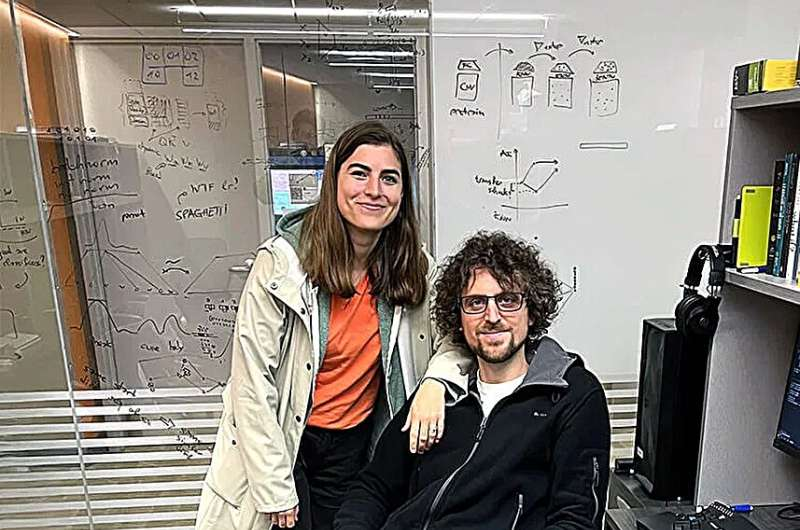
The research team, led by Csenge Petak, an evolutionary biologist, and Lapo Frati, a computer scientist, wanted to understand whether fluctuating environments consistently help populations adapt—or whether constant change can sometimes slow evolution down. Their central question was straightforward but powerful: do populations exposed to repeated environmental shifts become more adaptable, or do they struggle because they are forced to continually readjust?
A large-scale digital evolution experiment
Testing this idea in the real world would be nearly impossible. Tracking thousands of generations of plants or animals across dozens of controlled environments would take centuries. Instead, the team turned to digital organisms—computer-simulated life forms that evolve according to defined rules.
Using a powerful computational model, the researchers simulated thousands of generations of these digital organisms. They placed populations into 105 different variable environments, each designed to mimic natural fluctuations such as hot-cold cycles or alternating drought and rainfall. These environments were compared to static environments where conditions never changed.
This large number of environments was key. Rather than observing evolution once and drawing broad conclusions, the team was able to replay evolution hundreds of times, watching how different populations responded to different kinds of change.
Surprising variation in evolutionary outcomes
The results showed that environmental variability does not have a single, predictable effect on evolution. In some cases, changing environments helped populations reach higher fitness levels than those evolving in stable conditions. In other cases, variability did the opposite—it prevented populations from ever reaching the same heights of fitness as their counterparts in static environments.
Fitness, in evolutionary terms, refers to how well an organism survives and reproduces. The researchers measured both maximum fitness (the highest point reached) and average fitness across populations. What they found was striking: the same amount of environmental change could produce very different outcomes depending on the structure of the environment itself.
Some fluctuating environments allowed populations to explore new evolutionary pathways and discover better adaptations. Others repeatedly disrupted adaptation, forcing populations to start over each time conditions shifted.
Why the type of fluctuation matters
One of the most important insights from the study is that not all environmental fluctuations are equal. For example, temperature changes between warm and cold seasons might encourage traits that perform well across a range of conditions. On the other hand, repeated cycles of drought followed by long periods of rainfall might undo previous drought adaptations, leaving populations less prepared when dry conditions return.
This means that two populations of the same species—such as fruit flies living in different parts of the world—could evolve very differently even if both experience environmental change. One population might benefit from variability, while another might be harmed by it.
Evolution depends on history and starting point
Another key takeaway is the importance of evolutionary history. Where a population starts, and what challenges it faces early on, strongly influence how far it can climb on the evolutionary “fitness landscape.” A fitness landscape is a way of visualizing how different traits lead to higher or lower fitness.
The study shows that populations do not all climb the same hill. Some find smooth paths to high fitness, while others encounter barriers created by repeated environmental shifts. This makes it risky to assume that studying one population tells the full story of a species’ evolutionary potential.
Why this matters for real-world problems
These findings have major implications beyond theoretical biology. Understanding how populations respond to environmental variability is critical for predicting whether species can adapt quickly enough to survive climate change. As global conditions become more unpredictable, knowing which types of variability promote adaptation—and which hinder it—could shape conservation strategies.
The study also has relevance for antibiotic resistance. Bacteria experience rapidly changing environments as new drugs are introduced. If certain patterns of change encourage evolvability, they may accelerate the emergence of resistance.
Connections to artificial intelligence and learning systems
Interestingly, the research also connects to challenges in artificial intelligence and machine learning. Many AI systems struggle with continual learning—acquiring new skills without forgetting old ones. The evolutionary dynamics observed in this study closely mirror this problem.
By studying how biological systems cope with changing environments, researchers may gain insights into how AI systems can be designed to learn continuously rather than being optimized for a single task.
Why studying many environments matters
A major contribution of this research is methodological. By examining evolution across many comparable but distinct environments, the study demonstrates that broad conclusions cannot be drawn from narrow experiments. Evolvability itself—the capacity of a system to generate useful variation—can change depending on environmental conditions.
This challenges the idea that evolution is a one-time process of optimization. Instead, it suggests that adaptation is deeply shaped by context, history, and repeated challenges.
Expanding our understanding of evolvability
Evolvability is not just about mutation rates or genetic diversity. It also depends on how traits are linked together and how changes in one trait affect others. Variable environments can reshape these relationships, sometimes making adaptation easier and sometimes harder.
This nuanced view helps explain why evolution often appears messy and unpredictable—and why simple models fail to capture its full complexity.
A broader lesson about evolution
At its core, this study reinforces a simple but profound idea: evolution is not one-and-done. The path a population takes depends on where it starts, what challenges it faces, and how those challenges change over time. No single population can stand in for an entire species, and no single environment tells the whole story.
By combining computational power with evolutionary theory, this research opens new ways to explore how life adapts in a constantly changing world.
Research paper:
https://www.pnas.org/doi/10.1073/pnas.2519469122